Duration:
9 Days
YOGA, MEDITATION & THERAPEUTIC SOUND
Tibetan Singing Bowl Sound Healing in Rishikesh, India
Learn traditional Tibetan singing bowl techniques, sound therapy, chakra practices and therapeutic instruments through practical residential training in Rishikesh, India.
Tibetan Singing Bowl Certification Course Details
Level:
Beginner to intermediate
Location:
Rishikesh, India
Module:
Residential with Meals
Certification:
Yoga Alliance USA
Yoga Style:
Multi Style
Language:
English & Hindi
Choose your learning path
Tibetan Singing Bowl Certification Course Fees
Dates 2026-27 | Veda Yoga Ashram
Level 1
(1 Day Training)
With Stay200 USD Without Stay114 USD Enroll Now
Level 2
(2 Days Training)
With Stay250 USD Without Stay159 USD Enroll Now
Level 3
(4 Days Training)
With Stay250 USD Without Stay216 USD Enroll Now
Full Course
(9 Days Total)
With Stay700 USD Without Stay499 USD Secure Full Seat
Note: Starts 24th of the month. These 9-day course dates are systematic. Small groups only. Please book early.
Yoga, meditation & therapeutic sound
Tibetan Singing Bowl Certification Course in Rishikesh
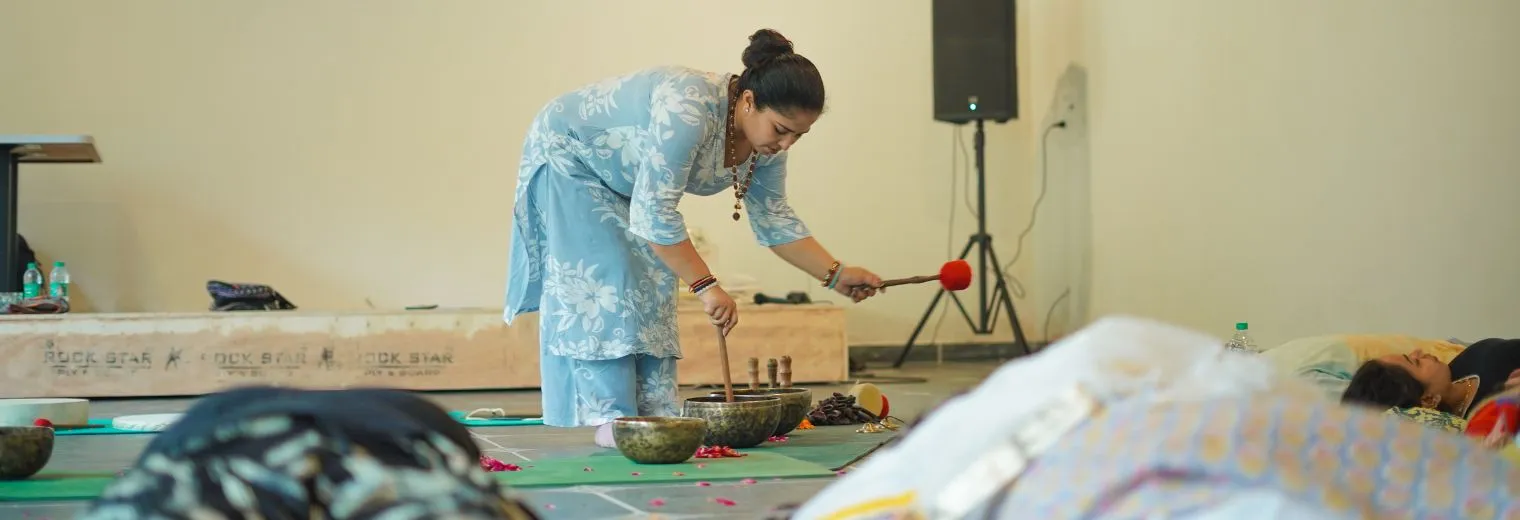
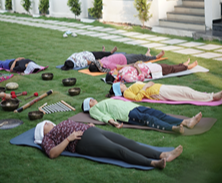
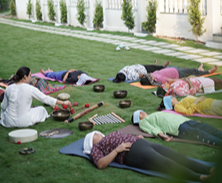
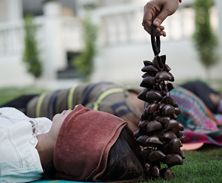
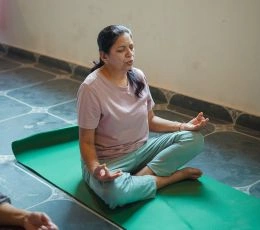
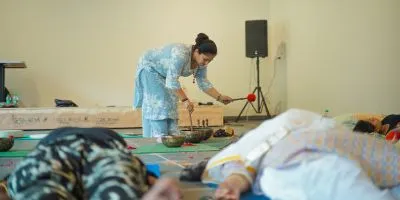
Sound has long been used as part of meditation, chanting and traditional healing practices. Tibetan singing bowls create sustained tones and vibrations that can be incorporated into relaxation, meditation and sound-based wellness practices. The training introduces students to different types of bowls, playing methods and ways to structure individual and group sessions.
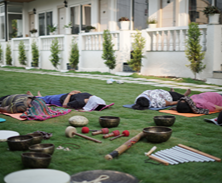
At Veda Yoga Ashram, students learn through a combination of theory, demonstration and hands-on practice. The course is suitable for people who want to explore sound healing for their own practice as well as those interested in developing skills to guide others.
The Tibetan Singing Bowl Certification Course in Rishikesh is structured to give students a practical understanding of sound, vibration, instruments, and therapeutic applications. The learning takes place in the traditional setting of Rishikesh, where yoga, meditation, and spiritual practices have been part of the local culture for generations.
What Makes This Course Unique?
Sound healing training becomes more useful when students get enough time to practise rather than only studying the theory. This program introduces the traditional use of singing bowls while giving learners opportunities to understand instruments, frequencies, sound-based relaxation and session techniques.
Students explore different forms of sound healing and gradually develop confidence in using bowls and other instruments. The course also introduces practices connected with meditation, chakra work, and group sound sessions.
For international yoga students, the training offers a chance to add sound-based practices to an existing yoga or meditation background while learning in Rishikesh.
What You Will Learn During the Course?
The course covers the main principles and practical skills needed to work with traditional sound-healing instruments. The curriculum is built to help you learn step, by step. It starts with the basics. Slowly moves toward hands-on practice sessions.
History of Singing Bowls
Understand the traditional background of Tibetan singing bowls and their place in Himalayan sound practices. The students learn the background and the basic ideas of these instruments.
Different Types of Singing Bowls
Learn how different bowls and metals produce different tones. Students practise holding, striking and playing the bowls so they can recognise variations in sound and vibration.
Individual Sound Therapy
Understand how singing bowls can be incorporated into individual relaxation and sound sessions. The training introduces practical methods for working with different bowls according to the purpose of a session.
Group Sound Healing Sessions
Learn how to organise a structured group sound session. Students gain practical experience with sound baths and learn how to work with several instruments in a shared setting.
Conch Shell Practices
Explore the traditional role of the conch shell in spiritual and sound practices. Students learn how its sound can be incorporated into the beginning or preparation of a session.
Tingsha Bells
Learn how Tingsha bells can be used to mark transitions during a session and create clear, bright tones for meditation and sound practices.
Om Bell
Learn how to use an Om bell in meditation and sound practices. Students investigate using sounds of bells to create an environment of focus and calm.
Rain Sticks
Work with natural, flowing sounds created by rain sticks. Their rhythmic sound can be incorporated into relaxation practices and group sound sessions.
Therapeutic Shakers
Learn basic techniques for using shakers and similar rhythmic instruments. These sounds can add movement and variation to a sound-healing session.
Koshi & Bar Chimes
Explore soft, delicate tones produced by chimes. Students learn how these instruments can be used to create gentle transitions and add variety to a session.
Gong Practice
Develop an understanding of gong playing techniques and controlled striking methods. Students practise using the instrument while learning how to manage volume, rhythm, and resonance.
Sound Healing Instruments India
The training introduces students to several traditional and therapeutic sound instruments. Each instrument produces a different type of tone and can be used at different stages of a meditation or sound-healing session.
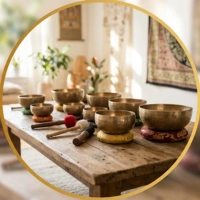
Singing Bowls
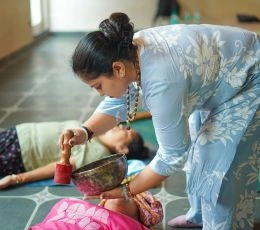
Tibetan singing bowls create sustained tones when played with a mallet around the rim or struck gently. Students learn basic playing techniques and how to work with different bowl sounds.

Tingsha Bells
Tingsha bells are small paired metal bells that produce a clear, bright tone. They can be used to open or close a practice and create transitions during meditation.
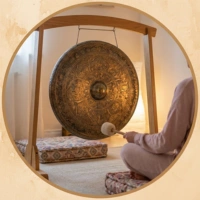
Therapeutic Gong
The gong produces a broad range of resonant sounds. Students learn controlled striking techniques and how to include gong sounds within a structured sound session.

Healing Bells
Healing bells create lighter tones that can complement meditation and relaxation practices. Students learn how to use bells appropriately alongside other instruments.
The instrument-based curriculum reflects the reference course's focus on singing bowls, bells and gong work as part of progressive sound-healing education.
Benefits of Tibetan Sound Healing Therapy in Rishikesh
Experience Greater Calm Through Sound and Vibration
Sound-based practices are often used in combination with meditation and relaxation. Students are introduced to how these practices can create a calm and focused environment.
Deep Relaxation
Gentle tones and rhythmic sounds can be incorporated into a relaxation practice and participants can take time to slow down and settle their attention.
Deeper Meditation
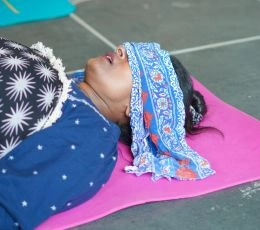
Meditation sessions may include the use of singing bowls and other instruments, to provide an auditory focus and help create a quieter environment for practice.

Sense of Balance
Incorporation of sound therapy into a wellness program that is inclusive of relaxation, meditation, and mindfulness is possible.
Clearer Focus
Working with sound requires a sense of tone, rhythm, timing and listening skills. With practice, learners can gain greater awareness of the sounds and sensations that occur during a session.
Refreshed Feeling
A quiet sound session provides a space to stop from daily activity and reconnect with the body and breath.
Personal Sound Practice
Learning how to work with singing bowls gives students practical tools they can continue exploring after completing the training. The reference material highlights relaxation, meditation, restored balance, clearing blocked energy, and feeling refreshed among the commonly presented benefits of sound healing.
Sound Healing Teacher Training Course
Master Level Sound Healing Course in Rishikesh, India
Level 1: Foundations of Sound Therapy
Begin with the fundamentals of sound-based practice. This stage introduces the history of Tibetan sound healing, different singing bowls, and basic methods for holding, striking, and playing them. Students also explore relaxation techniques and introductory sound practices.
Level 2: Chakra Balancing and Energetic Practices
Move into practices involving the body's seven commonly described energy centres. Students learn how different bowls may be positioned during a sound session and explore methods for creating a regular personal practice.
Level 3: Professional Sound Bath Practice
Develop practical skills for planning and conducting group sound sessions. Students work with singing bowls and additional instruments while learning how to structure a session, communicate with participants and maintain a safe practice environment.
Practice and Application
Practice is an important part of sound-healing education. Students have opportunities to give and receive sessions, work with different instruments and receive guidance from teachers. This practical approach helps turn theoretical knowledge into usable skills.
The progressive structure is based on the reference material's Level I–IV approach, while the wording and section organisation have been adapted to match your existing three-level page design. The reference specifically describes foundational bowl work, treatment applications, advanced instruments and progression toward professional practice.
Authentic · Structured · Supportive
Why Choose Veda Yoga Ashram in Rishikesh for Sound Healing Course?
A sound-healing course should give students more than information. The learning environment, teacher guidance and amount of practical training all matter when choosing a program.
International Learning Environment: Veda Yoga Ashram welcomes students from different countries and provides courses in an ashram setting in Rishikesh. The school's current course information lists the sound-healing training as a 9-day program in Rishikesh.
Practical Learning: Sound healing requires practice with actual instruments. Students can learn through demonstrations, guided practice and repeated application rather than relying only on classroom theory.
Experienced Guidance: The ashram states that its teachers have experience in yogic practices and teaching methods, with guidance designed to help students build confidence and practicalunderstanding.
Traditional Rishikesh Setting: Rishikesh provides a natural environment for students interested in yoga, meditation and traditional Indian wellness practices. Veda Yoga Ashram describes its approach as combining traditional teachings with a supportive learning environment.
Know More
Course timetable
Daily Schedule for Sound Healing Teacher Training
Wake up
Pranayam & Mantra chanting
Breakfast
Theory
Hands on experience
Break
Instructor guided self-practise
Lunch
Theory and Hands on practice
Self Practise
Dinner
Lights off
Note:
Schedules are subject to change.
No Classes on Sunday
Plan your residential training
Sound Healing Teacher Training Upcoming Dates 2026-2027
Course Date
Course Fee
Availability
Booking
Note:4-sharing rooms are gender-segregated.
We dont provide extra stay beyond course dates
Additional charges apply for air conditioning or room heaters, available only in 4-sharing rooms.
Life at Veda Yoga Ashram
Food & Accommodation
Nourishing meals and a peaceful place to rest support every part of your yoga journey.
01
Food & Sattvic Dining
Sattvic Food: It's Significance
At the Veda Yoga Ashram we see that the true Yoga is beyond the mat. The right kind of food is as important as the physical practice itself, and our program is a holistic approach to wellbeing, starting with the food.
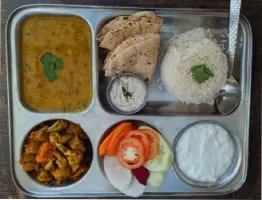
We offer freshly prepared sattvic foods, based on ancient ayurvedic teachings that food directly affects the mind, body and spirit. Sattvic diet revolves around the use of pure, natural and wholesome food items without any fried, processed, canned and artificially preserved food items. This type of nutrition is beneficial for the heart and blood vessels, helps normalize cholesterol, and provides a healthy digestive process and assimilation of nutrients. A sattvic diet has also been linked over the years to a decrease in the incidence of diabetes and lifestyle diseases, making it an ideal partner to a deep yoga and meditation practice.
Each of our meals is carefully prepared and planned and is as nutritious as it is delicious.
What we offer:
- Two freshly delicious and healthy vegetarian meals per day
- Vegan and gluten-free meals available upon request
- Drinking water is safe and clean, available at all times.
- Fresh seasonal fruits all day:
- Ayurvedic tea corner with restorative herbal teas.







02
Comfortable Accommodation
Accommodation : Veda Yoga Ashram - A ‘Home away from home’
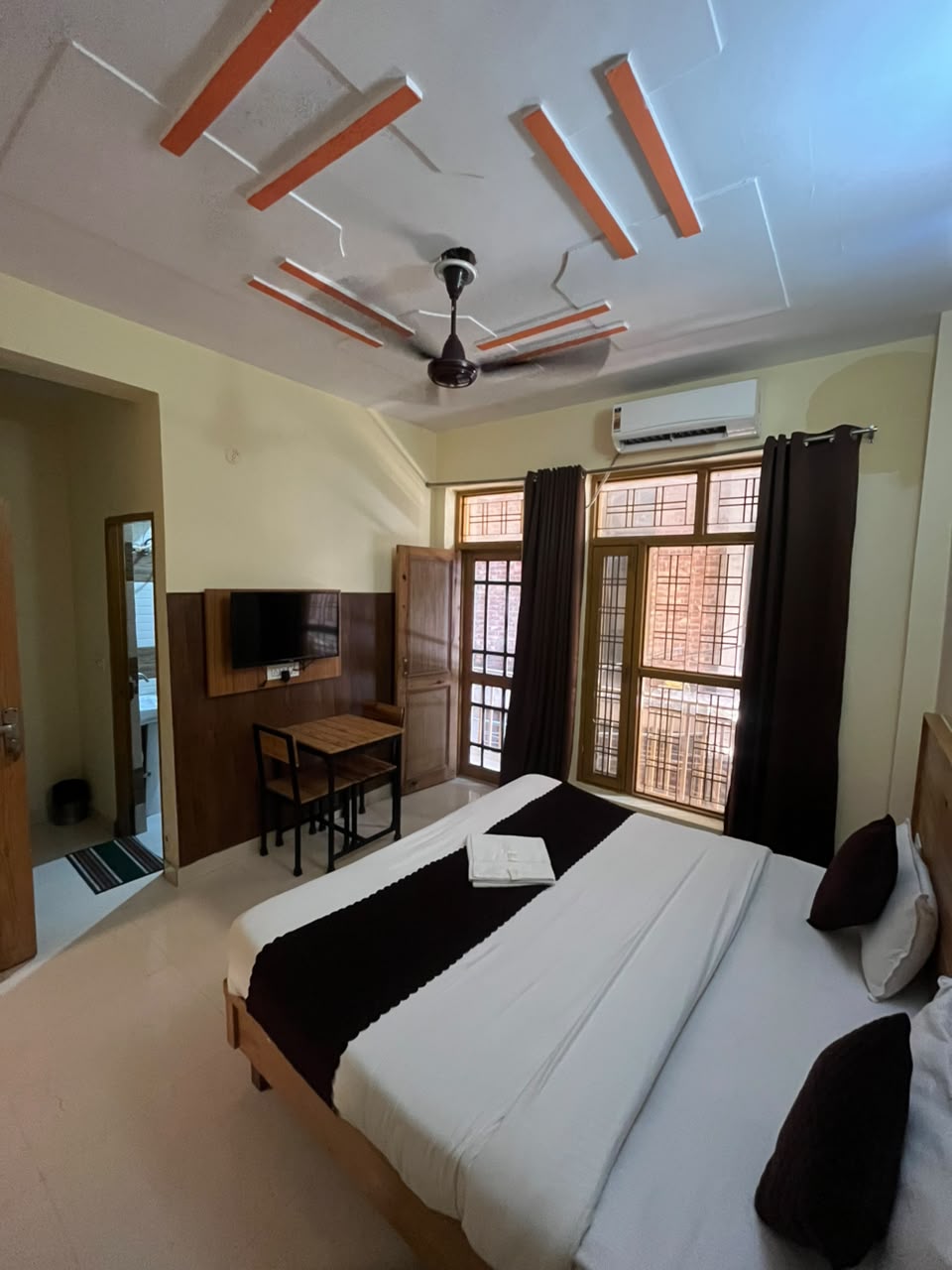
A quiet and clean environment is a key component to any worthwhile yoga practice. The rooms at Veda Yoga Ashram are well planned to promote comfort, rest and overall wellness for yoga students and retreaters.
Our clean, cosy and well maintained rooms are set among a peaceful and natural setting, offering a quiet retreat to unwind after each yoga practice, meditation and study day. A good night's sleep is not a luxury, it's a requirement during an intensive Yoga Teacher Training Course. Rest and a stable home base are essential to healing, thinking clearly and managing your emotions, and are important factors in the best use of your time.
The lifestyle at Veda Yoga Ashram is based on the yogic concepts of simple living, mindful awareness and yogic discipline. Our sattvic food, the proper daily routine and the serene atmosphere provide students with a place where they can experience a yogic lifestyle not only in class but beyond and all day long.
Our Room facilities include:
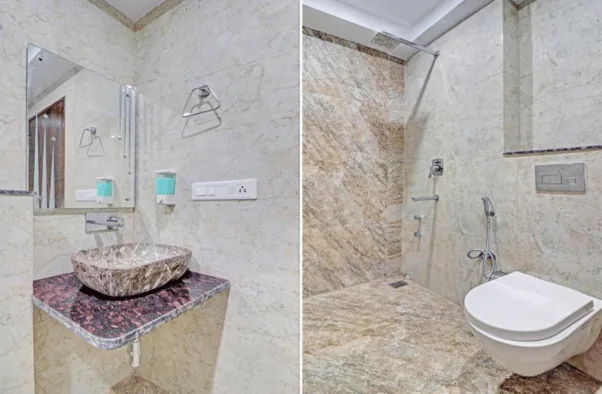
- The choice of both Private and Twin sharing rooms with attached 24/7 hot water facilities.
- Clean and comfortable sleeping areas with good quality mattresses and curtains for sleep
- Fresh and clean bed linens changed every week.
- Personal Room Lock and Key to ensure personal safety and privacy
Course At A Glance
About the Training

Class Size
Small, supportive groups
Yoga Style
Hatha & Ashtanga Yoga
Class Duration
9 Days
Food
Nutritious vegetarian yogic meals
Skill Level
Beginner to intermediate
Certification
Sound Healing Teacher Training Certificate
Location
Rishikesh, India
Join Training
Enroll now
Before you apply
Sound Healing Teacher Training Frequently Asked Questions
Tibetan sound healing is a sound-based wellness practice that uses instruments such as singing bowls, bells and gongs. Training focuses on learning how to play these instruments and incorporate their sounds into meditation, relaxation and structured sound sessions.
The course can suit beginners as well as people who already have experience with yoga, meditation or other wellness practices. The reference course states that its training is open to people interested in sound healing, including beginners and experienced practitioners.
No specific musical background is generally required. Students learn the basic handling and playing techniques of the instruments during the training, so an interest in sound and willingness to practise are more important starting points.
Students learn about singing bowls, sound frequencies, playing techniques, sound-healing session structures and the use of additional instruments such as bells and gongs. The training also includes individual and group applications.
Students learn about singing bowls, sound frequencies, playing techniques, sound-healing session structures and the use of additional instruments such as bells and gongs. The training also includes individual and group applications.
Yes. Sound-healing education can be used to develop a personal practice as well as to build skills for guiding others. The reference course specifically describes applications for self-practice, family and friends, individual sessions and professional sound-healing work.
The purpose of teacher training is to develop the knowledge and practical skills required to conduct sound sessions and share the practice with others. Certification details and the exact scope of teaching should be confirmed with Veda Yoga Ashram before enrollment.
One small step make a difference
Important Notes from Veda Yoga Ashram
Student Guidelines at Veda Yoga Ashram
To preserve a peaceful, disciplined, and authentic yogic atmosphere, all participants of Yoga Teacher Training Courses in Rishikesh at Veda Yoga Ashram are expected to follow these essential guidelines:
- Complete attendance is required for all scheduled classes, practical sessions, and program activities.
- Punctuality is highly valued; students are expected to arrive on time, as late entry may not be permitted.
- The ashram maintains a strict no-smoking, no-alcohol, and no-intoxicants policy within the premises.
- Students are requested to maintain respectful behavior toward teachers, staff members, and fellow practitioners at all times.
- If you plan to observe a fast, kindly inform the kitchen team in advance to help prevent food wastage.
- Any books, study materials, or items borrowed from the ashram must be returned before departure.
- Accommodation is reserved exclusively for enrolled students; friends or family members are not permitted to stay on campus.
Compliance With Yoga Alliance Standards
As a recognized yoga school in Rishikesh, Veda Yoga Ashram operates in full alignment with Yoga Alliance guidelines, maintaining a secure, ethical, and respectful learning environment for all students enrolled in our Yoga Teacher Training Courses in Rishikesh.
- Anti-Retaliation Policy: Students who report concerns or participate in related investigations are fully protected from any form of retaliation.
- Anti-Harassment Policy: We uphold a zero-tolerance approach toward harassment of any kind, including physical, verbal, sexual, discriminatory, or online misconduct, ensuring a safe space for every student.
- Attendance Policy: Active participation and full attendance in all scheduled classes, practical sessions, and program activities are mandatory throughout the Yoga TTC.
Refund Policy at Veda Yoga Ashram
- The advance deposit paid to confirm enrollment is non-refundable under any circumstances.
- In case of an unforeseen emergency, students may transfer the deposited amount to another course offered by Veda Yoga Ashram within 12 months from the original course start date.
- Course cancellations do not carry any additional charges; however, students must inform the ashram via email prior to the course commencement.
- While deposits are not eligible for refunds, they remain valid for future course participation within the permitted time period.
Women’s Safety at Veda Yoga Ashram
- At Veda Yoga Ashram in Rishikesh, the safety and comfort of women students is a top priority. We are committed to maintaining a secure, respectful, and supportive environment where women can focus fully on their Yoga Teacher Training Course in Rishikesh without concern or distraction.
- Our ashram follows strict safety protocols to ensure a peaceful stay for all women practitioners. The campus is monitored by 24/7 security personnel, ensuring continuous supervision and immediate assistance whenever required. These measures help create a safe atmosphere throughout the day and night.
- CCTV Surveillance: To further enhance security, CCTV surveillance is installed across key areas of the ashram. All accommodation rooms are provided with individual locks and keys, allowing women students to enjoy privacy, independence, and complete peace of mind during their stay.
- Our accommodations offer individual rooms, each equipped with its own private lock and key, allowing you to enjoy your stay with complete peace of mind.
Course Essentials
Sound Healing Course Included & Excluded
What Does the Course Fee Include?
- Private or shared accommodation provided throughout the 9-day program.
- Two daily sattvic vegetarian meals,
- Yoga props and study materials for practice and learning
- Tibetan Singing Bowl Sound Healing Certification upon successful completion.
What Is Not Included in the Course Fees?
- Travel expenses to and from the yoga institute are not included
- Personal costs such as laundry, phone usage, and additional meals are excluded
- Optional activities or excursions outside the program schedule are chargeable separately
- Accommodation beyond the course duration will involve additional costs
Our Expert Team of Teachers
Best Yoga Teachers in Rishikesh, India
ॐ
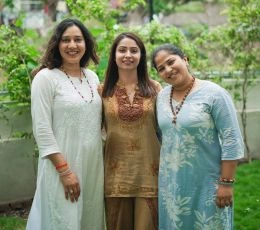
Learning at Veda Yoga Ashram takes place exclusively under the tutelage of some of the most experienced yoga teachers from Rishikesh, India. Our teachers are well experienced in the yogic practices and teaching methods to provide every student with genuine yogic knowledge and guidance. All teachers have a master's degree in Yogic Science and are certified by Yoga Alliance, which includes academic knowledge and a wealth of experience in teaching. Our graduates benefit from this solid base to build their confidence, clarity and to learn how to teach yoga professionally.

Founder
Yogesh Dixit
Experience
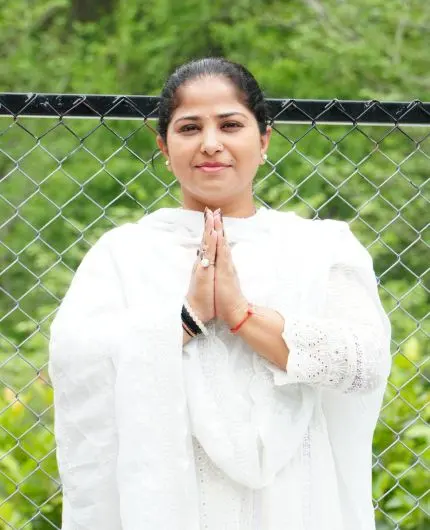
Co-Founder
Neha Thakur
Experience
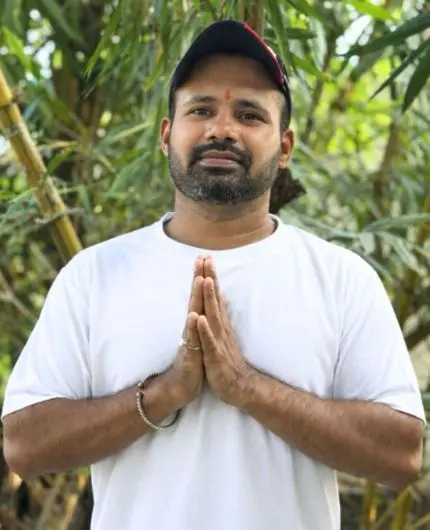
Hatha & Vinyasa Yoga Teacher
Rahul Ji
Experience

Manager
Yathin Ji
Experience
Reserve with confidence
How to Book Your Seat
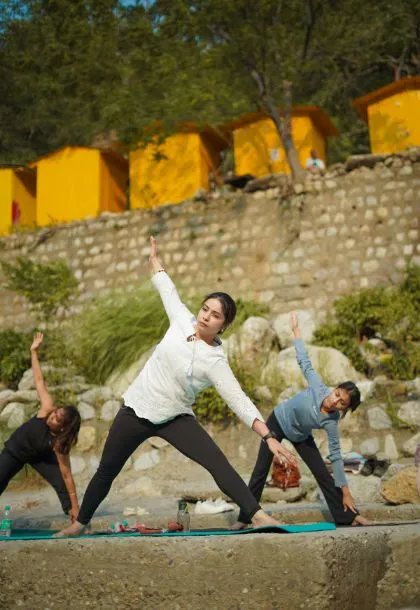
Booking your Sound Healing Teacher Training Course is simple and guided. Share your preferred date and accommodation choice, and our team will help you complete every step clearly.
After availability is confirmed, you will receive the information needed to reserve your seat and prepare for your arrival.
Apply online
Send your preferred course date and contact details.
Receive confirmation
Our team checks availability and shares next steps.
Pay booking deposit
Make the confirmed advance payment to reserve your place.
Prepare for arrival
Receive check-in and travel information before arrival.
Note: Contact the Veda Yoga Ashram team for booking, cancellation or refund clarification before making payment.
Your teaching journey begins here
Begin Your Journey with Veda Yoga Ashram
Sound healing and yoga can help provide a way to understand the self more deeply and can help promote personal and professional development. Veda Yoga Ashram offers a 200 hour course that uses sound healing and yoga to teach practical skills that will allow the student to teach and also enrich their lives.
Transformative Journeys at Veda Yoga Ashram
Testimonials/Reviews - What Do Students Say About Us?
This was a wonderful yoga retreat In Rishikesh. Veda yoga ashram provides excellent itinerary arrangements, including morning Ganga yoga, cave meditation, Ganga Aarti and sunrise sessions. Veda yoga ashram take great care of everyone, teachers are knowledgeable and nice. This was a very spiritual yoga journey, everyone was very happy, cannot wait for next Rishikesh trip.
J
My time at Veda Yoga Ashram was memorable to say the least. It’s not just a retreat but an amazing yoga school, and the entire experience felt beautifully balanced between learning, spiritual practices, and meaningful excursions. Meditating at Vashishta Cave and attending the evening Ganga Aarti on the banks of the Ganga were truly special moments that stay with you long after the retreat ends. These experiences make you feel deeply connected to the spiritual essence of Rishikesh. Mr. Yogesh and Ms. Neha are wonderful hosts who create a warm and welcoming atmosphere for everyone. The teachers are excellent, the food is nourishing, and the overall experience feels very holistic. I also met some amazing people and made great friends along the way. If you’re looking for a place to slow down, learn authentic yoga, and truly experience the spiritual side of Rishikesh, Veda Yoga Ashram is a fantastic choice.
N
I recently completed my Prenatal and Postnatal YTTC and it was a wonderful learning experience. The course was well-structured with lots of valuable content and deep knowledge.Prenatal and postnatal yoga is very deep, and this course helped me truly understand it better. A big thank you to Neha ma’am for the clear and detailed theory classes, and Himani ma’am for the practical sessions which were very helpful and easy to understand. Grateful for this beautiful journey and highly recommend this course!!!
S
I recently completed a Prenatal and Postnatal Yoga course, and I feel truly grateful to have learned from such an incredible teacher Neha ma’am . The entire experience was not only educational but also deeply enriching on a personal level. I recommend everyone to do this course, even if you don’t want to teach. This course had the knowledge of pre-pregnancy and Post pregnancy at such a deep level that everybody must know about it.
G
My overall experiance was excellent . If i have to discribe in one word " its a re engeneering of our body n soul" the team was very supportive , specially Ms Neha maam , Deepa maam , Rahul Sir , Yogesh sir n Aman . The entire Hotel staff of Nature Nest were very helpfull n the hospitality as Awsome. Will definately recommend all my friends and family to "Veda Yoga Aashram "
H
I have successfully completed the Master's Sound Healing Course at Veda Yoga Ashram with Neha Ma'am, and I am truly grateful that I made this decision. It has been a beautiful and transformative journey filled with learning, healing, and self-discovery. I am from Gujarat, where the competition in this field is very high. However, this course has given me the confidence, knowledge, and practical skills to move forward with clarity and purpose. I am taking back not only a certification but also unforgettable memories, meaningful experiences, and the blessings of my teachers. Thank you, Neha Ma'am, and the entire Veda Yoga Ashram family, for your guidance, support, and warmth throughout this journey. I will always cherish this experience.
F
I am deeply grateful to Veda Yogashram for such a beautiful and life-changing experience. I completed my Prenatal Yoga Teacher Training Course and Yoga Retreat here, and every moment was filled with learning, peace, and positivity. A heartfelt thank you to Neha Ma’am, Rahul Sir, Yogesh Sir, and Deepali Patil Ma’am. They are not only exceptional teachers but also wonderful human beings. Their patience, guidance, and encouragement made this journey truly special. I became so attached to them that saying goodbye was very emotional. They will always have a special place in my heart. The staff is incredibly kind and supportive, the atmosphere is peaceful, and the entire ashram feels like a second home. I learned so much here, not only about yoga but also about myself. Thank you, Veda Yogashram, for the unforgettable memories and valuable teachings. I will definitely come back again and highly recommend this ashram to anyone looking for an authentic and meaningful yoga experience.
R
My experience at Veda Yoga Ashram was absolutely wonderful. I attended a sound-healing session with Neha ma'am, and it turned out to be one of the most peaceful and uplifting experiences I’ve had. The vibrations of the instruments created such a powerful yet gentle energy that helped release stress and bring a deep sense of calm. Also, Neha ma’am carries herself with genuine kindness and professionalism, her guidance throughout the session made the experience even more meaningful. The whole session felt magical and refreshing for the mind and body. I would definitely recommend this experience to anyone looking for relaxation, healing, and inner peace in Rishikesh.
N
Veda is a wonderful yoga retreat in Rishikesh with a peaceful atmosphere and authentic yogic lifestyle. It’s not just about yoga sessions or excursions—it’s about truly experiencing the ancient yogic tradition and spirituality that Rishikesh is known for.The hospitality of Mr. Yogesh and Ms. Neha is exceptional. Highly recommended for anyone looking for a genuine yoga and meditation retreat in Rishikesh. ⭐
K
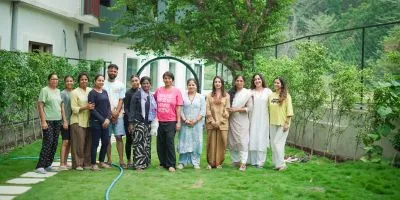
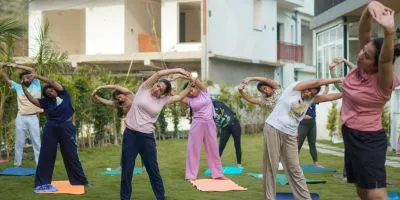
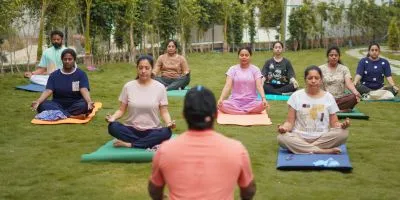
Yoga Community of Veda Yoga Ashram Rishikesh
Our Yoga Community


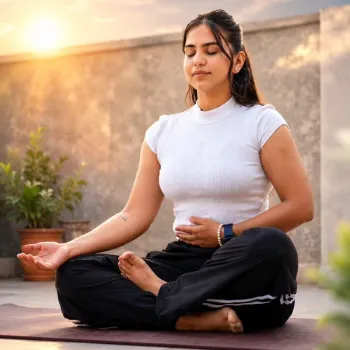
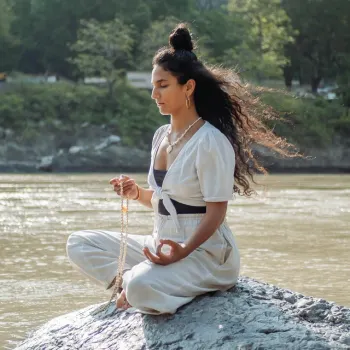

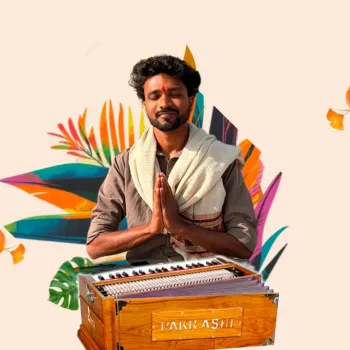



Veda Yoga Ashram Gallery

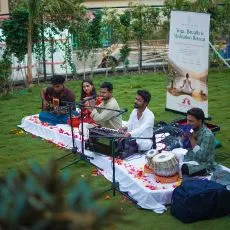
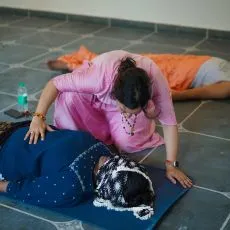
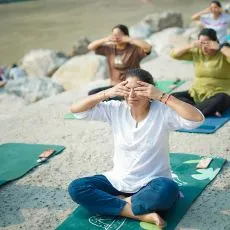
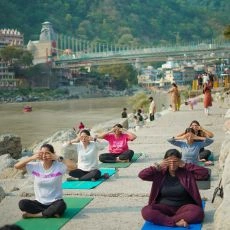
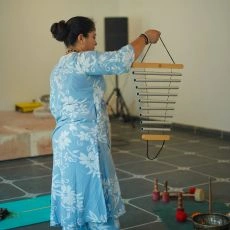
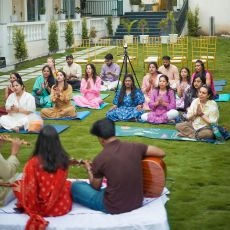
Yoga knowledge
Latest from our blog
Yoga & Wellness
Mantras and Meanings: A Practical Guide for Yoga Students
Walk down to the Ganga at sunset in Rishikesh and you will hear it: voices rising and falling over the same few syllables. Students from the USA and elsewhere often stand there wondering what the words mean and whether they are supposed to join in. This guide answers those questions in plain language. It covers the idea behind a mantra, the main kinds, the mantras and meanings you are most likely to meet in class, what research can and cannot say about chanting, and how to build a simple practice of your own. At Veda Yoga Ashram, we teach students from many countries, and chanting is often unfamiliar at first. We wrote this piece the way we explain it in person: clearly, and without pressure to believe anything. What Does the Word Mantra Mean? Mantra is a Sanskrit word. A common explanation splits it into man, meaning mind, and tra, meaning tool or instrument. A mantra is a tool for the mind. Some traditions link tra to the idea of protection, and scholars still debate the exact roots, so treat the simple version as a useful starting point rather than the final word. In practice, a mantra is a sound, word or short phrase that you repeat with attention. It can be a single syllable such as Om, a line of a few words or a verse from an ancient text. You can say it aloud, whisper it or repeat it silently. Repeating a mantra while counting on a string of 108 beads, called a mala, is known as japa. Mantras belong to Hindu, Buddhist and Jain traditions, and each tradition uses them differently. In some, a mantra is a prayer to a deity. In others, it is simply a focus for meditation with no belief attached. That is why the same chant can feel devotional to one person and purely meditative to another. Meaning matters either way, which is why mantras and meanings belong together. The Main Kinds of Mantras Sorting mantras by purpose makes the list of mantras and meanings below easier to follow. Teachers group them in several ways, and this is one simple version. Seed Mantras A seed mantra, or bija, is a single syllable. Om is the best-known example. Tradition links different seed sounds with different energy centres in the body, and students often use them as a point of focus. Deity Mantras These name or call on a deity, such as Om Namah Shivaya for Shiva or Om Gam Ganapataye Namaha for Ganesha. They belong to the devotional side of yoga, called bhakti. Prayer and Wisdom Mantras This group includes prayers like the Gayatri Mantra and wishes like Lokah Samastah Sukhino Bhavantu. It also includes statements such as So Hum, which point toward a view of the self instead of a deity. Common Mantras and Meanings Students Meet in Rishikesh Translations vary, because Sanskrit words carry several layers. Treat the meanings below as starting points, and ask your teacher about the version your lineage uses. Om A sacred syllable, often written Aum. Traditions describe it as the sound of existence as a whole. Classes often open or close with a few rounds of it. Om Namah Shivaya Roughly, "I bow to Shiva" or "salutations to Shiva." Many teachers read Shiva here as the inner self beyond ego, not only a god in a story. The words namah shivaya make five syllables, which is why people call it the five-syllable mantra. Our page on Om Namah Shivaya goes deeper. Gayatri Mantra This verse comes from the Rigveda and addresses the sun as a source of light. Its request is for clarity of understanding. Some lineages teach it only through formal initiation, so ask a teacher before assuming how it should be practised. So Hum Often translated "I am that." Students pair it with the breath: so on the inhale and hum on the exhale. It is silent, simple and tied to no deity, so many teachers offer it to beginners first. Om Mani Padme Hum A Tibetan Buddhist mantra linked with Avalokiteshvara, the embodiment of compassion. A common rendering is "the jewel in the lotus." Teachers explain each syllable in different ways, which is normal for a mantra this old. Lokah Samastah Sukhino Bhavantu "May all beings everywhere be happy and free." Many classes close with it, and it works well as a quiet wish at the end of a practice. Om Gam Ganapataye Namaha "Salutations to Ganesha," the remover of obstacles. People often chant it before starting something new, such as a course or a project. Shanti Mantras Shanti means peace. Peace chants usually repeat the word three times. Teachers commonly explain the three repetitions as peace within yourself, in your surroundings and in the wider world. The Benefits Mantra Meditation Can Realistically Offer Be wary of any page that promises healing, wealth or cosmic protection from a mantra. Research on mantra meditation exists but remains modest. Small studies of repetition-based practice have reported effects on relaxation, stress and attention, yet study quality and size vary, and results do not apply to everyone. What students usually notice is simpler. A mantra gives a busy mind one job. When attention drifts, you return to the sound, and that return is the training. Chanting aloud also lengthens the breath, because you need a long exhale to finish a line. Many people feel calmer after a few minutes. Treat mantra practice as a support for wellbeing, not a treatment. If you live with anxiety, depression or any other health condition, keep working with your doctor or therapist. Knowing the mantras and meanings you chant adds something studies cannot measure: repetition feels like intention instead of noise. Mantra vs Affirmation: What Is the Difference? Both are repeated phrases, so they look alike. The difference lies in source and purpose. An affirmation is a statement in your own language, written to change how you think about yourself, such as "I am capable." A mantra usually comes from a tradition, often in Sanskrit, and you choose it less for what it says than for what it does to your attention. The sound, the rhythm and the lineage all matter. Put simply, affirmations work on belief and mantras work on attention. Neither is better. Some people use English words as a mantra, and that is fine. Pay attention to how a phrase lands, though. If "I am calm" feels false in the middle of a stressful day, a neutral sound such as So Hum may suit you better. Daily Mantra Meaning: How to Choose and Use One? A mantra you understand holds up better than one you picked because it was popular. Here is a simple routine that works for most beginners. Pick one. Choose a mantra whose meaning you can explain in your own words. Stay with it for several weeks instead of switching often. Learn the sound. Listen to a teacher or a recording and repeat it slowly. Correct pronunciation helps, but a steady attitude matters more than perfection. Set a time. Use the same moment each day, such as just after waking. Five minutes is enough. Settle first. Sit with a tall spine and take a few slow breaths. Repeat with attention. Start aloud, then move to a whisper, then silence. Count with a mala, or set a timer instead. Close quietly. Sit in silence for a minute before you move. A small notebook of the mantras and meanings you learn keeps the practice grounded. Write the words, a translation in your own phrasing and a note on how it felt. Chanting With Respect, and Mistakes to Avoid Mantras come from living religious traditions. You do not need to adopt a belief to chant, but you should learn what you are saying. Treat the sacred syllables with care rather than as decoration. Common mistakes are easy to spot: Expecting fast results. The effect builds slowly, and some days nothing seems to happen. Forcing the voice. Strain in the throat means you are chanting too loudly or too high. Switching mantras constantly. Depth comes from staying with one. Treating a slip as failure. A mispronounced syllable is not a disaster. Listen again and carry on. Chanting with closed eyes while driving or operating machinery. Keep meditative practice for safe, quiet places. Final Thoughts Rishikesh is a good place to study mantras and meanings, because chanting is part of daily life along the river. You hear it on the ghats, at evening aarti and in classrooms. A teacher can also correct your pronunciation on the spot, which a recording cannot do. If you want to learn chanting from a teacher, ask about mantra sessions within our 100 hour yoga teacher training in Rishikesh or our 200 hour yoga teacher training in Rishikesh. Students travelling from the USA should allow a few days to recover from jet lag before long sitting practices.
Read article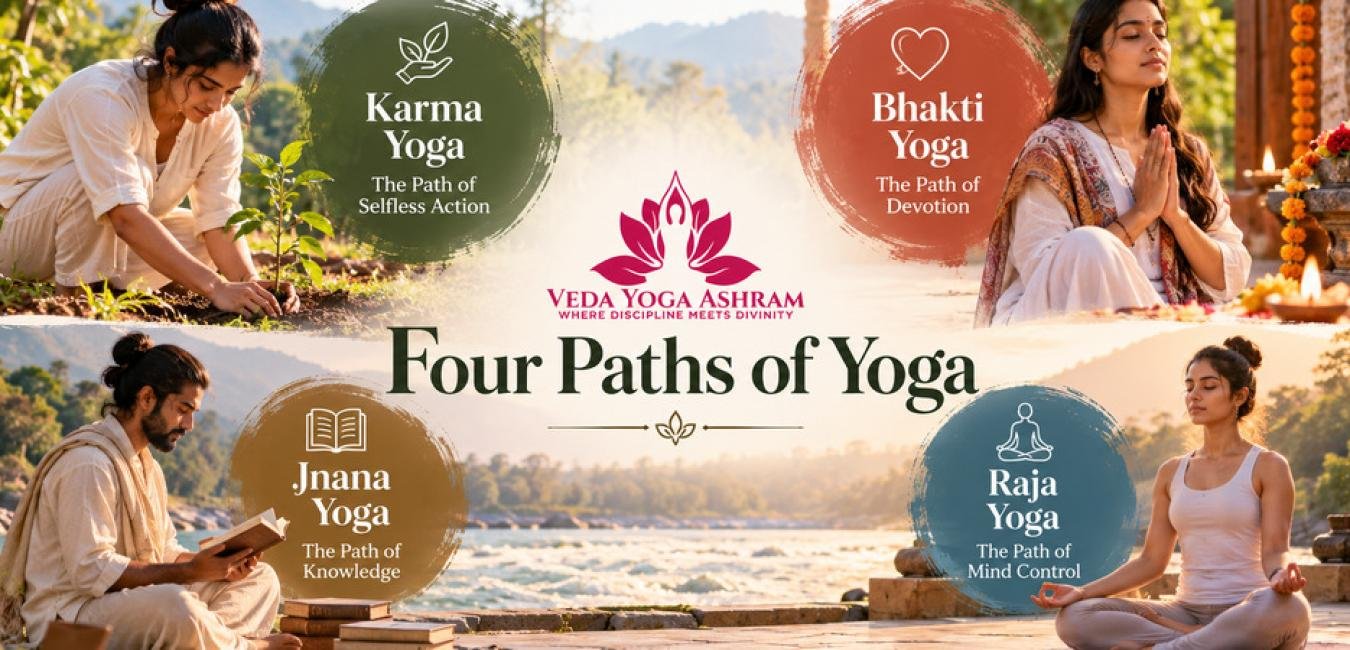
Yoga & Wellness
Four Paths of Yoga: A Practical Guide for International Students in Rishikesh
Most people meet yoga on a mat. They stretch, breathe and leave class a little calmer. Then they arrive in India, open a book on yoga philosophy, and find words like karma, bhakti, jnana and raja. Suddenly yoga looks much bigger than a physical class. Those four words sit at the center of the four paths of yoga, a framework Hindu teachers have used for generations to explain spiritual growth. The idea is simple. People differ, so the road to self-understanding differs too. Some learn by doing, some by feeling, some by thinking and some by sitting still. This guide explains each path in plain language, shows how to practice it in daily life, and points out the mistakes students often make. It is written for international students who plan to study in Rishikesh, Uttarakhand, or who want to understand the philosophy before they travel. What Are the Four Paths of Yoga? The four paths of yoga are Karma Yoga (action), Bhakti Yoga (devotion), Jnana Yoga (knowledge) and Raja Yoga (meditation and mental discipline). Each one is a method for reaching the same goal. Different texts name that goal in different ways: self-realization, liberation (moksha), or union of the individual self with something larger. The word yoga comes from the Sanskrit root yuj, which means to join. A path of yoga is therefore a way of joining what feels separate, such as the small ego and the wider awareness behind it. One Mountain, Several Trails Picture a single mountain with four trails up the slope. One is steep and direct, another winds through forest, a third follows a river. All reach the summit, but the walker's temperament decides which one feels natural. The four paths of yoga work the same way. A warm, emotional person may find devotion easier than abstract philosophy. A restless, practical person may prefer service. Nobody stays on one trail forever. Most students end up borrowing from all four. The Four Yogas Hinduism Describes in Its Texts Hindu scripture does not present the four paths of yoga as one tidy list. The Bhagavad Gita, a conversation between the warrior Arjuna and Krishna, explains action without attachment in its third chapter and devotion in its twelfth. Knowledge and meditation run through several others. The Upanishads focus on inquiry into the self. Patanjali's Yoga Sutras lay out the eight-limbed system behind Raja Yoga. They were compiled roughly two thousand years ago, though scholars debate the exact date. Swami Vivekananda popularized the four-part grouping in the West through his lectures in the 1890s. Later teachers such as Swami Sivananda kept the framework and stressed balance. This history explains why different ashrams may lean toward different paths. Karma Yoga: The Path of Selfless Action Of the four paths of yoga, Karma Yoga is the one you can start at your desk today. It asks you to act fully while loosening your grip on the result. The Gita puts it simply: you have a right to your work, not to its rewards. This does not mean working carelessly. It means giving full effort and letting go of the fantasy of praise, promotion or control. For a student, this has practical meaning. Imagine a group project where one teammate keeps taking credit. A karma yogi still does the best work possible, then lets the credit question go. The effort stays honest, and resentment has nothing to feed on. Selfless service does not mean tolerating harm. Healthy boundaries belong to the path too. Ways to Practice Karma Yoga Do one daily task, such as sweeping or washing dishes, with full attention and no complaint. Volunteer for something with no reward attached. Many ashrams include seva, or selfless service, in the daily schedule. Before a big task, ask what your duty is. Then ask where you are attached to the outcome. At the end of the day, notice one action you did for its own sake. Bhakti Yoga: The Path of Devotion Bhakti Yoga turns the emotions toward something higher than personal wants. In the Hindu tradition, that object of love is often a deity such as Shiva, Krishna or Devi. Other practitioners direct it toward the divine in nature, in a teacher or in all living beings. The aim is to soften the ego through love and surrender. Many teachers call Bhakti the most approachable of the four paths of yoga, since everyone already knows how to love. Devotion does not require you to adopt a religion. Many international students come from other faiths or none, and teachers in India are used to that. Treat the practices as forms of attention and gratitude, and take part with respect. Common Bhakti Practices Mantra repetition, called japa, is the easiest entry point. A well-known example is Om Namah Shivaya, often understood as "I bow to Shiva," the pure awareness within. Students usually count repetitions on a mala of 108 beads. Kirtan, call-and-response chanting with harmonium and drums, brings devotion into a group. Satsang, a gathering to hear teachings and share silence, supports both. Try a simple start. Sit for five minutes each morning, repeat the mantra silently, and finish with a moment of thanks. Jnana Yoga: The Path of Knowledge Within the four paths of yoga, Jnana is the most philosophical. It is the path of inquiry, and it keeps returning to one question: who am I? The practitioner questions every identity, such as job title, nationality or mood, and looks at what remains when each one is set aside. The classical phrase is neti neti, meaning "not this, not this." Vedanta describes three stages. First comes listening to the teachings (shravana). Next comes reflection until doubts are settled (manana). Last comes sustained contemplation, where the insight sinks in (nididhyasana). Reading alone is not enough. Knowledge becomes yoga only when it changes how you see. Teachers also warn that this path needs a steady mind. The Sivananda tradition, for example, advises building a base in the other paths first. An anxious or sleep-deprived student can turn inquiry into overthinking. A small exercise: at night, write down a belief you hold about yourself, such as "I am bad with languages." Ask what evidence supports it and what contradicts it. Then sit quietly and ask who is holding the belief. Raja Yoga: The Path of Meditation and Mental Discipline Among the four paths of yoga, Raja is the one most Western classes touch, usually without naming it. Raja means "royal," and the path works directly on mastery of the mind. Patanjali's eight limbs form its map. Most studio classes teach only the third limb, posture, so many students are surprised by how much more the system contains. The Eight Limbs at a Glance Yama: ethical restraints, such as non-violence and truthfulness Niyama: personal observances, such as cleanliness and contentment Asana: steady posture Pranayama: breath regulation Pratyahara: drawing attention away from the senses Dharana: concentration on one point Dhyana: meditation, an unbroken flow of attention Samadhi: complete absorption, the traditional goal The limbs are not rungs you finish one at a time. A beginner can work on ethics, posture and breath in the same week. Daily meditation sits at the center of the practice. The U.S. National Institutes of Health says meditation carries few risks for most people, though some report difficult experiences. If you have a history of trauma or anxiety, tell your teacher and begin with short sessions. 4 Types of Yoga and Who Each One Suits Traditional teachers match the path to temperament. The four paths of yoga suit different natures, so treat the table below as a starting guess, not a personality test. Modern science does not confirm these categories, and most people are a mix. Path Natural fit Core practice Common trap Karma Active, practical, service-minded Selfless work, seva Burnout or resentment Bhakti Emotional, warm, devotional Mantra, kirtan, prayer Sentiment without discipline Jnana Analytical, curious Study, self-inquiry Intellectual pride Raja Methodical, introspective Meditation, breath, ethics Rigid perfectionism Paths Versus Class Styles Many people searching for yoga types expect hatha, vinyasa or yin. Those are styles of physical practice, and they belong mostly to Raja Yoga's postures and breath. The paths are bigger than any style. You can take a vinyasa class as karma yoga if you practice without chasing results. You can take it as bhakti if you dedicate it to someone. Can You Combine the Four Paths of Yoga? Yes, and most teachers hope you will. Swami Sivananda called this approach the yoga of synthesis, a balance of head, heart and hands. A simple weekly rhythm shows how it can look: Morning: ten minutes of meditation and breath (Raja) Daytime: one task done as selfless service (Karma) Evening: mantra or chanting (Bhakti) Weekend: reading and reflection on one question (Jnana) Adjust the proportions as you learn. If you feel dry, add devotion. If you feel scattered, add meditation. If you feel stuck in your head, add service. Studying the Four Paths of Yoga in Rishikesh Books give you vocabulary. Living inside a community gives you practice. Rishikesh sits on the Ganga in the foothills of the Himalayas and has drawn yoga students from around the world for many years. Ashram life tends to blend the four paths of yoga naturally, with early meditation, shared chores, evening chanting and philosophy talks. If you want to study these ideas in person, Veda Yoga Ashram in Rishikesh is one place to explore. Ask about the daily schedule, class sizes, and how philosophy fits alongside asana and meditation. A few practical tips for international students: Check current visa requirements with the Indian consulate or official government sources before you book. Arrive a couple of days early to recover from travel and settle your sleep. Pack modest, comfortable clothing, since many ashrams and temples expect covered shoulders and knees. Bring a notebook for questions. Teachers welcome them. Common Mistakes When Choosing Among the Four Paths of Yoga Picking the path that sounds most impressive. Jnana attracts many students with its big ideas, but it works best on a steady foundation. Treating posture as the whole of yoga. Asana is one limb of one path. Skipping ethics. Yama and niyama come first for a reason. A calm mind without kindness is incomplete. Following a teacher without questions. Look for clear training, consistent conduct, and a willingness to answer doubts. Expecting fast change. Early signs are modest, such as a little more patience and a little less reactivity. Also Go through:- 100 Hour Yoga Teacher Training in Rishikesh Conclusion Pick one practice from each path and keep it small. Five minutes of silent mantra, one chore done with full attention, one reflective question in a notebook, and ten minutes of seated breathing are plenty. After two weeks, notice which one you look forward to. That is likely your natural path, and a sensible place to go deeper. The four paths of yoga do not ask you to become someone else. They offer four ways to look at the same life more clearly.
Read article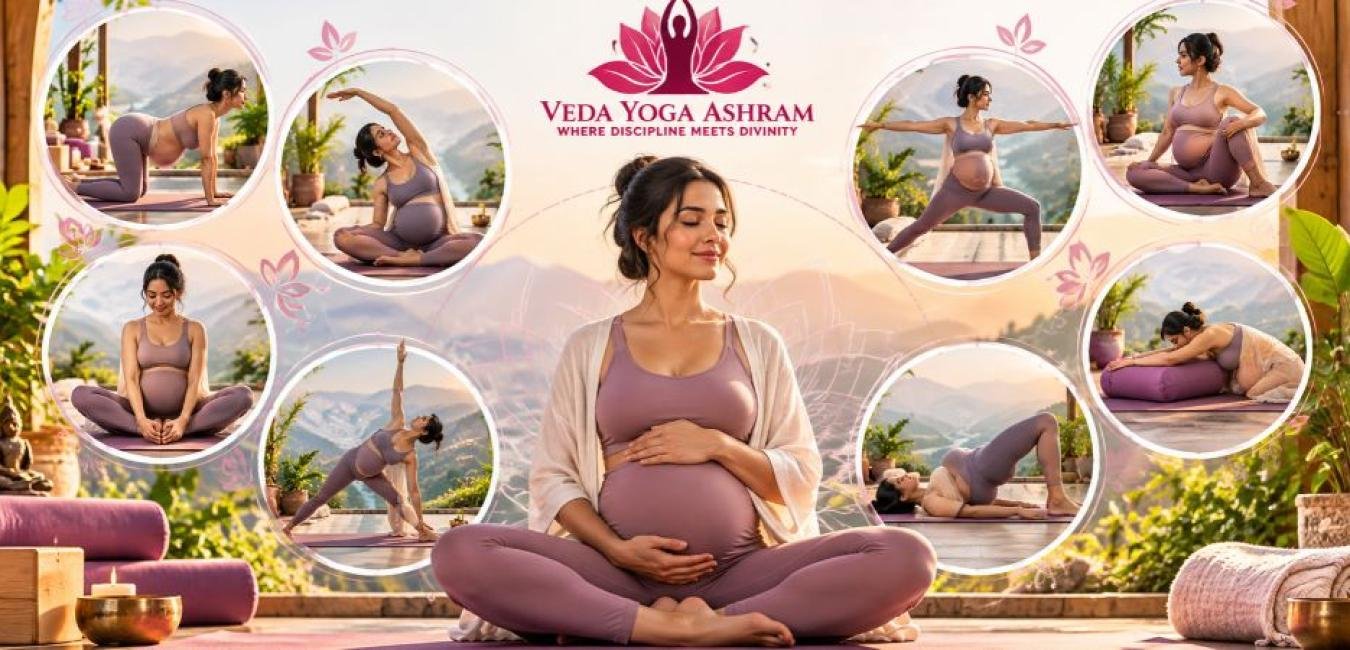
Yoga & Wellness
10 Safe Prenatal Yoga Poses for Beginners During Pregnancy
Pregnancy causes physical and emotional changes. As the body gets ready for a growing baby moving can be a part of staying comfortable moving easily being strong and feeling relaxed. For healthy pregnancies yoga that is changed to fit the situation can be part of a regular activity plan. Pregnancy is not the time to push for more flexibility or try advanced positions. Your balance, how your joints move, how energy you have and how you feel can change each week. The best way is to make sure the movements are gentle under control and match where you are in your pregnancy. The pregnancy yoga poses in this guide are meant as examples for people who are just starting out not as a replacement for medical advice. If you are pregnant talk to your healthcare provider before starting or changing your exercise routine especially if your pregnancy is risk or you have a health problem. The NCCIH says that yoga can be safe and helpful, during pregnancy if the right steps are taken. Why Choose Prenatal Yoga During Pregnancy? Prenatal yoga is adapted to the changing needs of pregnancy. Than focusing on achieving difficult shapes prenatal yoga emphasizes comfortable movement, breath awareness, relaxation, mobility and appropriate strength work. Research reviewed by NCCIH suggests that prenatal yoga may help reduce perceived stress, anxiety and depression during pregnancy although evidence for outcomes remains limited and researchers continue to study the practice. A pregnancy-focused class may also help beginners understand how to modify postures as the abdomen grows and balance changes. The important principle is simple: prenatal yoga should feel supportive rather, than Exhausting. Yoga Asanas During Pregnancy 1st Trimester: What to Know The first trimester can cause tiredness feeling sore breasts and changes in energy. You might feel completely different from one day to the next. There is no need to start a routine just because you are pregnant. If your doctor says it is okay to exercise gentle movement can be adjusted depending on how you feel. 1. Cat-Cow. Marjaryasana-Bitilasana Start on your hands and knees with your hands under your shoulders and your knees under your hips. As you breathe in gently stretch your spine. Open your chest. As you breathe out curve your spine a little. Let your neck relax. Move slowly. Stay within a comfortable range. This is a mobility exercise because you can easily make the movement smaller when you have less energy. 2. Supported Bound Angle Pose. Baddha Konasana Sit comfortably with the soles of your feet together. Your knees pointing outward. Put cushions or folded blankets under your thighs if your hips feel tight. Keep your spine relaxed and straight. There is no need to push your knees down. This seated position can be used as a movement and relaxation practice especially when you don’t want a hard session. Yoga Poses During Pregnancy: Second Trimester Practice As pregnancy continues, the belly. The body’s balance changes. Balance can become harder to manage which is why steady standing positions and helpful tools can become more useful. 3. Warrior II. Virabhadrasana II Stand with your feet a little apart. Turn one foot out. Bend the knee only as far as feels right while keeping the knee in line with the foot. Stretch your arms out in directions and breathe steadily. Use a wall or chair for support whenever you need it. Warrior II can offer a controlled lower-body strength challenge without needing flexibility. 4. Goddess Pose. Utkata Konasana Stand with your feet wider than your hips and turn your toes out. Bend your knees gently and lower your body only as far as you can manage comfortably. Keep your body straight and use a wall or strong support if your balance feels unsure. Don’t stay in the squat long if your legs get tired. 5. Supported Triangle Pose. Trikonasana Take a stance and turn one foot out. Stretch your arms. Reach gently toward the front leg. Of reaching all the way down put your hand on a yoga block or something similar. Keep your torso long. Avoid pressing on your stomach. As pregnancy continues, making your feet further apart and using support can make the pose more comfortable. Prenatal Yoga Poses for the Third Trimester During the trimester the growing belly can affect balance and movement a lot. The goal of the practice might change to movement, comfortable strength, breathing and relaxing. 6. Supported Childs Pose. Balasana Get on your knees and spread your knees enough to make space for your belly. Put a bolster or a few folded blankets in front of you. Let your upper body rest on the support instead of pushing your torso down. If this position does not feel good choose another resting position. The modified version is more important than trying to make the shape exactly. 7. Legged Standing Side Stretch Stand with your feet a comfortable distance apart and hold onto a wall or chair with one hand. Lift the arm and gently stretch the side of your body. Do the same on the side. This simple standing move can be easier to control than a twist and can be changed as your balance changes. 8. Supported Malasana. Garland Squat Stand with your feet a little wider than your hips and slowly lower into a squat. Use a yoga block, bolster, wall or strong support so you don’t have to balance without help. Don’t force your knees out. Go deeper just to get the traditional pose. Because pregnancy affects balance and movement differently for each person the depth should be based on how you feel, not a goal. 9. Side-Lying Relaxation Pose Lie on your side with your head supported by a pillow. Put another pillow between your knees. Add more support under your belly if needed. Let your shoulders jaw and hands relax while breathing normally. This can be very helpful as a rest position later in pregnancy. NCCIH suggests changing yoga during pregnancy. Specifically says that lying on your back for too long should be avoided. 10. Pelvic Tilts on Hands and Knees Get on your hands and knees with your spine, in a neutral position. Gently move your pelvis to create an amount of spine movement without making it too big. Keep the movement slow. Match it with your breathing. If your wrists feel uncomfortable put a folded towel or yoga wedge under your hands. Ask a trained teacher for another option. Pregnancy Yoga Chart: A Simple Trimester Guide Stage Main Focus Examples First Trimester Gentle mobility and relaxation Cat-Cow, Supported Bound Angle Second Trimester Balance, strength and mobility Warrior II, Goddess, Supported Triangle Third Trimester Comfort, support and relaxation Supported Child's Pose, Side-Lying Relaxation, Supported Squat his chart is a general guide rather than a prescription. Your healthcare provider or qualified prenatal yoga instructor may recommend different movements depending on your health and pregnancy. First Trimester Yoga Poses: What Should Beginners Remember? During pregnancy many new mothers think they must start exercising or become more flexible right away. That is not necessary. If you were doing yoga before getting pregnant you might be able to keep up with a version of your routine but talk to your healthcare provider first. If you have never tried yoga begin with movements instead of complicated poses. The first trimester is about noticing how your body feels. On days when you feel very tired or sick a short session of stretches breathing exercises or quiet relaxation can help more, than trying to do a full yoga class. What to Avoid When Practicing Yoga During Pregnancy Safety is always more important than getting into a certain pose. According to NCCIH, pregnant yogis should steer clear of hot yoga due to the potential for overheating and also modify exercises which require long periods of lying down on the back. It also suggests consulting a healthcare professional and yoga instructor about personal requirements. You might also want to consider avoiding/ modifying: Deep abdominal compression Extremes in twisting Advanced Inversions Breathing techniques that are forceful Aggressive stretching Balance poses that do not have support Any position that causes pain or discomfort Do not make comparisons between your pregnancy yoga routine and pictures of advanced practitioners on the internet. : Essential Safety Tips A comfortable practice environment is as important as the poses themselves. Use a nonslip surface. Keep a wall, chair, blocks or bolsters close by. Stay hydrated. Avoid exercising in too much heat. Your instructor should know that you are pregnant and should understand how to modify the practice for people. NCCIH recommends that pregnant people discuss their needs with both their healthcare provider and yoga instructor because modifications may be necessary. Stop exercising and seek advice if you experience concerning symptoms such, as vaginal bleeding, fluid leakage, chest pain, faintness, severe breathing difficulty, painful contractions or other symptoms your healthcare provider has told you to seek attention. How Often Should You Practice? There is no need to measure your pregnancy journey by the number of poses you complete.You might practice for 15 to 30 minutes on a day when your energy's good while another day may call for a shorter session. For pregnancies regular physical activity is generally encouraged when medically appropriate. NCCIH notes that physical activity can be safe and beneficial during pregnancy while emphasizing the importance of precautions. Consistency, comfort and listening to your body are more important, than intensity. Why Learn Prenatal Yoga From a Qualified Teacher? Pregnancy yoga needs more than swapping a few poses for simpler ones. A qualified prenatal instructor must know about trimester‑specific details how to modify poses when to use props, breathing methods and when to send a student to a doctor. Veda Yoga Ashram that covers postnatal poses, trimester‑specific precautions and contraindications the anatomy of pregnancy breathing techniques, meditation, relaxation methods pose modifications and teaching methods. Common Mistakes Beginners Should Avoid Trying to Stretch Deeper Pregnancy is not a flexibility competition. Stop before discomfort. Ignoring Balance Changes A pose that felt stable weeks ago may feel different now. Use support. Holding the Breath Breathing should remain comfortable and natural unless practicing a breathing technique under expert guidance. Practicing Through Pain Pregnancy involves unfamiliar sensations but pain should not be ignored. Following a Generic Online Routine Without Modification A routine designed for a -pregnant practitioner may not account for trimester-specific changes. Final Thoughts A thoughtful prenatal yoga practice is less about achieving perfect shapes and more about moving with awareness as your body changes. The ten movements in this guide provide examples of gentle practices that may be adapted for different stages of pregnancy, but no generic pregnancy yoga poses list can replace individual medical advice. Start slowly, use props, stay within a comfortable range, and select a qualified prenatal yoga instructor whenever possible. As your pregnancy progresses, your practice may need to change—and that is completely normal. The goal is not to maintain the same yoga practice you had before pregnancy. The goal is to create a practice that respects where your body is today.
Read article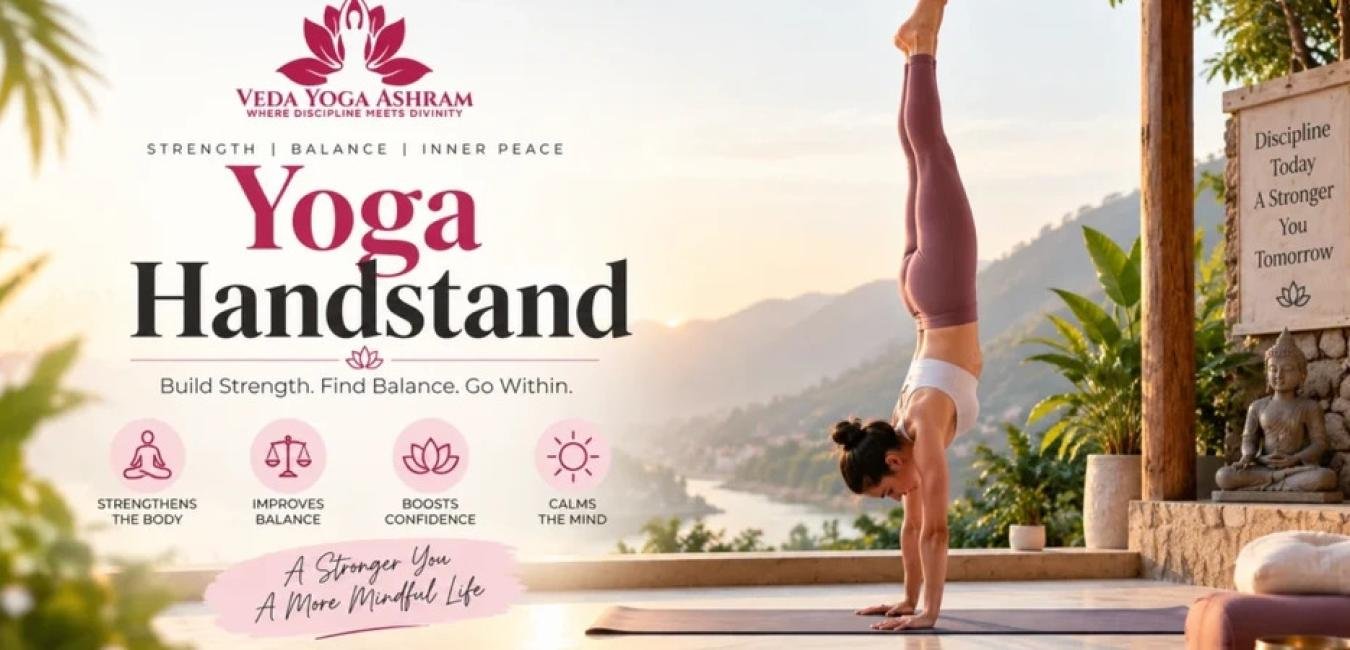
Yoga & Wellness
Yoga Handstand: A Complete Beginner’s Guide to Balance and Strength
I find that a yoga handstand can seem scary when you first see someone balance down with ease. A handstand needs strength, coordination, body awareness, mobility and patience. Initially, the hardest part is not just lifting your feet off the floor. Learning to control the body when the hands are the base. A handstand is an inversion where the hands hold the body and the legs stretch up. A handstand needs shoulders, a tight core solid wrists and hands, and enough confidence to face the fear of falling. You do not have to master the handstand right away. Moving through preparation exercises and supported handstand variations is safer and more practical for building the needed skills. This guide shows how to prepare for a handstand, how to practice it step-by-step, mistakes, beginner progressions and key safety points. What is a Yoga Handstand? A yoga handstand is an inversion in which the body is balanced vertically on the hands, with the arms supporting the body and the legs extending above the hips. In some yoga traditions, handstand practice may be described as an arm balance or an inversion practice. The position demands coordinated work from the wrists, forearms, shoulders, chest, core, hips and legs. Unlike kicking the legs upward a controlled handstand depends on creating a stable line and making small adjustments through the fingers, hands, shoulders and core. Because it places load through the upper body and requires balance while inverted, beginners should build strength and technique progressively. ACE Fitness recommends developing confidence in inversions, such as the downward-facing dog, before progressing toward handstand preparation. Physical Requirements for a Handstand Before you try a freestanding handstand, it helps to understand the physical qualities you need. Wrist and Hand Strength Your hands and wrists are the foundation, so they must be able to support your weight. Start with wrist movements and exercises that are supported. Put your palms on the floor, spread your fingers, press through your fingertips, and make sure your weight is evenly spread across your hands. Never force a wrist position that hurts. If pain keeps coming, it is a sign to stop and get professional help. Shoulder Strength and Mobility Your shoulders need stability and enough overhead mobility. Exercises like the plank, downward‑facing dog, dolphin pose, and controlled shoulder‑strengthening moves can build the base you need for advanced inversions. ACE Fitness points out that Downward‑Facing Dog can help strengthen the arms required for inversion work. Core Control A strong active core keeps your body aligned when your legs are overhead. Work on plank variations hollow‑body drills and controlled leg lifts to learn how to stabilize the trunk. Leg and Hip Control Your legs do not stay still during a handstand. Active thighs, engaged glutes and controlled hips help you keep a body position. Mobility, in the hamstrings can also make some preparation drills easier. Flexibility alone will not make a handstand work. Warm-Up Before Practicing One of the lessons from beginner handstand training is that preparation should come before repeated kick-ups. The competitor material also emphasizes warming the wrists, shoulders, core, quadriceps and hamstrings before attempting the skill. Start your session with five to ten minutes of movement. You can include: Wrist circles and gentle wrist stretches Cat-Cow movements Plank Downward-Facing Dog Shoulder mobility drills Low lunges Standing leg lifts A gradual warm-up prepares the joints and muscles, for weight-bearing and reduces the temptation to start with repeated attempts. How to do a Yoga Handstand? Learning the Yoga Handstand movement slowly is more helpful than trying to jump into the final pose. Step 1: Begin in Downward-Facing Dog Put hands a shoulder-width apart fingers wide. Press palms hard onto the floor. Make room around shoulders. Look at the floor between hands. Just past them. Step 2: Walk Your Feet Forward Slowly move feet toward hands while keeping shoulders active. When feet move forward hips. Come near the line above shoulders. Aim to bring weight toward hands of using a big kick. Step 3: Create Strong Shoulder Support Press hard into floor of letting shoulders collapse. Picture pushing ground away while keeping arms straight. This gives stability to shoulder area. Step 4: Lift One Leg Lift one leg while keeping pelvis very controlled. Do not swing leg hard. Focus on moving hips toward space above shoulders. Step 5: Practice a Controlled Kick-Up Bend standing leg a little. Use small steady motion to lift other leg up. Yoga Handstands first goal does not have to be a free handstand. Instead learn how much force is needed to move weight onto hands. Step 6: Find Your Balance When both legs are above body tighten thighs and core. Use fingertips and palms to make adjustments. Guide also stresses hands, shoulder stacking, steady leg movement and pulling inner thighs to middle line. Lower, with control of waiting until balance is lost completely. Common Yoga Handstand Mistakes Improvement often comes from understanding what is going wrong. Arching the Lower Back A beginner mistake is creating an excessive backbend while trying to keep the legs overhead. Instead gently engage the core. Think about creating a long line through the body. Looking Too Far Forward Your gaze can affect your balance and body position. Looking forward may encourage the chest and spine to shift. A neutral gaze, toward the floor generally makes it easier to maintain control. Kicking Hard A powerful kick does not automatically create a handstand. Much momentum can cause you to overbalance or fall. Practice a kick and focus on shifting your hips over your shoulders. Collapsing Through the Shoulders Allowing the shoulders to sink can make the position unstable. Press through your hands. Actively elevate your shoulders. Practicing Without a Warm-Up Jumping into repeated kick‑ups can place unnecessary stress on the wrists and shoulders. Preparation should be part of every practice session. These issues are also highlighted in the competitor material particularly skipping warm‑ups, poor wrist‑over‑shoulder positioning, excessive back arching and fear of falling. Yoga Handstand Progressions for Beginners You do not have to begin with a freestanding handstand. Progressions allow you to develop strength and balance gradually. Wall-Assisted Handstand Start with your hands on the floor. Your feet supported by a wall. As your confidence improves, gradually reduce your dependence on the wall. Pike Handstand Preparation Use an elevated surface to create a pike position and practice bringing your hips above your shoulders. One-Leg Lifts From a supported position, experiment with lifting one foot from the wall while keeping the other foot supported. Freestanding Attempts Once you can comfortably control supported variations start practicing freestanding attempts in an open safe area. The progression from assisted pike work to wall-supported practice and reduced assistance is consistent, with the beginner progression described in the supplied competitor material. Yoga Handstand Poses and Variations There is more than one way to practice a handstand. Some beneficial handstand poses and variations are: Wall-supported handstand split-leg handstand tuck handstand straddle handstand straight-leg handstand press handstand preparation These variations should not all be practiced at the same time. Develop the basic power and control, and then advance to more sophisticated techniques. When people search for yoga handstand poses names, they may actually be seeking for distinct variations and entry techniques, rather than completely different poses. Knowing the difference might aid a novice in selecting an appropriate progression. Also Go Through: Hatha yoga for beginners Benefits of Practicing Handstands When you practice a handstand correctly, you can develop physical skills. Upper-Body Strength Supporting yourself on your hands needs your shoulders, arms, wrists and upper body to work hard. Core Stability Keeping your body inverted in a handstand means your trunk stays stable. Your abdominal and back muscles must work together to keep the body in order. Balance and Body Awareness Handstand practice forces you to make tiny adjustments. Over time you will notice balance, weight distribution, alignment and movement. Confidence and Focus Learning a hard balance takes patience. Going through the process can help you concentrate better and feel more comfortable with progress. These benefits are training results, not guaranteed cures. If someone says that a handstand will instantly boost circulation lift mood strengthen bones or fix a problem, you should not take that claim as proven. Inversions may not be safe for everyone. Harvard Health warns that advanced inversions, like handstand practice, should be approached carefully by people who have conditions such as blood pressure. Safety Tips Before Trying a Yoga Handstand Handstands are poses and must be approached with care. Safety: Practice on a stable surface and avoid placing near hard or obstructive objects. Beginners can use a wall for support or practice under the guidance of a yoga teacher. Safety: do not continue through pain, dizziness, unusual pressure or significant discomfort. People with conditions involving blood pressure, heart health, glaucoma or other concerns related to inversions should speak with a healthcare professional before practicing advanced inverted poses. Cleveland Clinic and Harvard Health both advise caution around inversions for people with medical conditions. Safety is more important, than holding the pose for a time. Yoga Pose Standing on Hands: How Long Should You Practice? There is no specific number of minutes required to master the handstand. For beginners short and controlled attempts are generally more useful than exhausting handstand practice with repeated kick-ups. Practice quality attempts, rest and focus on technique. A consistent handstand practice two or three times per week may be more productive than doing a number of unsuccessful attempts in one session. Remember that handstand balance develops gradually. Some handstand practitioners may progress quickly while others may need more time. When Should You Learn a Handstand? A yoga handstand is an advanced skill, so beginners should first develop a foundation in basic yoga movements and upper-body conditioning. You may be better prepared to begin handstand drills when you can comfortably practice movements such as plank and downward-facing dog while maintaining good control. Working with an experienced yoga teacher can also help you understand alignment, choose suitable progressions, and identify when you are ready to move to the next stage. A yoga handstand is a skill, so beginners should first develop a foundation in basic yoga movements and upper-body conditioning. You may be better prepared to begin handstand drills when you can comfortably practice movements such, as planks and downward-facing dogs while maintaining control. Working with a yoga teacher can also help you understand alignment choose suitable progressions and identify when you are ready to move to the next stage. Related Post:- Group yoga poses Final Thoughts Learning a yoga handstand is not simply about getting down. This learning process helps build strength, balance, coordination, mobility and body awareness. Start with preparation before rushing toward the final pose. Warm-up wrists and shoulders to strengthen the core, and practice supported variations. Gradually grow confidence in balance. Interest in a yoga pose standing on hands for practice or the desire to explore advanced yoga training requires patience. Progress is measured not only by how long the handstand can stay upside down but also by how safely and consciously the handstand can enter, hold and exit the position. With practice and proper guidance, the handstand can become a challenging yet rewarding part of a steady yoga practice.
Read articlePlan Your Journey
How To Reach Us
Veda Yoga Ashram is nestled in the lap of nature, the Himalayas to its back while the Ganga meanders at its front. The place is well connected to the nearest cities by roadways, airways, and railways, assuring you a comfortable and hassle-free journey to the course.
By Airways
The nearest airport is Jolly Grant Airport, Dehradun, which is well-connected to all metro cities. You can also reach Rishikesh via Dehradun airport and you can hire a taxi from the airport or you can ask our coordinators to help you with one.
By Roadways
The city is well-connected to all neighboring cities by road. You can hire a taxi or board a bus from the nearest cities like Delhi, Haridwar, and Dehradun. The roads are in good condition, and a number of taxis are available on hire.
By Railways
The nearest railway stations are Haridwar and Rishikesh. Haridwar Railway Station is well-connected to most Indian cities and has regular local train services. You could reach Veda Yoga Ashram by hiring a taxi from the station.