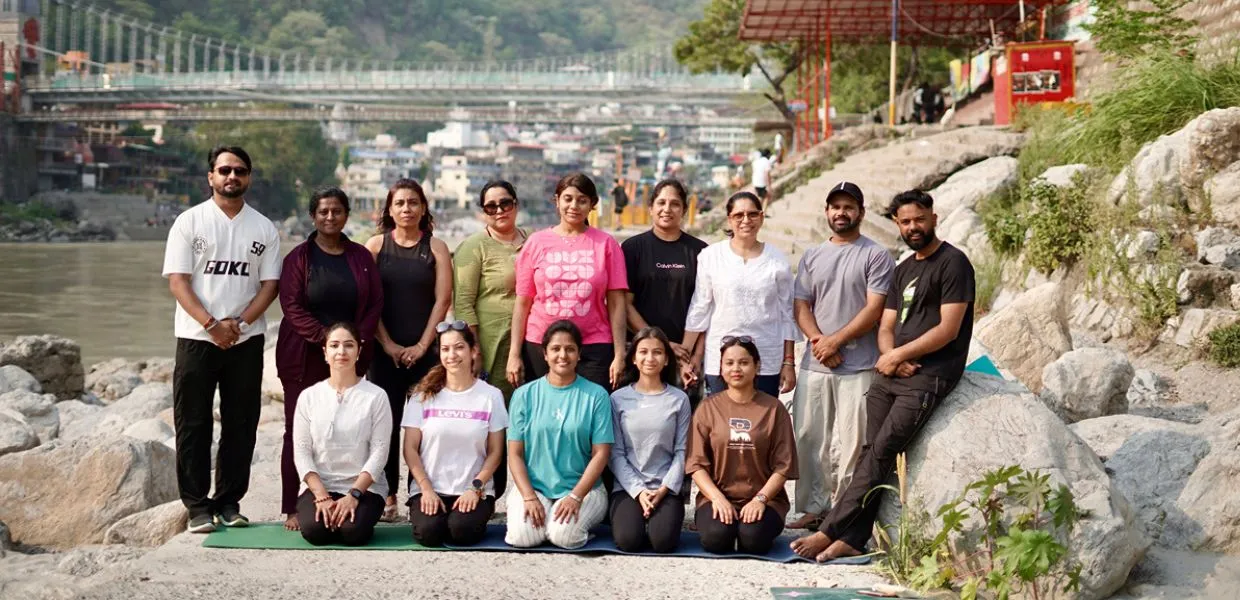
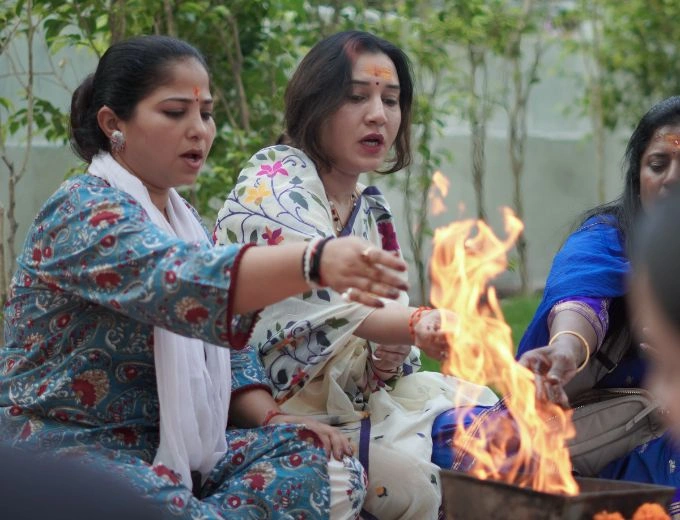
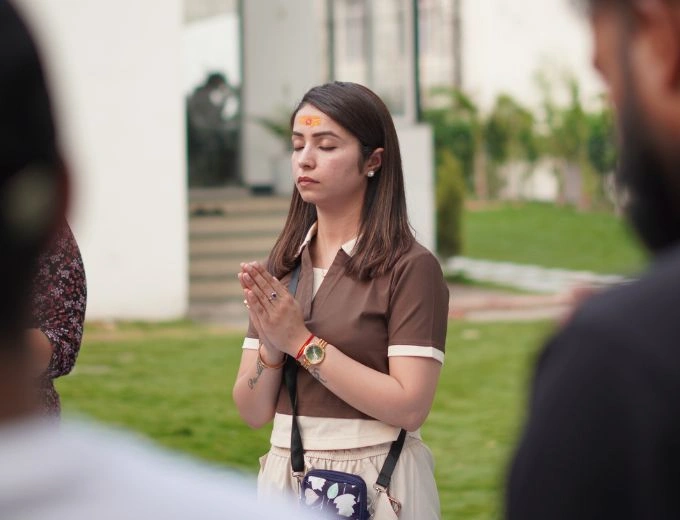
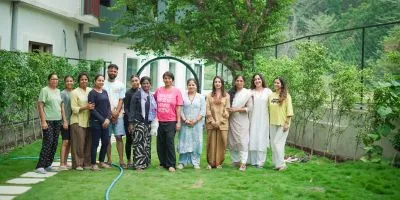
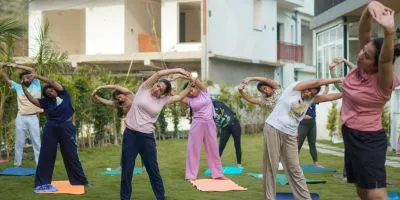
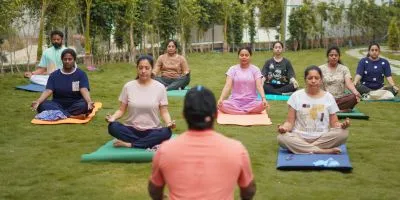
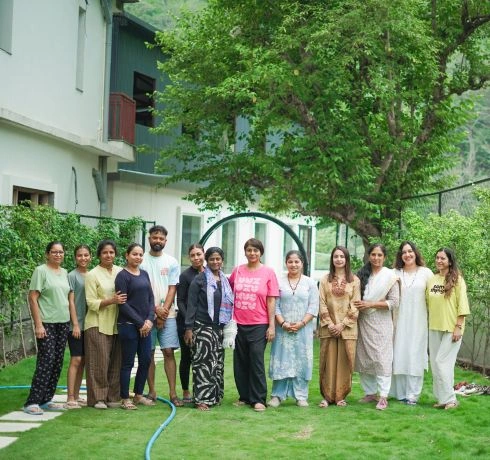
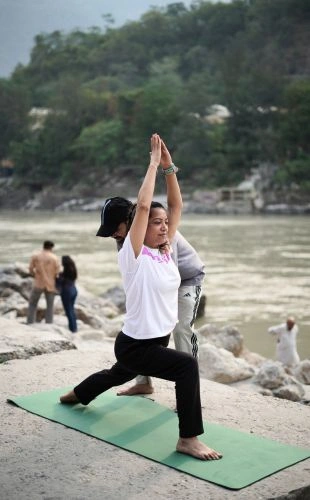
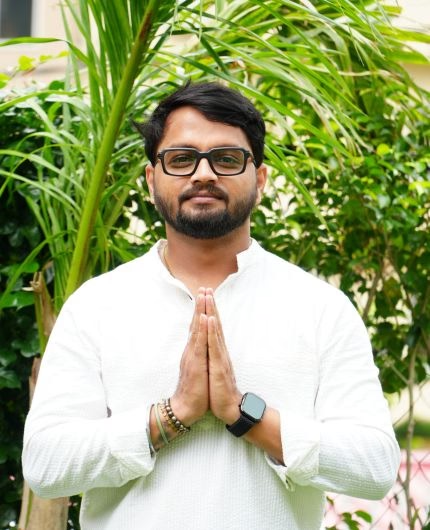
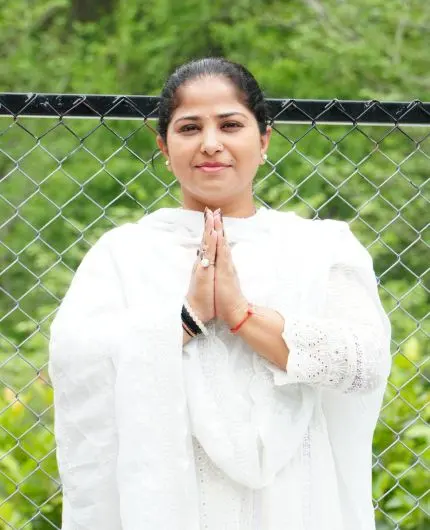
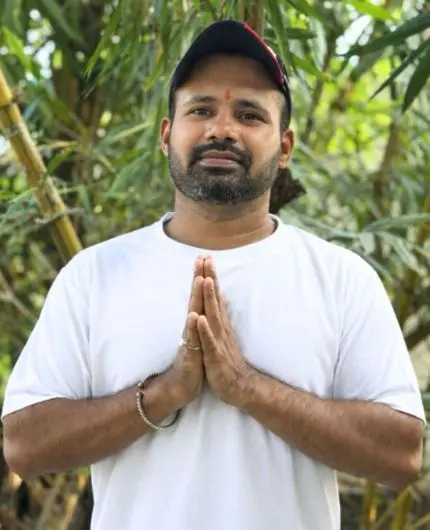
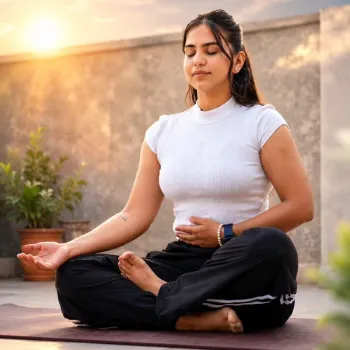
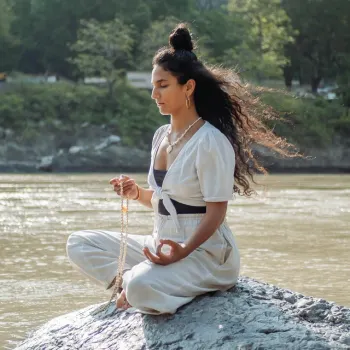
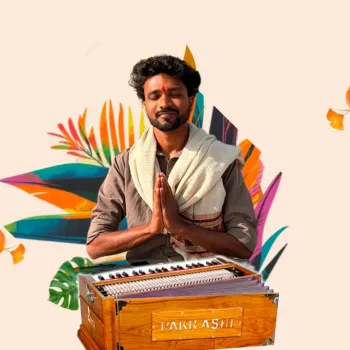
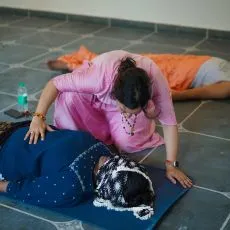
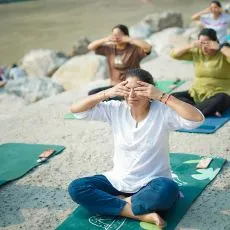
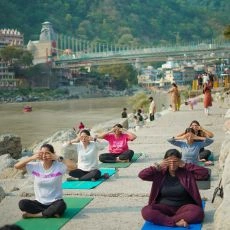
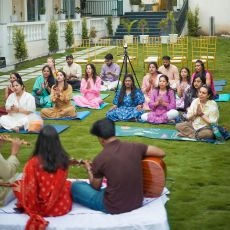
If you seek the divine yogic knowledge in its true and traditional form, Veda Yoga Ashram is the place to be. It is here that the perfect blending of the wisdom of ancient yoga with contemporary amenities bring forth an inviting and encouraging learning environment. The ashram is situated in the spiritual hub of India and is focused on providing students from all over the world with professional Yoga teacher training courses.
Veda Yoga Ashram has a solid base in the traditional yogic science and it adopts internationally accepted teaching standards and offers certified teacher training programs facilitated by experienced and knowledgeable yoga teachers. The vision of the ashram is not just to train yoga teachers but to refine the personality of every person visiting the ashram and to make them disciplined, mindful, aware of themselves and improve their relationship with the self simply by practicing yoga.
If you want real yogic knowledge in its way Veda Yoga Ashram is the place to start your journey. Located in the heart of Rishikesh, India, Veda Yoga Ashram brings together the wisdom of ancient yoga with a supportive and welcoming learning environment. Students from around the world can experience yoga not as a physical practice but as a complete way of life.
ॐPreserve Practise Share
Veda Yoga Ashram is rooted in yogic science while following internationally recognised teaching standards. Veda Yoga Ashram’s yoga teacher training programs are guided by knowledgeable teachers helping students deepen their practice and develop a meaningful understanding of yoga. Whether you are beginning your journey or seeking to advance your knowledge Veda Yoga Ashram’s courses provide an opportunity to learn, practise and grow.
At Veda Yoga Ashram yoga goes beyond asana and physical movement. Veda Yoga Ashram encourages students to explore mindfulness, self‑awareness, discipline and traditional yogic teachings. Veda Yoga Ashram’s aim is not simply to train yoga teachers but to support the development of every learner and help them build a stronger connection with themselves.
Rishikesh, known as the Yoga Capital of the World offers a setting, for this journey. Its spiritual atmosphere and Himalayan surroundings create space for learning, sincere practice and self‑reflection.
At Veda Yoga Ashram we believe that yoga is not something you simply do—it is something you live. Veda Yoga Ashram’s goal is to help every seeker discover the essence of yoga both physically and spiritually.
We exclusively aim to bring out the teacher within you! To achieve this , we go beyond the mile, when it comes to building a solid foundation in the subject of yoga. We encourage the art of self-practice and focus on traditional teachings. Thus you learn how to teach from the innate wisdom that you acquire and not just from mental know-how. We offer Yoga Teacher Training Courses in Rishikesh, India, which are registered with Yoga Alliance, USA (RYT / Soundhealing and Short Courses). Our programs are customised for each category - beginners and intermediate practitioners, under the expert guidance of our experienced team of teachers to create confident future yoga teachers ready to teach the world.
We want to help you discover the teacher inside you by building a base in the classic teachings of Yoga. At Veda Yoga Ashram we support self‑practice. Help students gain a real understanding of Yoga through experience, discipline and genuine yogic knowledge.
We offer Yoga Teacher Training Courses in Rishikesh, India. These courses are registered with Yoga Alliance, USA. Include RYT programs, Sound Healing and short courses. Our programs are made for beginners and intermediate practitioners. Are guided by an experienced team of Yoga teachers.
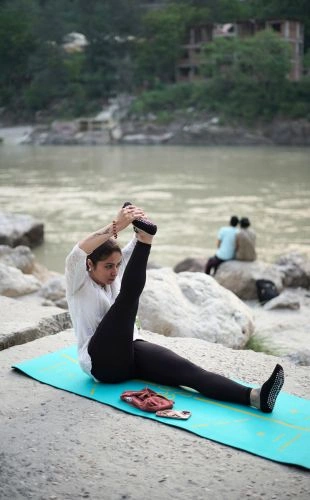
Each course blends guided asana practice, pranayama, meditation, anatomy, teaching methodology and traditional Yoga philosophy. Students receive guidance, personal feedback and chances for teaching practice to build confidence and a deeper understanding of Yoga. This hands‑on method prepares students to share Yoga with insight, awareness and confidence.
Beyond classroom learning the immersive ashram environment encourages living, self‑study and connection, with a supportive international community. This balanced approach helps students deepen their practice while developing the practical skills and confidence needed to become authentic and responsible Yoga teachers.
ॐ
100 Hours Yoga Teacher Training in Rishikesh
Duration13 Days / 12 NightsLocationRishikesh, India
Deepen your understanding of your practice of yoga. Our 100 hours teacher training course in Rishikesh will open up a world of traditional yoga and teach you about asana, pranayama, meditation and yoga philosophy. The course is suitable for serious students of yoga who want to enrich their knowledge, deepen their understanding of themselves and experience something unique in the heart of Rishikesh.
200 Hour Yoga Teacher Training in Rishikesh is the perfect way to build a solid foundation in traditional yoga. Our professional quality yet affordable yoga teacher training course focuses on asana, pranayama, meditation, anatomy, teaching methodology and yogic philosophy under the guidance of experienced teachers. This yoga school is ideal for those who wish to deepen their own practice as well as share the wisdom of yoga with others.
Prenatal & Postnatal Yoga Teacher Training in Rishikesh
Duration07 DaysLocationRishikesh, India
Our Prenatal & Postnatal Yoga Teacher Training in Rishikesh will provide you with a solid understanding of various yoga practices during pregnancy and after childbirth. Through the course, you will learn how to approach postpartum women with confidence and help them restore their bodies and minds with specific sets of exercises and relaxation techniques, as well as breathing practices. The training aims to enable you to assist women throughout the entire pregnancy process and prepare you to become a professional prenatal and postnatal yoga instructor.
Sound Healing Teacher Training Course in Rishikesh
Duration9 DaysLocationRishikesh, India
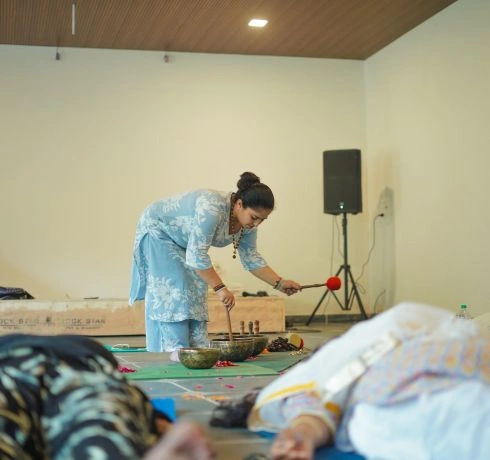
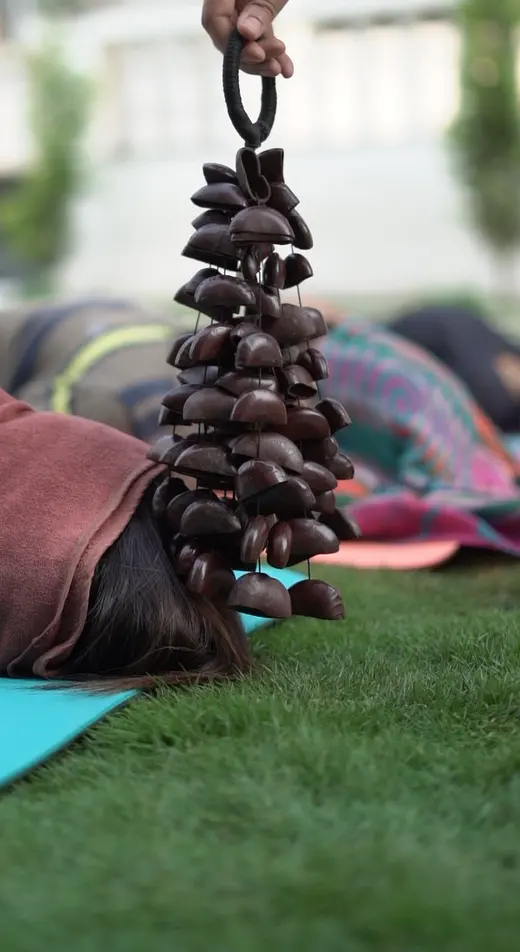
Experience the magic of sound with the help of our Sound Healing Teacher Training Course. Our staff will introduce you to traditional sound healing methods like the use of singing bowls, singing bowls vibrations and listening to sounds to let them flow through you. You will obtain the needed knowledge and skills to incorporate sound healing in your practice of yoga or teach others the relaxing and healing effects of proper breathing, stretching and meditation.
Experience yoga, meditation, sattvic meals, sound healing and meaningful Himalayan excursions. Disconnect from the demands of everyday life and relax in the peaceful and spiritual surroundings of Rishikesh. Our retreats give you time to slow down, practise mindfully and reconnect with yourself.
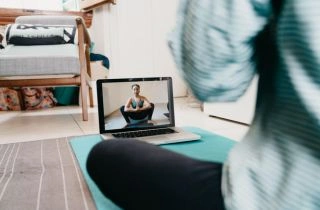
Along with our residential programs, Veda Yoga Ashram provides online yoga teacher training for those students who cannot attend an on-site course. Whether you have a busy schedule, work conflicts, traveling restrictions or other limitations, our online programs will help you continue your yoga path without disrupting your daily commitments.
Our 200 Hour Online Yoga Teacher Training Course provides a solid foundation for students who are serious about developing their knowledge of yoga. It creates a genuine online platform of authentic yoga learning experience, which helps students to get more organized and achieve progress in their practice despite a hectic schedule.
The curriculum covers all fundamentals of yoga like asana, pranayama, meditation, philosophy and yoga teaching methodology. Under the guidance and mentorship of experienced yoga teachers, students will be able to expand their knowledge and receive the necessary competencies for a thorough understanding of the yoga tradition.
Whatever your goal is, to become a qualified yoga instructor or simply enrich your yoga practice, our online teacher training will contribute to your yoga path. By learning the traditional yoga system, practicing asanas and meditation on a regular basis and engaging yourself in a comprehensive self-learning, self-development and self-discipline process, you will certainly achieve outstanding results.
Join our online yoga teacher training course from the comfort of your home and be a part of the authentic yoga learning experience of Veda Yoga Ashram.
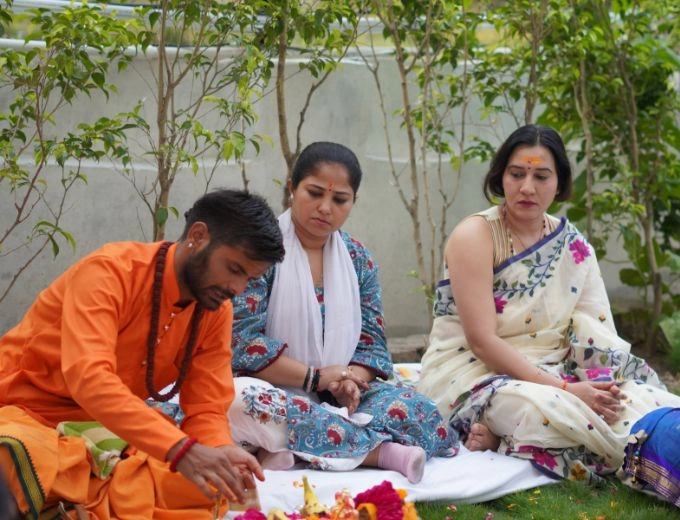
At Veda Yoga Ashram we have complete faith in the purity of the yoga tradition. Our school is not just a training ground, rather you can call it a “home away from home" that has withstood the test of time. If you want to witness the true transmission of yoga and meditation, through ancient techniques, Veda Yoga Ashram is the place to be. Our student-friendly teachers help you to embark on a safe path that is structured and goes beyond physical activity to concentrate on what is happening in your heart, mind and soul.
Here are the reasons why you should choose us:
✦
Balance of discipline and rejuvenation: Your decision to pick us comes with a disciplined yet nurturing environment, in the heart of Rishikesh, India.
✦
Personalised attention : Not all five fingers are the same. At Veda Yoga Ashram, students are our top priority, hence personal attention is the focus of our teaching, and we make sure to offer every student, from beginner to advanced practitioner, the guidance to learn how to align body, breath and mind.
✦
Easy- to-understand curriculum: We teach our curriculum in a way that is easy to understand and can be implemented in a contemporary lifestyle.
✦
The Ashram experience: Discover yourself within our ashram setting where we combine Hatha, Ashtanga and Vinyasa Yoga along with a deep understanding of philosophy and sound healing, leading to self-awareness and inner peace.
✦
Experienced mentors: Learn from qualified and high knowledgeable mentors who will guide and support you along your yoga path.
✦
Authentic learning: Embrace the traditional teachings of yoga, a genuine approach to self-practice, and a broader understanding of yoga’s physical, mental, and spiritual planes.
Whether you aim to develop your personal practice or empower yourself as a certified yoga teacher, join the Veda Yoga Ashram family and learn how to establish a solid foundation in your yogic journey.
Affordability: Courses are designed to offer you high quality education in an ashram-style setting while being affordable for serious students of yoga.
Online teaching: Continue your learning journey with certified teachers from the comfort of your own home with our online learning programs, designed to deliver authentic knowledge and teachings beyond the ashram.
Strong values: We foster a culture of discipline, compassion, respect, and mindfulness, to deliver a nurturing environment where every student is made to feel welcome and supported throughout their learning journey.
Yoga In Rishikesh, India
Approved Certificates – Yoga Alliance International In India
At Veda Yoga Ashram, we conduct courses that are authentic and approved by the Yoga Alliance.
Nourishing meals and a peaceful place to rest support every part of your yoga journey.
01Food & Sattvic Dining
Sattvic Food: It's Significance
At the Veda Yoga Ashram we see that the true Yoga is beyond the mat. The right kind of food is as important as the physical practice itself, and our program is a holistic approach to wellbeing, starting with the food.
We offer freshly prepared sattvic foods, based on ancient ayurvedic teachings that food directly affects the mind, body and spirit. Sattvic diet revolves around the use of pure, natural and wholesome food items without any fried, processed, canned and artificially preserved food items. This type of nutrition is beneficial for the heart and blood vessels, helps normalize cholesterol, and provides a healthy digestive process and assimilation of nutrients. A sattvic diet has also been linked over the years to a decrease in the incidence of diabetes and lifestyle diseases, making it an ideal partner to a deep yoga and meditation practice.
Each of our meals is carefully prepared and planned and is as nutritious as it is delicious.
What we offer:
Two freshly delicious and healthy vegetarian meals per day
Vegan and gluten-free meals available upon request
Drinking water is safe and clean, available at all times.
Fresh seasonal fruits all day:
Ayurvedic tea corner with restorative herbal teas.
02Comfortable Accommodation
Accommodation : Veda Yoga Ashram - A ‘Home away from home’
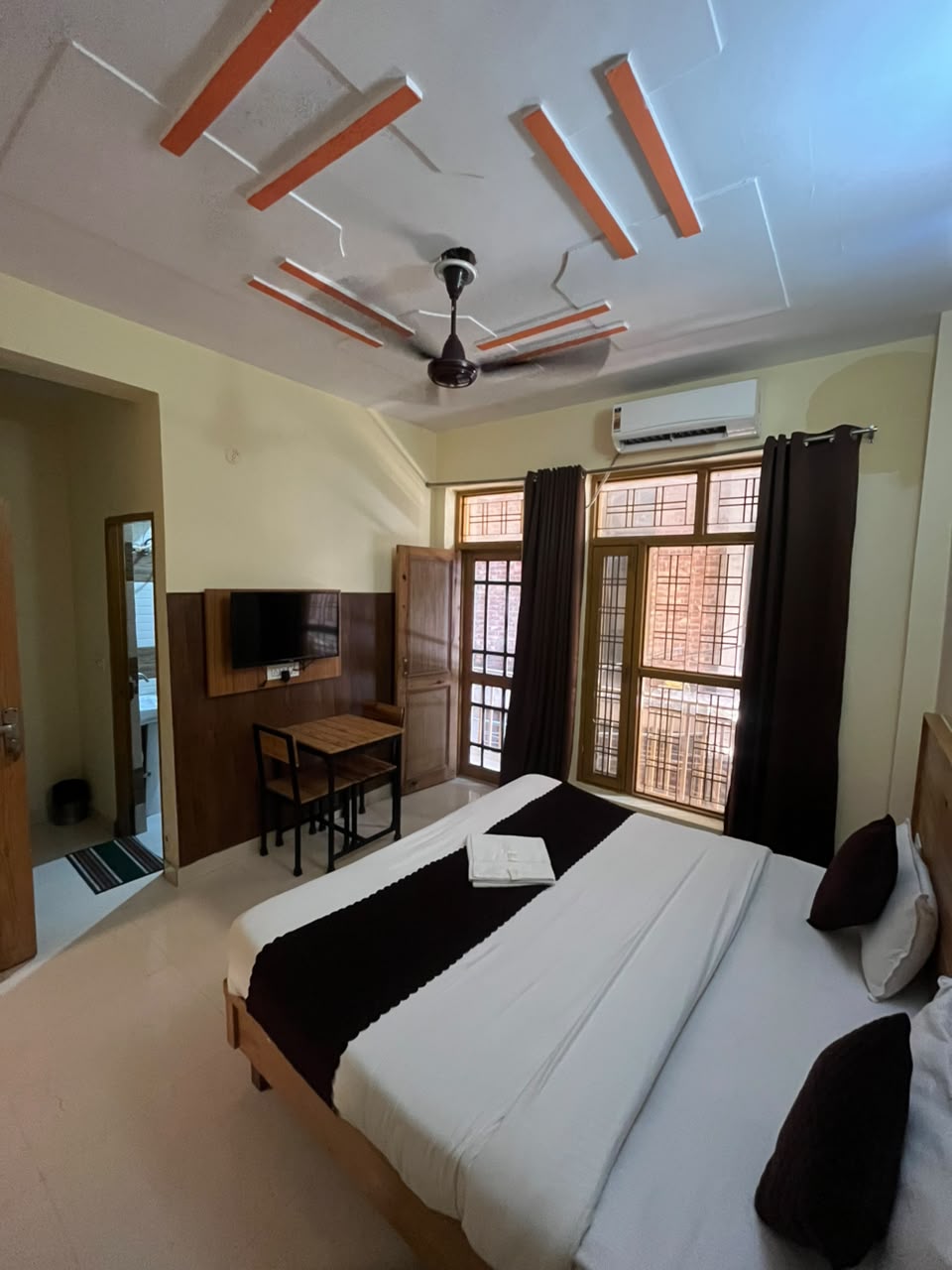
A quiet and clean environment is a key component to any worthwhile yoga practice. The rooms at Veda Yoga Ashram are well planned to promote comfort, rest and overall wellness for yoga students and retreaters.
Our clean, cosy and well maintained rooms are set among a peaceful and natural setting, offering a quiet retreat to unwind after each yoga practice, meditation and study day. A good night's sleep is not a luxury, it's a requirement during an intensive Yoga Teacher Training Course. Rest and a stable home base are essential to healing, thinking clearly and managing your emotions, and are important factors in the best use of your time.
The lifestyle at Veda Yoga Ashram is based on the yogic concepts of simple living, mindful awareness and yogic discipline. Our sattvic food, the proper daily routine and the serene atmosphere provide students with a place where they can experience a yogic lifestyle not only in class but beyond and all day long.
Our Room facilities include:
The choice of both Private and Twin sharing rooms with attached 24/7 hot water facilities.
Clean and comfortable sleeping areas with good quality mattresses and curtains for sleep
Fresh and clean bed linens changed every week.
Personal Room Lock and Key to ensure personal safety and privacy
✺✺
Our Expert Team of Teachers
Best Yoga Teachers in Rishikesh, India
ॐ
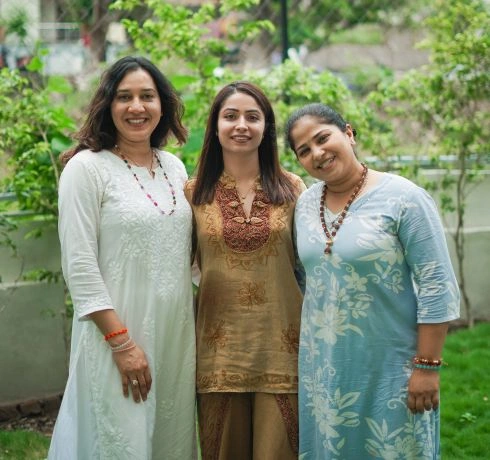
Learning at Veda Yoga Ashram takes place exclusively under the tutelage of some of the most experienced yoga teachers from Rishikesh, India. Our teachers are well experienced in the yogic practices and teaching methods to provide every student with genuine yogic knowledge and guidance. All teachers have a master's degree in Yogic Science and are certified by Yoga Alliance, which includes academic knowledge and a wealth of experience in teaching. Our graduates benefit from this solid base to build their confidence, clarity and to learn how to teach yoga professionally.
Testimonials/Reviews - What Do Students Say About Us?
✿
“
This was a wonderful yoga retreat In Rishikesh. Veda yoga ashram provides excellent itinerary arrangements, including morning Ganga yoga, cave meditation, Ganga Aarti and sunrise sessions. Veda yoga ashram take great care of everyone, teachers are knowledgeable and nice. This was a very spiritual yoga journey, everyone was very happy, cannot wait for next Rishikesh trip.
J
Joan Chang
“
My time at Veda Yoga Ashram was memorable to say the least. It’s not just a retreat but an amazing yoga school, and the entire experience felt beautifully balanced between learning, spiritual practices, and meaningful excursions. Meditating at Vashishta Cave and attending the evening Ganga Aarti on the banks of the Ganga were truly special moments that stay with you long after the retreat ends. These experiences make you feel deeply connected to the spiritual essence of Rishikesh. Mr. Yogesh and Ms. Neha are wonderful hosts who create a warm and welcoming atmosphere for everyone. The teachers are excellent, the food is nourishing, and the overall experience feels very holistic. I also met some amazing people and made great friends along the way. If you’re looking for a place to slow down, learn authentic yoga, and truly experience the spiritual side of Rishikesh, Veda Yoga Ashram is a fantastic choice.
N
Nafisa Barlaskar
“
I recently completed my Prenatal and Postnatal YTTC and it was a wonderful learning experience. The course was well-structured with lots of valuable content and deep knowledge.Prenatal and postnatal yoga is very deep, and this course helped me truly understand it better. A big thank you to Neha ma’am for the clear and detailed theory classes, and Himani ma’am for the practical sessions which were very helpful and easy to understand. Grateful for this beautiful journey and highly recommend this course!!!
S
Sunetra Bedarkar
“
I recently completed a Prenatal and Postnatal Yoga course, and I feel truly grateful to have learned from such an incredible teacher Neha ma’am . The entire experience was not only educational but also deeply enriching on a personal level. I recommend everyone to do this course, even if you don’t want to teach. This course had the knowledge of pre-pregnancy and Post pregnancy at such a deep level that everybody must know about it.
G
Gunjan Gupta
“
My overall experiance was excellent . If i have to discribe in one word " its a re engeneering of our body n soul" the team was very supportive , specially Ms Neha maam , Deepa maam , Rahul Sir , Yogesh sir n Aman . The entire Hotel staff of Nature Nest were very helpfull n the hospitality as Awsome. Will definately recommend all my friends and family to "Veda Yoga Aashram "
H
Hema Naidu
“
I have successfully completed the Master's Sound Healing Course at Veda Yoga Ashram with Neha Ma'am, and I am truly grateful that I made this decision. It has been a beautiful and transformative journey filled with learning, healing, and self-discovery. I am from Gujarat, where the competition in this field is very high. However, this course has given me the confidence, knowledge, and practical skills to move forward with clarity and purpose. I am taking back not only a certification but also unforgettable memories, meaningful experiences, and the blessings of my teachers. Thank you, Neha Ma'am, and the entire Veda Yoga Ashram family, for your guidance, support, and warmth throughout this journey. I will always cherish this experience.
F
Falguni Patel (Gujarat)
“
I am deeply grateful to Veda Yogashram for such a beautiful and life-changing experience. I completed my Prenatal Yoga Teacher Training Course and Yoga Retreat here, and every moment was filled with learning, peace, and positivity. A heartfelt thank you to Neha Ma’am, Rahul Sir, Yogesh Sir, and Deepali Patil Ma’am. They are not only exceptional teachers but also wonderful human beings. Their patience, guidance, and encouragement made this journey truly special. I became so attached to them that saying goodbye was very emotional. They will always have a special place in my heart. The staff is incredibly kind and supportive, the atmosphere is peaceful, and the entire ashram feels like a second home. I learned so much here, not only about yoga but also about myself. Thank you, Veda Yogashram, for the unforgettable memories and valuable teachings. I will definitely come back again and highly recommend this ashram to anyone looking for an authentic and meaningful yoga experience.
R
Ritika Walia
“
My experience at Veda Yoga Ashram was absolutely wonderful. I attended a sound-healing session with Neha ma'am, and it turned out to be one of the most peaceful and uplifting experiences I’ve had. The vibrations of the instruments created such a powerful yet gentle energy that helped release stress and bring a deep sense of calm. Also, Neha ma’am carries herself with genuine kindness and professionalism, her guidance throughout the session made the experience even more meaningful. The whole session felt magical and refreshing for the mind and body. I would definitely recommend this experience to anyone looking for relaxation, healing, and inner peace in Rishikesh.
N
Niva Rana
“
Veda is a wonderful yoga retreat in Rishikesh with a peaceful atmosphere and authentic yogic lifestyle. It’s not just about yoga sessions or excursions—it’s about truly experiencing the ancient yogic tradition and spirituality that Rishikesh is known for.The hospitality of Mr. Yogesh and Ms. Neha is exceptional. Highly recommended for anyone looking for a genuine yoga and meditation retreat in Rishikesh. ⭐
Pranic Healing: Meaning, How It Works & Benefits Explained
Walk through the lanes of Rishikesh and you will see signs for energy healing, aura reading and pranic healing next to the yoga schools and cafes. If you are new to India, it is hard to tell which of these are old yogic traditions, which are modern inventions and which are worth your money. This guide explains pranic healing in plain language. You will learn where it comes from, how a session works, what research exists, and how to stay safe. It does not give medical advice, and nothing here replaces a conversation with your doctor. In short: pranic healing is a no-touch energy practice developed in the 1980s by Master Choa Kok Sui. The practitioners claim that they “scan, clear, and energize” the energy field of the individual. Scientific studies regarding it are sparse; hence, it should be taken only as an aid to conventional medicine. What is Pranic Healing? It is a structured system of energy healing built around prana, the Sanskrit word for life force or breath. A practitioner works with their hands a few inches from your body, without touching you. They follow a fixed order: scan the energy field for areas they judge congested or depleted, sweep away what they call used-up energy, then direct fresh prana into the area. The system was created by Master Choa Kok Sui, and practitioners learn it through graded courses. This is not a regular yoga practice or a medically certified therapy. In most countries, including India, anyone with a course certificate can offer sessions, since no single body regulates the title. Pranic Healing Meaning: The Ideas Behind the Name The name combines two simple ideas. “Pranic” refers to prana, and “healing” refers to the goal of supporting recovery. The human body is said to possess a field of energy which encircles and complements the physical body. In their view, a clean, well-supplied energy body helps the physical body recover faster. What Does Pranic Mean? Pranic is the adjective form of prana. It simply means “relating to prana.” Prana itself is an old Sanskrit word for breath, vitality or life force, and it appears throughout yoga philosophy and in breathing practices (pranayama). Thus, the definition of pranic practice is any practice utilizing prana. People sometimes type “prana healing” or even “panic healing” by mistake, and they mean the same thing. Aura, Chakras and the Energy Body Pranic healing uses a few terms you will hear again and again: Aura: an invisible energy field said to surround the body. Chakras: energy centers said to take in prana and pass it to organs and emotions. Scanning, cleansing and energizing: the three working steps of a session. These are traditional or system-specific ideas. Scientists have not found an aura or chakras as measurable structures in the body, so it is more accurate to treat them as a framework practitioners use, not as proven anatomy. Prana in Classical Yoga vs Pranic Healing Students often assume that pranic healing is simply yoga’s ancient view of prana. The two are related but not the same. In classical yoga, prana is something you work with yourself, through breath, posture and meditation. Pranayama is the most direct method, and it is part of the Raja Yoga path described in the four paths of yoga. The practitioner is the one who practices. Pranic healing, by contrast, is something one person does to or for another. The system is modern, it has its own curriculum, and it uses yogic vocabulary in a new structure. Knowing this difference helps you ask better questions when someone says their method is “ancient.” How a Pranic Healing Session Works? Sessions are quiet and usually last 20 to 60 minutes. You stay clothed and sit or lie down. A typical session runs like this: Talk: the practitioner asks what brought you in and what you hope for. Scanning: the practitioner slowly moves their hands over the body in an effort to feel areas they read as congested or weak. Cleansing: sweeping motions meant to remove used-up energy. Energise: the practitioner energises the areas they identified with new prana. Closing: often advice to drink water and rest. People describe sensations such as warmth, tingling, heaviness or a deep sense of calm. Some feel nothing at all, and that is fine too. No touch, needles or manipulation should be involved. If a practitioner wants to touch you, press you for extra payments or promise cures, walk away. Pranic Meditation and Self-Practice Some people use the term pranic meditation for meditation practices that focus attention on prana and the breath. Within the pranic healing system, the best-known example is the Meditation on Twin Hearts, a guided group practice taught by Master Choa Kok Sui’s organization. Outside that system, the phrase is used loosely. If you want a simple, low-risk prana awareness exercise, try this: Sit comfortably with your spine tall and your eyes closed. Breathe slowly through the nose for a minute. Rest your hands on your knees with the palms up. Notice any warmth, tingling or heaviness in the hands and arms without trying to produce it. Stay for five to ten minutes. If your mind wanders, return to the breath. Some students also add a silent mantra, such as Om Namah Shivaya, as a point of focus. Stop if the practice makes you anxious or uncomfortable, and talk to a teacher or health professional if that continues. Pranic Healing Benefits: What People Report and What Research Shows What People Commonly Report Many people who try pranic healing say they feel relaxed, calm or lighter afterward, and some say they sleep more easily. These reports are real experiences. Lying still in a quiet room while someone gives you undivided attention is relaxing on its own, so these feelings do not prove that an energy field exists. What the Research Shows The research is limited. The best-known study is a 2018 trial. It was a randomised, double-blind trial of 52 people with mild to moderate depression, who received either pranic healing or mock healing, alongside antidepressant medication, in weekly 20-minute sessions over several weeks. The group that received real sessions showed more improvement in depression category. That result is interesting, but it is one small study, in one setting, on one condition, and the participants were also taking medication. Other studies exist, mostly small and from India, and their quality varies. None shows that pranic healing treats a disease on its own. So the fair summary is that the question is open, and pranic healing is not an evidence-based treatment for any condition. Claims to Be Careful With Promises to cure diseases, or to reverse chronic conditions Advice to reduce or stop medication Diagnosing illness from an energy scan Claims of guaranteed results, or “remote healing” that works at any distance Large prepaid packages sold on promises of a cure Safety and Who Should Be Careful The session itself carries almost no physical risk. The real risk is substitution: leaving a condition untreated, or delaying care, because you trust a healing session more than a doctor. Keep seeing your doctor, and never stop or change medicine because of a session. If you have a serious or worsening condition, get a medical assessment first. If you live with a mental health condition, tell your doctor or therapist that you plan to try it, and do not use it in place of treatment. If a session leaves you distressed, anxious or confused, stop and speak to a qualified professional. If you feel unsafe or in crisis, contact local emergency services or a mental health helpline right away. Pranic Healing in Rishikesh: Practical Tips for International Students Rishikesh offers everything from serious teachers to casual stalls, and the quality varies a lot. A few simple checks protect your time and money: Ask which course levels the practitioner completed, and with which organization. Ask whether they work alongside medical care. The right answer is yes. Ask what they do not treat. A practitioner with no limits is a warning sign. Ask for the price of one session before you agree to a package. Avoid anyone who diagnoses illness, sells supplements or pressures you. Bring a list of your health conditions and medicines, and tell your doctor about your plans. If you mainly want calm, focus and a better understanding of prana, practices such as pranayama and meditation are well known in yoga and cost little. Ask Veda Yoga Ashram how its classes approach breathing and meditation, and whether beginners receive guidance. Confirm current visa rules with official sources before you travel. Common Myths About Pranic Healing “It is an ancient yoga technique.” The system is modern, created in the 1980s, though it borrows yogic ideas. “Science has proven it works.” Research is limited, and no study shows it treats disease. “It is the same as Reiki.” Both are energy healing practices, but they have different origins, methods and training. “You can skip your doctor.” No. Use it, if at all, alongside medical care. “You must be spiritual to try it.” You can be curious and skeptical. Just stay critical. Conclusion Pranic healing can feel pleasant, and some people find it comforting. That is a fair reason to try it. It is not a reason to delay medical care, spend large sums or accept big claims. Ask questions, check qualifications and treat your own judgment as your best tool. Rishikesh rewards curiosity, and it also rewards a clear head.
Yoga Poses for Degenerative Disc Disease: A Safe Beginner's Guide
A diagnosis of disc disease can make everyday movement feel uncertain especially when you are unsure which exercises or yoga postures are appropriate. The good news is that having disc disease on an imaging report does not automatically mean you should stop moving. Spinal disc changes are common as people age. Many people have some degree of degenerative disc disease without significant symptoms. Degenerative disc disease generally refers to changes in the discs between the vertebrae. These changes can bring loss of water, height and flexibility. Symptoms, when present can include back or neck pain and sometimes pain, numbness or weakness that come from nerve irritation. Yoga may be one type of movement that supports mobility, physical function and overall well‑being for some people with low‑back pain. However research, on yoga usually looks at low‑back pain. Does not prove that yoga can reverse degenerative disc disease itself. This guide explains how to approach yoga carefully which gentle movements may be considered what to modify, and when professional medical guidance should come first. What is Degenerative Disc Disease? Degenerative disc disease happens when the cushioning discs between vertebrae change shape over time. Those discs help absorb weight and let the spine move. Even though the name says degeneration degenerative disc disease is often a part of aging. Cleveland Clinic says most people have some spinal disc degeneration after age 40 but not everyone feels symptoms. Degenerative disc disease can affect the back, the neck, or several parts of the spine. The place matters because a person with lower pain may need a very different movement plan than someone, with neck disc changes. That is why a generic list of poses should not replace a personal assessment. Can Yoga Help with Disc Degeneration? Research does show that yoga can be a type of exercise that helps with low-back pain. The National Center for Complementary and Integrative Health says that studies have found yoga might lead to improvements in pain and the ability to move normally for people who have low-back pain. The evidence does not prove that yoga is definitely better, than types of exercise and the research is not proof that yoga fixes or change degenerative discs.That difference is important. The goal of practicing yoga should be keeping movement building strength and understanding the body and helping with daily activities rather than trying to "heal" a worn disc by doing a certain pose. Yoga for Degenerative Discs: Start With the Right Approach Before choosing poses think about your symptoms, the diagnosis you have and how mobile you're right now. A gentle practice might work for some people. Others might need physiotherapy or a special exercise plan before they can do yoga again. Remember these ideas: Stay within a range of movement that feels good. Do not push into a stretch. Move at a pace instead of using fast movement. Stop if your symptoms get much worse. Do not think that a pose is safe just because it is often taught. Follow any rules that your doctor or physiotherapist has given you. NCCIH says that people with health issues should talk about their needs, with their healthcare provider and yoga instructor because some poses and activities might need to be changed. Also Read: Sound Healing Teacher Training Course in Rishikesh Gentle Yoga Poses to Discuss With Your Healthcare Professional There is no set of postures that suits every person who suffers from disc degeneration. These movements can be starting points for some practitioners but only if they are modified correctly and cleared by a qualified professional. I recommend checking with a professional before starting. 1. Cat-Cow Pose. Marjaryasana-Bitilasana Cat-Cow is a movement between spinal flexion and extension. Begin on hands and knees with your hands below your shoulders and knees beneath your hips. Slowly move through a comfortable range rather than trying to create the deepest possible curve; coordinate each movement with your breathing and keep the neck relaxed and if moving into either direction increases your symptoms reduce the range or stop. 2. Supported Childs Pose. Balasana Childs Pose can be modified with a bolster or folded blankets to reduce the amount of flexion; kneel comfortably and bring your torso forward only as far as feels appropriate placing your chest or forehead on a support so you do not need to force the position; because forward bending can aggravate symptoms for some disc conditions this posture should not automatically be considered appropriate for everyone. 3. Sphinx Pose. Salamba Bhujangasana Sphinx Pose creates an extension through the spine while your forearms remain supported on the floor; lie on your stomach place your forearms in front of you and gently lift the upper chest without forcing the lower back; for some people with certain lumbar symptoms, extension-based movements may feel more comfortable than flexion-based movements but for others they may increase discomfort so your individual response matters more than the name of the pose. 4. Supported Bridge Pose. Setu Bandhasana A gentle bridge variation can introduce controlled movement and engagement through the legs and hips; lie on your back with your knees bent and feet supported press gently through the feet and lift the hips as far as you can comfortably control avoiding a dramatic backbend because the purpose is controlled movement, not maximum range. 5. Bird Dog. Dandayamana Bharmanasana Bird Dog is often used to develop trunk stability and coordination; from a tabletop position extend one arm and the opposite leg while maintaining a stable spine return slowly and alternate sides keeping the movement controlled rather than trying to lift the limbs as high as possible; a qualified instructor or physical therapist can help determine whether this movement is suitable, for your condition. Yoga for Cervical Disc Degeneration Neck disc degeneration needs care because neck symptoms can touch the neck, shoulders, arms or nerves. The safest approach is to stay from big neck moves and extra pressure on the neck. Gentle practices such, as: Stand in a comfortable balanced posture Breathe slowly and steadily Move the shoulders gently Relax with support Move the neck in small pain‑free motions These can be added based on your check. If you feel arm pain, numbness, tingling, weakness or big neck symptoms you should ask a doctor of trying to heal yourself with yoga. Neck disc problems can touch nerves and how bad the symptoms feel depends on where the problem is and how bad it is. Read Also: 200 Hour Yoga Teacher Training Course in Rishikesh Yoga for Disc Degeneration: Movements to Modify Certain movements deserve attention when you have symptomatic disc problems. Deep Forward Bends Spinal flexion can make symptoms worse for some people. It’s best to avoid pushing the chest toward the thighs or trying to go beyond your range of motion. Let your body guide you of forcing flexibility. Strong Twists Deep rotational movements may not be safe during a phase. Keep twists slow and light. Avoid using your arms to pull yourself into the twist—this adds pressure that could worsen discomfort. Extreme Backbends Advanced backbends put stress on the spine. Just because a posture is traditional in yoga doesn’t mean it’s right for everyone when dealing with disc issues. Focus on movement over intensity. Advanced Inversions Headstands, shoulder stands and similar advanced inversions are not essential when managing disc symptoms. The National Center for Complementary and Integrative Health specifically suggests that people with lumbar disease or other health conditions should talk to their healthcare provider, about safe modifications. It’s better to skip practices if they don’t suit your condition. The supplied competitor research similarly emphasizes that forward bending, twisting and some forms of backbending can carry different levels of concern depending on the individual’s disc condition. Each person’s situation is unique. What works for one might not work for another. Pay attention to your body. Adjust accordingly. How to Yoga Poses for Degenerative Disc Disease Practice Safely? Safety should come before flexibility or performance. Always begin with a session and pick movements that leave you feeling good afterward. A qualified yoga teacher can help adjust poses to fit your body. A yoga instructor should not diagnose any spinal condition. If you have already seen a physiotherapist or, doctor make sure to share their advice with your yoga teacher. This helps keep your practice safe and effective. Do not practice through: Sharp or severe pain Increasing numbness Tingling that spreads into an arm or leg Sudden weakness Loss of balance caused by issues Seek urgent medical help if you notice any new loss of bladder or bowel control numbers, around the groin or inner thighs, or sudden and major weakness. These symptoms need medical attention. Your health is important. Always listen to your body. Final Thoughts Yoga for degenerative disc disease should be viewed as an individual practice of movement and not as a set of poses for anyone suffering from degenerated discs. Individuals might respond well to light movements such as modified Cat-Cow with support of Childs Pose, Sphinx, Bridge, and Bird Dog. The selection depends on the site of the change in the discs, the symptoms, the degree of mobility, and a professional assessment. Research has shown that yoga is among the practices that help alleviate low back pain, but they do not indicate that it corrects disc degeneration. The practice should be approached gradually, listening to what your body tells you, remaining within comfortable limits and getting professional help when symptoms are severe or uncertain.
Mantras and Meanings: A Practical Guide for Yoga Students
Walk down to the Ganga at sunset in Rishikesh and you will hear it: voices rising and falling over the same few syllables. Students from the USA and elsewhere often stand there wondering what the words mean and whether they are supposed to join in. This guide answers those questions in plain language. It covers the idea behind a mantra, the main kinds, the mantras and meanings you are most likely to meet in class, what research can and cannot say about chanting, and how to build a simple practice of your own. At Veda Yoga Ashram, we teach students from many countries, and chanting is often unfamiliar at first. We wrote this piece the way we explain it in person: clearly, and without pressure to believe anything. What Does the Word Mantra Mean? Mantra is a Sanskrit word. A common explanation splits it into man, meaning mind, and tra, meaning tool or instrument. A mantra is a tool for the mind. Some traditions link tra to the idea of protection, and scholars still debate the exact roots, so treat the simple version as a useful starting point rather than the final word. In practice, a mantra is a sound, word or short phrase that you repeat with attention. It can be a single syllable such as Om, a line of a few words or a verse from an ancient text. You can say it aloud, whisper it or repeat it silently. Repeating a mantra while counting on a string of 108 beads, called a mala, is known as japa. Mantras belong to Hindu, Buddhist and Jain traditions, and each tradition uses them differently. In some, a mantra is a prayer to a deity. In others, it is simply a focus for meditation with no belief attached. That is why the same chant can feel devotional to one person and purely meditative to another. Meaning matters either way, which is why mantras and meanings belong together. The Main Kinds of Mantras Sorting mantras by purpose makes the list of mantras and meanings below easier to follow. Teachers group them in several ways, and this is one simple version. Seed Mantras A seed mantra, or bija, is a single syllable. Om is the best-known example. Tradition links different seed sounds with different energy centres in the body, and students often use them as a point of focus. Deity Mantras These name or call on a deity, such as Om Namah Shivaya for Shiva or Om Gam Ganapataye Namaha for Ganesha. They belong to the devotional side of yoga, called bhakti. Prayer and Wisdom Mantras This group includes prayers like the Gayatri Mantra and wishes like Lokah Samastah Sukhino Bhavantu. It also includes statements such as So Hum, which point toward a view of the self instead of a deity. Common Mantras and Meanings Students Meet in Rishikesh Translations vary, because Sanskrit words carry several layers. Treat the meanings below as starting points, and ask your teacher about the version your lineage uses. Om A sacred syllable, often written Aum. Traditions describe it as the sound of existence as a whole. Classes often open or close with a few rounds of it. Om Namah Shivaya Roughly, "I bow to Shiva" or "salutations to Shiva." Many teachers read Shiva here as the inner self beyond ego, not only a god in a story. The words namah shivaya make five syllables, which is why people call it the five-syllable mantra. Our page on Om Namah Shivaya goes deeper. Gayatri Mantra This verse comes from the Rigveda and addresses the sun as a source of light. Its request is for clarity of understanding. Some lineages teach it only through formal initiation, so ask a teacher before assuming how it should be practised. So Hum Often translated "I am that." Students pair it with the breath: so on the inhale and hum on the exhale. It is silent, simple and tied to no deity, so many teachers offer it to beginners first. Om Mani Padme Hum A Tibetan Buddhist mantra linked with Avalokiteshvara, the embodiment of compassion. A common rendering is "the jewel in the lotus." Teachers explain each syllable in different ways, which is normal for a mantra this old. Lokah Samastah Sukhino Bhavantu "May all beings everywhere be happy and free." Many classes close with it, and it works well as a quiet wish at the end of a practice. Om Gam Ganapataye Namaha "Salutations to Ganesha," the remover of obstacles. People often chant it before starting something new, such as a course or a project. Shanti Mantras Shanti means peace. Peace chants usually repeat the word three times. Teachers commonly explain the three repetitions as peace within yourself, in your surroundings and in the wider world. The Benefits Mantra Meditation Can Realistically Offer Be wary of any page that promises healing, wealth or cosmic protection from a mantra. Research on mantra meditation exists but remains modest. Small studies of repetition-based practice have reported effects on relaxation, stress and attention, yet study quality and size vary, and results do not apply to everyone. What students usually notice is simpler. A mantra gives a busy mind one job. When attention drifts, you return to the sound, and that return is the training. Chanting aloud also lengthens the breath, because you need a long exhale to finish a line. Many people feel calmer after a few minutes. Treat mantra practice as a support for wellbeing, not a treatment. If you live with anxiety, depression or any other health condition, keep working with your doctor or therapist. Knowing the mantras and meanings you chant adds something studies cannot measure: repetition feels like intention instead of noise. Mantra vs Affirmation: What Is the Difference? Both are repeated phrases, so they look alike. The difference lies in source and purpose. An affirmation is a statement in your own language, written to change how you think about yourself, such as "I am capable." A mantra usually comes from a tradition, often in Sanskrit, and you choose it less for what it says than for what it does to your attention. The sound, the rhythm and the lineage all matter. Put simply, affirmations work on belief and mantras work on attention. Neither is better. Some people use English words as a mantra, and that is fine. Pay attention to how a phrase lands, though. If "I am calm" feels false in the middle of a stressful day, a neutral sound such as So Hum may suit you better. Daily Mantra Meaning: How to Choose and Use One? A mantra you understand holds up better than one you picked because it was popular. Here is a simple routine that works for most beginners. Pick one. Choose a mantra whose meaning you can explain in your own words. Stay with it for several weeks instead of switching often. Learn the sound. Listen to a teacher or a recording and repeat it slowly. Correct pronunciation helps, but a steady attitude matters more than perfection. Set a time. Use the same moment each day, such as just after waking. Five minutes is enough. Settle first. Sit with a tall spine and take a few slow breaths. Repeat with attention. Start aloud, then move to a whisper, then silence. Count with a mala, or set a timer instead. Close quietly. Sit in silence for a minute before you move. A small notebook of the mantras and meanings you learn keeps the practice grounded. Write the words, a translation in your own phrasing and a note on how it felt. Chanting With Respect, and Mistakes to Avoid Mantras come from living religious traditions. You do not need to adopt a belief to chant, but you should learn what you are saying. Treat the sacred syllables with care rather than as decoration. Common mistakes are easy to spot: Expecting fast results. The effect builds slowly, and some days nothing seems to happen. Forcing the voice. Strain in the throat means you are chanting too loudly or too high. Switching mantras constantly. Depth comes from staying with one. Treating a slip as failure. A mispronounced syllable is not a disaster. Listen again and carry on. Chanting with closed eyes while driving or operating machinery. Keep meditative practice for safe, quiet places. Final Thoughts Rishikesh is a good place to study mantras and meanings, because chanting is part of daily life along the river. You hear it on the ghats, at evening aarti and in classrooms. A teacher can also correct your pronunciation on the spot, which a recording cannot do. If you want to learn chanting from a teacher, ask about mantra sessions within our 100 hour yoga teacher training in Rishikesh or our 200 hour yoga teacher training in Rishikesh. Students travelling from the USA should allow a few days to recover from jet lag before long sitting practices.
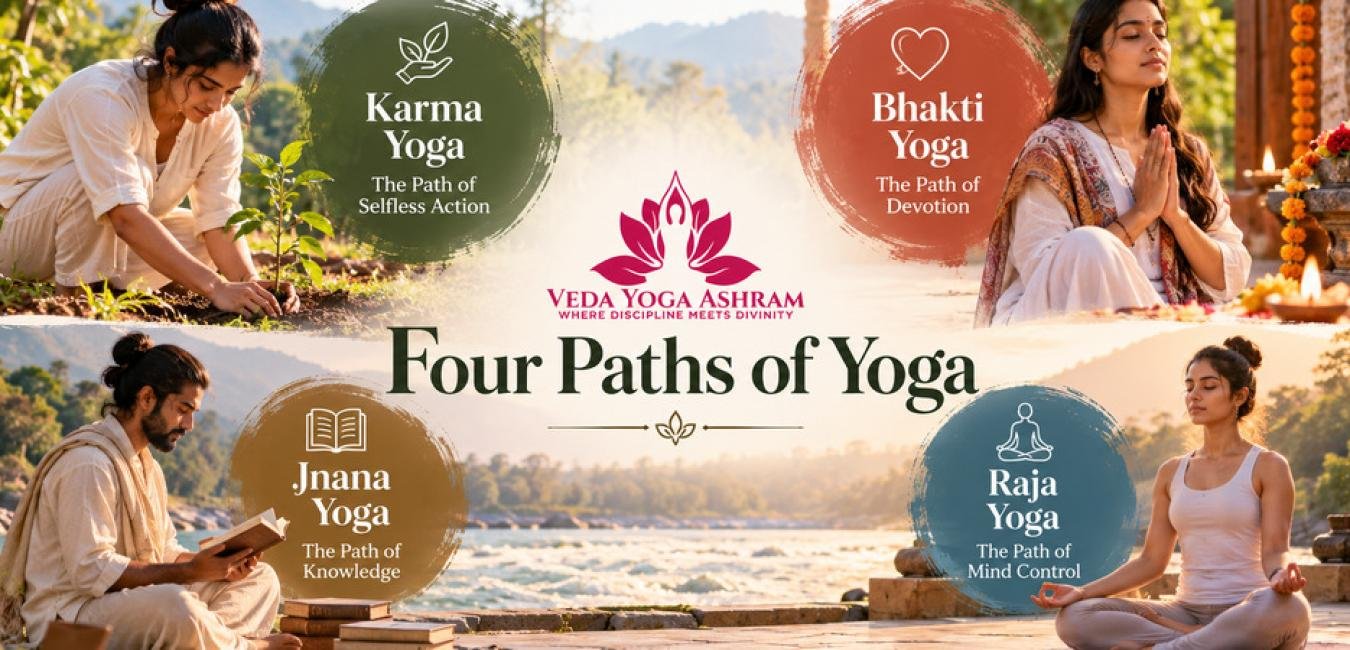
Four Paths of Yoga: A Practical Guide for International Students in Rishikesh
Most people meet yoga on a mat. They stretch, breathe and leave class a little calmer. Then they arrive in India, open a book on yoga philosophy, and find words like karma, bhakti, jnana and raja. Suddenly yoga looks much bigger than a physical class. Those four words sit at the center of the four paths of yoga, a framework Hindu teachers have used for generations to explain spiritual growth. The idea is simple. People differ, so the road to self-understanding differs too. Some learn by doing, some by feeling, some by thinking and some by sitting still. This guide explains each path in plain language, shows how to practice it in daily life, and points out the mistakes students often make. It is written for international students who plan to study in Rishikesh, Uttarakhand, or who want to understand the philosophy before they travel. What Are the Four Paths of Yoga? The four paths of yoga are Karma Yoga (action), Bhakti Yoga (devotion), Jnana Yoga (knowledge) and Raja Yoga (meditation and mental discipline). Each one is a method for reaching the same goal. Different texts name that goal in different ways: self-realization, liberation (moksha), or union of the individual self with something larger. The word yoga comes from the Sanskrit root yuj, which means to join. A path of yoga is therefore a way of joining what feels separate, such as the small ego and the wider awareness behind it. One Mountain, Several Trails Picture a single mountain with four trails up the slope. One is steep and direct, another winds through forest, a third follows a river. All reach the summit, but the walker's temperament decides which one feels natural. The four paths of yoga work the same way. A warm, emotional person may find devotion easier than abstract philosophy. A restless, practical person may prefer service. Nobody stays on one trail forever. Most students end up borrowing from all four. The Four Yogas Hinduism Describes in Its Texts Hindu scripture does not present the four paths of yoga as one tidy list. The Bhagavad Gita, a conversation between the warrior Arjuna and Krishna, explains action without attachment in its third chapter and devotion in its twelfth. Knowledge and meditation run through several others. The Upanishads focus on inquiry into the self. Patanjali's Yoga Sutras lay out the eight-limbed system behind Raja Yoga. They were compiled roughly two thousand years ago, though scholars debate the exact date. Swami Vivekananda popularized the four-part grouping in the West through his lectures in the 1890s. Later teachers such as Swami Sivananda kept the framework and stressed balance. This history explains why different ashrams may lean toward different paths. Karma Yoga: The Path of Selfless Action Of the four paths of yoga, Karma Yoga is the one you can start at your desk today. It asks you to act fully while loosening your grip on the result. The Gita puts it simply: you have a right to your work, not to its rewards. This does not mean working carelessly. It means giving full effort and letting go of the fantasy of praise, promotion or control. For a student, this has practical meaning. Imagine a group project where one teammate keeps taking credit. A karma yogi still does the best work possible, then lets the credit question go. The effort stays honest, and resentment has nothing to feed on. Selfless service does not mean tolerating harm. Healthy boundaries belong to the path too. Ways to Practice Karma Yoga Do one daily task, such as sweeping or washing dishes, with full attention and no complaint. Volunteer for something with no reward attached. Many ashrams include seva, or selfless service, in the daily schedule. Before a big task, ask what your duty is. Then ask where you are attached to the outcome. At the end of the day, notice one action you did for its own sake. Bhakti Yoga: The Path of Devotion Bhakti Yoga turns the emotions toward something higher than personal wants. In the Hindu tradition, that object of love is often a deity such as Shiva, Krishna or Devi. Other practitioners direct it toward the divine in nature, in a teacher or in all living beings. The aim is to soften the ego through love and surrender. Many teachers call Bhakti the most approachable of the four paths of yoga, since everyone already knows how to love. Devotion does not require you to adopt a religion. Many international students come from other faiths or none, and teachers in India are used to that. Treat the practices as forms of attention and gratitude, and take part with respect. Common Bhakti Practices Mantra repetition, called japa, is the easiest entry point. A well-known example is Om Namah Shivaya, often understood as "I bow to Shiva," the pure awareness within. Students usually count repetitions on a mala of 108 beads. Kirtan, call-and-response chanting with harmonium and drums, brings devotion into a group. Satsang, a gathering to hear teachings and share silence, supports both. Try a simple start. Sit for five minutes each morning, repeat the mantra silently, and finish with a moment of thanks. Jnana Yoga: The Path of Knowledge Within the four paths of yoga, Jnana is the most philosophical. It is the path of inquiry, and it keeps returning to one question: who am I? The practitioner questions every identity, such as job title, nationality or mood, and looks at what remains when each one is set aside. The classical phrase is neti neti, meaning "not this, not this." Vedanta describes three stages. First comes listening to the teachings (shravana). Next comes reflection until doubts are settled (manana). Last comes sustained contemplation, where the insight sinks in (nididhyasana). Reading alone is not enough. Knowledge becomes yoga only when it changes how you see. Teachers also warn that this path needs a steady mind. The Sivananda tradition, for example, advises building a base in the other paths first. An anxious or sleep-deprived student can turn inquiry into overthinking. A small exercise: at night, write down a belief you hold about yourself, such as "I am bad with languages." Ask what evidence supports it and what contradicts it. Then sit quietly and ask who is holding the belief. Raja Yoga: The Path of Meditation and Mental Discipline Among the four paths of yoga, Raja is the one most Western classes touch, usually without naming it. Raja means "royal," and the path works directly on mastery of the mind. Patanjali's eight limbs form its map. Most studio classes teach only the third limb, posture, so many students are surprised by how much more the system contains. The Eight Limbs at a Glance Yama: ethical restraints, such as non-violence and truthfulness Niyama: personal observances, such as cleanliness and contentment Asana: steady posture Pranayama: breath regulation Pratyahara: drawing attention away from the senses Dharana: concentration on one point Dhyana: meditation, an unbroken flow of attention Samadhi: complete absorption, the traditional goal The limbs are not rungs you finish one at a time. A beginner can work on ethics, posture and breath in the same week. Daily meditation sits at the center of the practice. The U.S. National Institutes of Health says meditation carries few risks for most people, though some report difficult experiences. If you have a history of trauma or anxiety, tell your teacher and begin with short sessions. 4 Types of Yoga and Who Each One Suits Traditional teachers match the path to temperament. The four paths of yoga suit different natures, so treat the table below as a starting guess, not a personality test. Modern science does not confirm these categories, and most people are a mix. Path Natural fit Core practice Common trap Karma Active, practical, service-minded Selfless work, seva Burnout or resentment Bhakti Emotional, warm, devotional Mantra, kirtan, prayer Sentiment without discipline Jnana Analytical, curious Study, self-inquiry Intellectual pride Raja Methodical, introspective Meditation, breath, ethics Rigid perfectionism Paths Versus Class Styles Many people searching for yoga types expect hatha, vinyasa or yin. Those are styles of physical practice, and they belong mostly to Raja Yoga's postures and breath. The paths are bigger than any style. You can take a vinyasa class as karma yoga if you practice without chasing results. You can take it as bhakti if you dedicate it to someone. Can You Combine the Four Paths of Yoga? Yes, and most teachers hope you will. Swami Sivananda called this approach the yoga of synthesis, a balance of head, heart and hands. A simple weekly rhythm shows how it can look: Morning: ten minutes of meditation and breath (Raja) Daytime: one task done as selfless service (Karma) Evening: mantra or chanting (Bhakti) Weekend: reading and reflection on one question (Jnana) Adjust the proportions as you learn. If you feel dry, add devotion. If you feel scattered, add meditation. If you feel stuck in your head, add service. Studying the Four Paths of Yoga in Rishikesh Books give you vocabulary. Living inside a community gives you practice. Rishikesh sits on the Ganga in the foothills of the Himalayas and has drawn yoga students from around the world for many years. Ashram life tends to blend the four paths of yoga naturally, with early meditation, shared chores, evening chanting and philosophy talks. If you want to study these ideas in person, Veda Yoga Ashram in Rishikesh is one place to explore. Ask about the daily schedule, class sizes, and how philosophy fits alongside asana and meditation. A few practical tips for international students: Check current visa requirements with the Indian consulate or official government sources before you book. Arrive a couple of days early to recover from travel and settle your sleep. Pack modest, comfortable clothing, since many ashrams and temples expect covered shoulders and knees. Bring a notebook for questions. Teachers welcome them. Common Mistakes When Choosing Among the Four Paths of Yoga Picking the path that sounds most impressive. Jnana attracts many students with its big ideas, but it works best on a steady foundation. Treating posture as the whole of yoga. Asana is one limb of one path. Skipping ethics. Yama and niyama come first for a reason. A calm mind without kindness is incomplete. Following a teacher without questions. Look for clear training, consistent conduct, and a willingness to answer doubts. Expecting fast change. Early signs are modest, such as a little more patience and a little less reactivity. Also Go through:- 100 Hour Yoga Teacher Training in Rishikesh Conclusion Pick one practice from each path and keep it small. Five minutes of silent mantra, one chore done with full attention, one reflective question in a notebook, and ten minutes of seated breathing are plenty. After two weeks, notice which one you look forward to. That is likely your natural path, and a sensible place to go deeper. The four paths of yoga do not ask you to become someone else. They offer four ways to look at the same life more clearly.
Yes. The majority of Yoga Teacher Training schools in Rishikesh have been accredited by Yoga Alliance like 200hrs, 300hrs and 500hrs courses by Registered Yoga Schools (RYS). A Registered Yoga Teacher (RYT) is a designation recognized and respected all over the world that graduates will be registered with upon successful completion.
From beginners to intermediate practitioners , yoga teachers and wellness professionals to anyone who wants to enhance their yoga practice, these programs are open to all. No requirements are set, and only a true interest in Yoga and commitment to the Yoga way of life is required.
The advantages are much more than a certificate. You will acquire professional teaching skills, deep understanding of the theories, anatomy and traditional practices relating to yoga and improve your self-management and mindfulness. Certification offers you opportunities to teach yoga all over the world as a professional.
Rishikesh is considered as the Yoga Capital of the World and is a place that provides you an environment which you cannot get in the classroom, being so deeply immersed in a spiritually rich and vibrant atmosphere in the foothills of Himalayas. In this place you learn from teachers who have experienced the practice, have been traditionally trained and are taught in the very land that has been used and cherished for centuries for yoga practice. Added to that, the international recognition of the town and the affordability of the prices makes it the ideal destination for yoga teacher training.
Yoga students can attend Ytt courses in Rishikesh at anytime of the year, but the most popular and comfortable times to be there are from February to April and September to November. However, many schools offer monthly batches all year long, providing you with the flexibility of when you want to take it.
ॐ
Your journey can begin today
Ready to study yoga in Rishikesh?
Talk to our team about courses, dates, fees, accommodation and travel.
Veda Yoga Ashram is nestled in the lap of nature, the Himalayas to its back while the Ganga meanders at its front. The place is well connected to the nearest cities by roadways, airways, and railways, assuring you a comfortable and hassle-free journey to the course.
✈
By Airways
The nearest airport is Jolly Grant Airport, Dehradun, which is well-connected to all metro cities. You can also reach Rishikesh via Dehradun airport and you can hire a taxi from the airport or you can ask our coordinators to help you with one.
▣
By Roadways
The city is well-connected to all neighboring cities by road. You can hire a taxi or board a bus from the nearest cities like Delhi, Haridwar, and Dehradun. The roads are in good condition, and a number of taxis are available on hire.
⌾
By Railways
The nearest railway stations are Haridwar and Rishikesh. Haridwar Railway Station is well-connected to most Indian cities and has regular local train services. You could reach Veda Yoga Ashram by hiring a taxi from the station.