Duration:
30 days (Every 25th of the month)
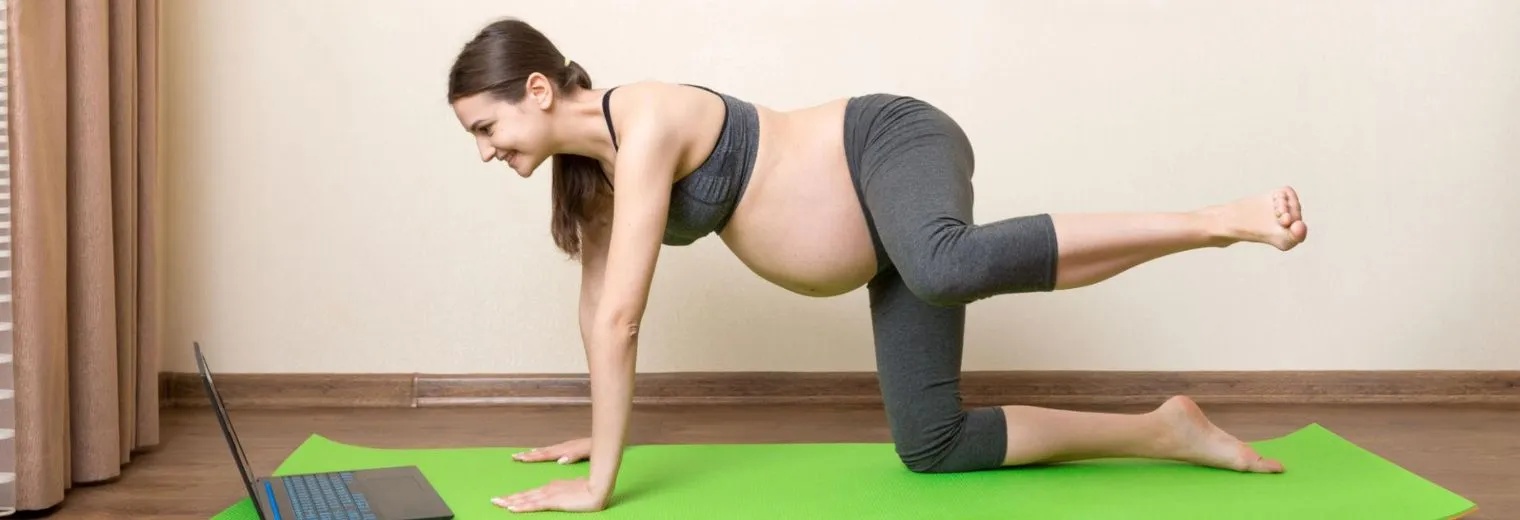
Safe · Supportive · Flexible
Online Prenatal Yoga Teacher Training in Rishikesh, India Course
Learn pregnancy yoga safely from anywhere with structured online guidance.
Online Prenatal Yoga Teacher Training Course Details
Level:
Beginner to intermediate
Location:
Online
Module:
Online learning
Certification:
Yoga Alliance Approved
Course Fees:
$500
Language:
English & Hindi
Learn Pregnancy Yoga Safely From Anywhere
Prenatal Yoga Teacher Training Course Online in Rishikesh, India
The Online Prenatal Yoga Teacher Training Course offered at Veda Yoga Ashram is for aspiring yoga teachers and practitioners who want to specialize in pregnancy yoga in a flexible manner, at home. In this program you can learn online prenatal and postnatal yoga from the expert and understand the physical, emotional and hormonal changes that happen to the mother throughout her pregnancy.
Our pregnancy yoga teacher training is an online course that teaches safe yoga asana, breath work, relaxation and mindfulness for pregnancy. The course focuses on awareness, safety and compassion, enabling you to confidently guide women through all stages of pregnancy.
Students receive the instruction from skilled teachers at Veda Yoga Ashram to create safe and effective prenatal yoga classes that take into consideration the evolving needs of the pregnant body. The course also emphasizes mindful cueing, emotional support and ethical teaching practices, which will help ensure that graduates are well-equipped to teach online prenatal yoga classes confidently, sensitively and professionally.


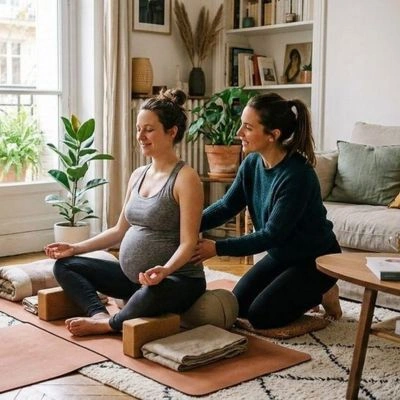






Learn Prenatal Yoga at Home!
Course Structure for the 85 Hour Prenatal Yoga TTC In Rishikesh
What you learn?
Online Prenatal Yoga Teacher Training Course is structured and easy-to-understand with online learning mode, which enables students to learn pregnancy yoga from anywhere in the world. The course consists of lecture notes, practice notes, and recommended reading that you can study whenever you want. Students are taken through the concepts, safe practices and teaching methodology of prenatal yoga step by step ensuring a smooth and progressive learning curve. Live or interactive sessions (when available) allow opportunities to ask questions, address concerns, and get guidance directly from experienced prenatal yoga teachers. The online pregnancy yoga teacher training is perfect for working women, yoga teachers, and mothers looking to take their yoga skills to the next level without having to travel to attend.
Who is this Online Prenatal Yoga Course For?
The Online Prenatal Yoga Teacher Training Course at Veda Yoga Ashram is open to not only pregnant women but also anyone with a genuine interest in learning pregnancy yoga. With its flexible online format and structured guidance, this online pregnancy yoga teacher training allows participants from around the world to gain authentic knowledge from a traditional yoga school in Rishikesh, while learning safely from home.
Authentic · Structured · Supportive
Why Choose Our Online Prental YTTC In Rishikesh India?
Veda Yoga Ashram is an old yoga institute in Rishikesh that is well known for its authentic teaching style and experienced teachers. Our online prenatal yoga teacher training course is as in-depth, caring and honest as our face-to-face courses and is a trusted course for learning prenatal yoga online. Learners move through this course with expert prenatal yoga instructors with a focus on safety, awareness, and application. Veda Yoga Ashram focuses on proper alignment, trimester-wise modifications, sensitivity to the emotions and the confidence of the student to teach pregnancy yoga online responsibly. With flexible learning, structured curriculum, and continuous guidance, Veda Yoga Ashram provides a supportive online learning environment. By selecting our online prenatal and postnatal yoga teacher training course, you will get to learn from a well-respected yoga school, but most importantly learn techniques that you can use with confidence and professionalism all over the globe.
Know More
Plan your residential training
Online Prenatal Yoga Course Upcoming Dates 2026-2027
Course Date
Course Fee
Availability
Booking
Course Date
Course Fee
Availability
Booking
Note:
Online class timings are subject to change based on availability.
Life at Veda Yoga Ashram
Food & Accommodation
Nourishing meals and a peaceful place to rest support every part of your yoga journey.
01
Food & Sattvic Dining
Sattvic Food: It's Significance
At the Veda Yoga Ashram we see that the true Yoga is beyond the mat. The right kind of food is as important as the physical practice itself, and our program is a holistic approach to wellbeing, starting with the food.
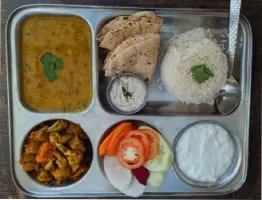
We offer freshly prepared sattvic foods, based on ancient ayurvedic teachings that food directly affects the mind, body and spirit. Sattvic diet revolves around the use of pure, natural and wholesome food items without any fried, processed, canned and artificially preserved food items. This type of nutrition is beneficial for the heart and blood vessels, helps normalize cholesterol, and provides a healthy digestive process and assimilation of nutrients. A sattvic diet has also been linked over the years to a decrease in the incidence of diabetes and lifestyle diseases, making it an ideal partner to a deep yoga and meditation practice.
Each of our meals is carefully prepared and planned and is as nutritious as it is delicious.
What we offer:
- Two freshly delicious and healthy vegetarian meals per day
- Vegan and gluten-free meals available upon request
- Drinking water is safe and clean, available at all times.
- Fresh seasonal fruits all day:
- Ayurvedic tea corner with restorative herbal teas.







02
Comfortable Accommodation
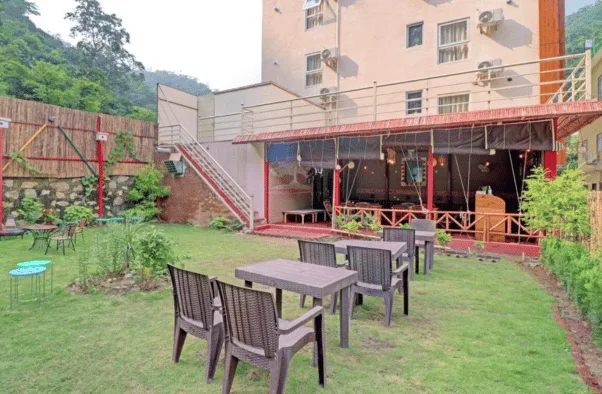
Accommodation : Veda Yoga Ashram - A ‘Home away from home’
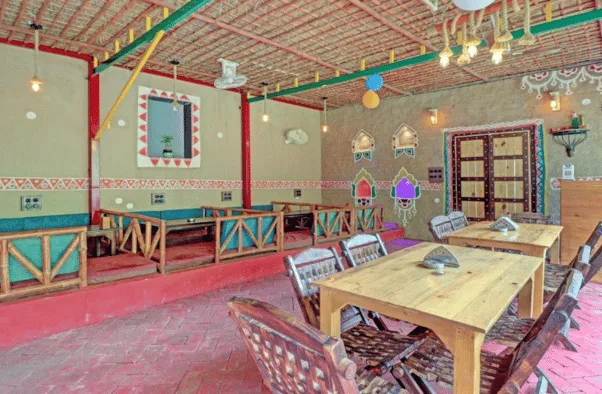
A quiet and clean environment is a key component to any worthwhile yoga practice. The rooms at Veda Yoga Ashram are well planned to promote comfort, rest and overall wellness for yoga students and retreaters.
Our clean, cosy and well maintained rooms are set among a peaceful and natural setting, offering a quiet retreat to unwind after each yoga practice, meditation and study day. A good night's sleep is not a luxury, it's a requirement during an intensive Yoga Teacher Training Course. Rest and a stable home base are essential to healing, thinking clearly and managing your emotions, and are important factors in the best use of your time.
The lifestyle at Veda Yoga Ashram is based on the yogic concepts of simple living, mindful awareness and yogic discipline. Our sattvic food, the proper daily routine and the serene atmosphere provide students with a place where they can experience a yogic lifestyle not only in class but beyond and all day long.
Our Room facilities include:
- The choice of both Private and Twin sharing rooms with attached 24/7 hot water facilities.
- Clean and comfortable sleeping areas with good quality mattresses and curtains for sleep
- Fresh and clean bed linens changed every week.
- Personal Room Lock and Key to ensure personal safety and privacy
Course At A Glance
About the Training
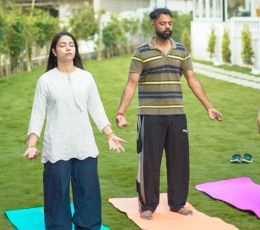
Learning Format
100% online and flexible
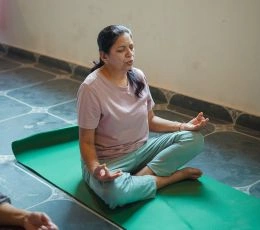
Course Focus
Prenatal & postnatal yoga
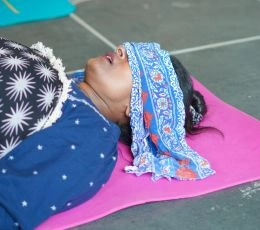
Course Duration
30 days

Food
Nutritious vegetarian yogic meals
Skill Level
Beginner to intermediate

Certification
Yoga Alliance Approved
Location
Learn from anywhere
Join Training
Book your seat nowHealing Through Sound
Sound Healing Training - The Healing Power of Therapeutic Sound
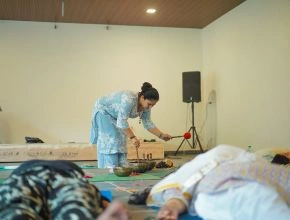
The Sound Healing with 200 Hour Yoga teacher training course at Veda Yoga Ashram gives students the opportunity to combine yoga, meditation, and sound healing practices along with ancient sound healing techniques. This program provides a more integrated and enriching experience than a typical yoga teacher training program and supports the practice of relaxation, mindfulness, and balance.
You will learn the ways that sound and vibration have been used over the years to create and maintain a calm and safe space for meditation and to support wellness. Instead of separating sound healing from other practices, you will learn how to incorporate sound healing into your yoga practice and other practices, including breathwork, meditation, and restorative practices to support your students’ and your own wellness.
Learn the Foundations of Sound Healing
Gain a basic understanding of sound healing and their associated practices. You will analyze and interpret the connection between sound, vibration, and the relaxation response. Sound healing is a means to support meditation and mindfulness, and emotional health and wellness. This training builds your confidence to use therapeutic sounds in the teaching of yoga and other holistic practices.
Experience Traditional Sound Healing Instruments
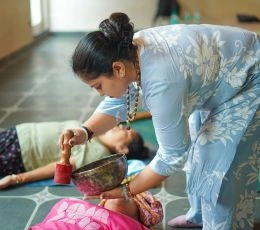
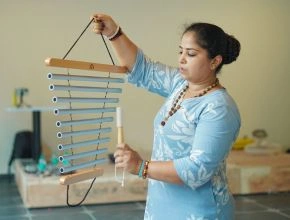
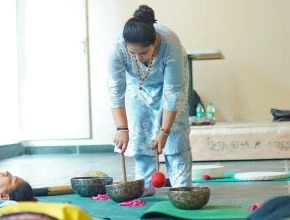
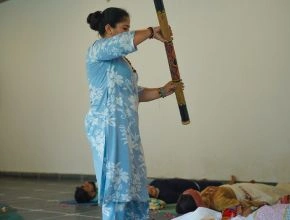
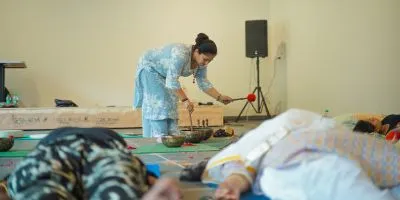
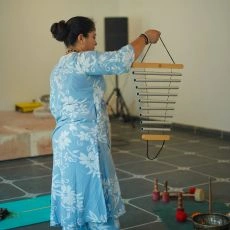
You will have an opportunity to learn and work with the following sound healing instruments: Tibetan and Crystal Singing Bowls, Gongs, Tuning Forks, Koshi Chimes, and Mantras. Your teachers will show how these instruments make unique sounds and how they are used to create a healing atmosphere in meditation and Yoga Nidra practice as well as other relaxation techniques.
Integrating Sound Healing into Your Yoga Practice
The ability to integrate yoga and sound healing in a simple, natural manner is one the most important outcomes of this course. You will learn sound healing techniques to use in meditation, pranayama, restorative yoga, Yoga Nidra and relaxation. You will learn to integrate sound in a manner that deepens your clients' experience.
Before you apply
Online Prenatal Yoga Teacher Training Frequently Asked Questions
There is no prerequisite for this course. Veda Yog Ashram Online Prenatal Yoga Teacher Training Course is open for yoga teachers, wellness practitioners, pregnant women and those who are interested in learning yoga for pregnancy.
Yes, the certification given after the Online Prenatal Yoga Teacher Training Course at Veda Yog Ashram is international oriented.
The course is taught 100% online, using lecture notes and through practice materials and recommended reading available to you at any time. It is a flexible format, which enables students from around the globe to study at their own pace and without the need of traveling to Rishikesh.
It is an established Yoga Institute in Rishikesh with Yoga teachers who have vast experience in teaching yoga and have an authentic approach. This online prenatal yoga teacher training course is as complete and authentic as their in-person courses and is based on traditional yogic precepts yet accessible to today's online student. Veda Yog Ashram aims to equip students with the knowledge, understanding and skills to teach pregnancy yoga professionally, compassionately and with clarity anywhere in the world, through a structured curriculum with continuous guidance and support.
One small step make a difference
Important Notes from Veda Yoga Ashram
Student Guidelines at Veda Yoga Ashram
To preserve a peaceful, disciplined, and authentic yogic atmosphere, all participants of Yoga Teacher Training Courses in Rishikesh at Veda Yoga Ashram are expected to follow these essential guidelines:
- Complete attendance is required for all scheduled classes, practical sessions, and program activities.
- Punctuality is highly valued; students are expected to arrive on time, as late entry may not be permitted.
- The ashram maintains a strict no-smoking, no-alcohol, and no-intoxicants policy within the premises.
- Students are requested to maintain respectful behavior toward teachers, staff members, and fellow practitioners at all times.
- If you plan to observe a fast, kindly inform the kitchen team in advance to help prevent food wastage.
- Any books, study materials, or items borrowed from the ashram must be returned before departure.
- Accommodation is reserved exclusively for enrolled students; friends or family members are not permitted to stay on campus.
Compliance With Yoga Alliance Standards
As a recognized yoga school in Rishikesh, Veda Yoga Ashram operates in full alignment with Yoga Alliance guidelines, maintaining a secure, ethical, and respectful learning environment for all students enrolled in our Yoga Teacher Training Courses in Rishikesh.
- Anti-Retaliation Policy: Students who report concerns or participate in related investigations are fully protected from any form of retaliation.
- Anti-Harassment Policy: We uphold a zero-tolerance approach toward harassment of any kind, including physical, verbal, sexual, discriminatory, or online misconduct, ensuring a safe space for every student.
- Attendance Policy: Active participation and full attendance in all scheduled classes, practical sessions, and program activities are mandatory throughout the Yoga TTC.
Refund Policy at Veda Yoga Ashram
- The advance deposit paid to confirm enrollment is non-refundable under any circumstances.
- In case of an unforeseen emergency, students may transfer the deposited amount to another course offered by Veda Yoga Ashram within 12 months from the original course start date.
- Course cancellations do not carry any additional charges; however, students must inform the ashram via email prior to the course commencement.
- While deposits are not eligible for refunds, they remain valid for future course participation within the permitted time period.
Women’s Safety at Veda Yoga Ashram
- At Veda Yoga Ashram in Rishikesh, the safety and comfort of women students is a top priority. We are committed to maintaining a secure, respectful, and supportive environment where women can focus fully on their Yoga Teacher Training Course in Rishikesh without concern or distraction.
- Our ashram follows strict safety protocols to ensure a peaceful stay for all women practitioners. The campus is monitored by 24/7 security personnel, ensuring continuous supervision and immediate assistance whenever required. These measures help create a safe atmosphere throughout the day and night.
- CCTV Surveillance: To further enhance security, CCTV surveillance is installed across key areas of the ashram. All accommodation rooms are provided with individual locks and keys, allowing women students to enjoy privacy, independence, and complete peace of mind during their stay.
- Our accommodations offer individual rooms, each equipped with its own private lock and key, allowing you to enjoy your stay with complete peace of mind.
Course Essentials
Online Prenatal Yoga Training: Included & Excluded
What Does the Course Fee Include?
- Online lecture notes, practice materials and recommended reading
- Structured prenatal and postnatal yoga curriculum
- Guidance on safe practice, modifications and teaching methodology
- Course completion certificate after successful completion
- Online Prenatal Yoga Teacher Training certification upon successful completion
What Is Not Included in the Course Fees?
- Travel and accommodation expenses
- Personal yoga props, internet connectivity and device costs
- Optional one-to-one sessions or services not included in the course
- Any costs outside the confirmed online course fee
Activity During The Course
Outdoor Activities & Excursions - Retreat & YTTC In Rishikesh
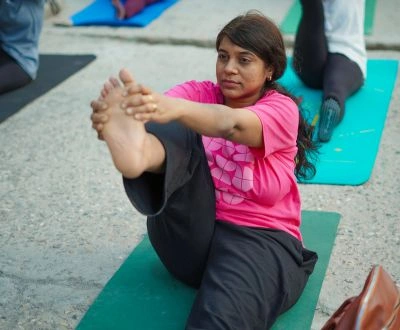
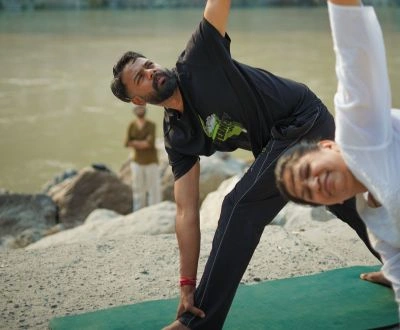
Rishikesh, known as the Yoga Capital of the World, offers a unique spiritual atmosphere that deeply supports yogic learning and self-reflection. During your Yoga Retreat or 100 Hour Yoga Teacher Training Course in Rishikesh, you will have the opportunity to participate in enriching activities that complement your training and deepen your overall experience. These activities include:
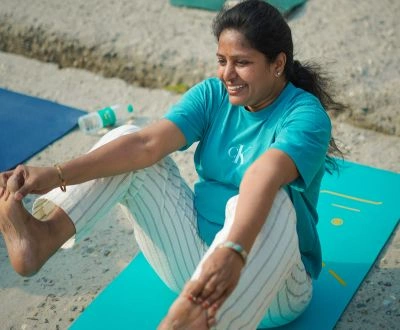
Note:Outdoor activities such as sunrise treks and Ganga Aarti are subject to weather conditions and local transportation availability. Activity schedules are finalized on a weekly basis to ensure safety and the best experience.As part of the Yoga Teacher Training Program in Rishikesh, excursion activities are usually planned on Tuesday of the 2nd week. Additional excursions are typically arranged on Tuesday of the 3rd week, depending on conditions.
Our Expert Team of Teachers
Best Yoga Teachers in Rishikesh, India
ॐ
Learning at Veda Yoga Ashram takes place exclusively under the tutelage of some of the most experienced yoga teachers from Rishikesh, India. Our teachers are well experienced in the yogic practices and teaching methods to provide every student with genuine yogic knowledge and guidance. All teachers have a master's degree in Yogic Science and are certified by Yoga Alliance, which includes academic knowledge and a wealth of experience in teaching. Our graduates benefit from this solid base to build their confidence, clarity and to learn how to teach yoga professionally.

Founder
Yogesh Dixit
Experience
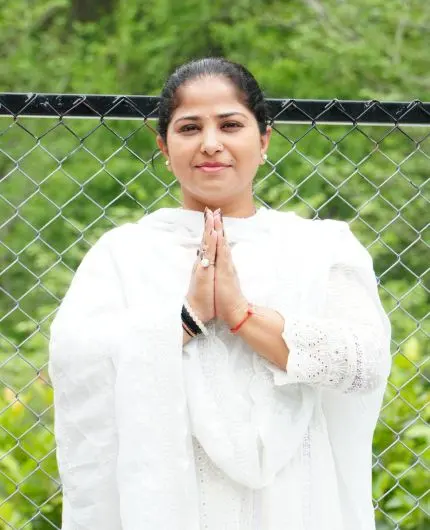
Co-Founder
Neha Thakur
Experience
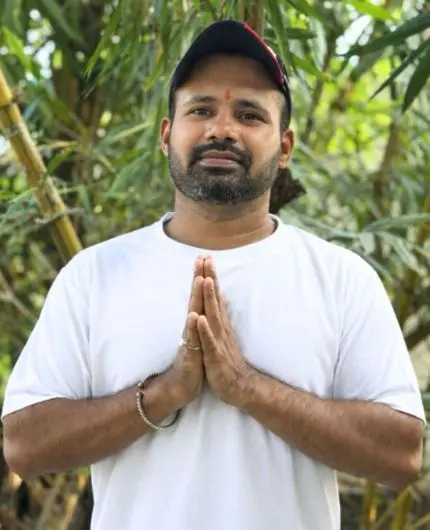
Hatha & Vinyasa Yoga Teacher
Rahul Ji
Experience
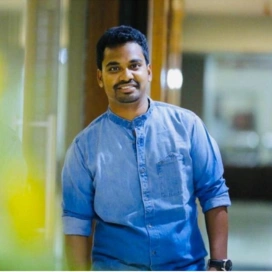
Manager
Yathin Ji
Experience
Reserve with confidence
How to Book Your Seat
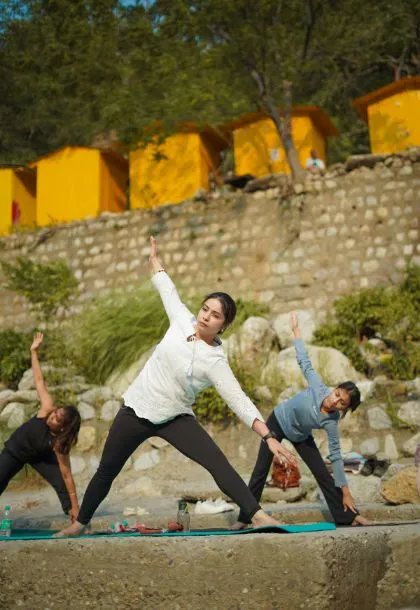
Booking your 200 Hour Yoga Teacher Training Course is simple and guided. Share your preferred date and accommodation choice, and our team will help you complete every step clearly.
After availability is confirmed, you will receive the information needed to reserve your seat and prepare for your arrival.
Apply online
Send your preferred course date and contact details.
Receive confirmation
Our team checks availability and shares next steps.
Pay booking deposit
Make the confirmed advance payment to reserve your place.
Prepare for arrival
Receive check-in and travel information before arrival.
Note: Contact the Veda Yoga Ashram team for booking, cancellation or refund clarification before making payment.
Your teaching journey begins here
Begin Your Journey with Veda Yoga Ashram
Sound healing and yoga can help provide a way to understand the self more deeply and can help promote personal and professional development. Veda Yoga Ashram offers a 200 hour course that uses sound healing and yoga to teach practical skills that will allow the student to teach and also enrich their lives.
Transformative Journeys at Veda Yoga Ashram
Testimonials/Reviews - What Do Students Say About Us?
This was a wonderful yoga retreat In Rishikesh. Veda yoga ashram provides excellent itinerary arrangements, including morning Ganga yoga, cave meditation, Ganga Aarti and sunrise sessions. Veda yoga ashram take great care of everyone, teachers are knowledgeable and nice. This was a very spiritual yoga journey, everyone was very happy, cannot wait for next Rishikesh trip.
J
My time at Veda Yoga Ashram was memorable to say the least. It’s not just a retreat but an amazing yoga school, and the entire experience felt beautifully balanced between learning, spiritual practices, and meaningful excursions. Meditating at Vashishta Cave and attending the evening Ganga Aarti on the banks of the Ganga were truly special moments that stay with you long after the retreat ends. These experiences make you feel deeply connected to the spiritual essence of Rishikesh. Mr. Yogesh and Ms. Neha are wonderful hosts who create a warm and welcoming atmosphere for everyone. The teachers are excellent, the food is nourishing, and the overall experience feels very holistic. I also met some amazing people and made great friends along the way. If you’re looking for a place to slow down, learn authentic yoga, and truly experience the spiritual side of Rishikesh, Veda Yoga Ashram is a fantastic choice.
N
I recently completed my Prenatal and Postnatal YTTC and it was a wonderful learning experience. The course was well-structured with lots of valuable content and deep knowledge.Prenatal and postnatal yoga is very deep, and this course helped me truly understand it better. A big thank you to Neha ma’am for the clear and detailed theory classes, and Himani ma’am for the practical sessions which were very helpful and easy to understand. Grateful for this beautiful journey and highly recommend this course!!!
S
I recently completed a Prenatal and Postnatal Yoga course, and I feel truly grateful to have learned from such an incredible teacher Neha ma’am . The entire experience was not only educational but also deeply enriching on a personal level. I recommend everyone to do this course, even if you don’t want to teach. This course had the knowledge of pre-pregnancy and Post pregnancy at such a deep level that everybody must know about it.
G
My overall experiance was excellent . If i have to discribe in one word " its a re engeneering of our body n soul" the team was very supportive , specially Ms Neha maam , Deepa maam , Rahul Sir , Yogesh sir n Aman . The entire Hotel staff of Nature Nest were very helpfull n the hospitality as Awsome. Will definately recommend all my friends and family to "Veda Yoga Aashram "
H
I have successfully completed the Master's Sound Healing Course at Veda Yoga Ashram with Neha Ma'am, and I am truly grateful that I made this decision. It has been a beautiful and transformative journey filled with learning, healing, and self-discovery. I am from Gujarat, where the competition in this field is very high. However, this course has given me the confidence, knowledge, and practical skills to move forward with clarity and purpose. I am taking back not only a certification but also unforgettable memories, meaningful experiences, and the blessings of my teachers. Thank you, Neha Ma'am, and the entire Veda Yoga Ashram family, for your guidance, support, and warmth throughout this journey. I will always cherish this experience.
F
I am deeply grateful to Veda Yogashram for such a beautiful and life-changing experience. I completed my Prenatal Yoga Teacher Training Course and Yoga Retreat here, and every moment was filled with learning, peace, and positivity. A heartfelt thank you to Neha Ma’am, Rahul Sir, Yogesh Sir, and Deepali Patil Ma’am. They are not only exceptional teachers but also wonderful human beings. Their patience, guidance, and encouragement made this journey truly special. I became so attached to them that saying goodbye was very emotional. They will always have a special place in my heart. The staff is incredibly kind and supportive, the atmosphere is peaceful, and the entire ashram feels like a second home. I learned so much here, not only about yoga but also about myself. Thank you, Veda Yogashram, for the unforgettable memories and valuable teachings. I will definitely come back again and highly recommend this ashram to anyone looking for an authentic and meaningful yoga experience.
R
My experience at Veda Yoga Ashram was absolutely wonderful. I attended a sound-healing session with Neha ma'am, and it turned out to be one of the most peaceful and uplifting experiences I’ve had. The vibrations of the instruments created such a powerful yet gentle energy that helped release stress and bring a deep sense of calm. Also, Neha ma’am carries herself with genuine kindness and professionalism, her guidance throughout the session made the experience even more meaningful. The whole session felt magical and refreshing for the mind and body. I would definitely recommend this experience to anyone looking for relaxation, healing, and inner peace in Rishikesh.
N
Veda is a wonderful yoga retreat in Rishikesh with a peaceful atmosphere and authentic yogic lifestyle. It’s not just about yoga sessions or excursions—it’s about truly experiencing the ancient yogic tradition and spirituality that Rishikesh is known for.The hospitality of Mr. Yogesh and Ms. Neha is exceptional. Highly recommended for anyone looking for a genuine yoga and meditation retreat in Rishikesh. ⭐
K
Yoga Community of Veda Yoga Ashram Rishikesh
Our Yoga Community


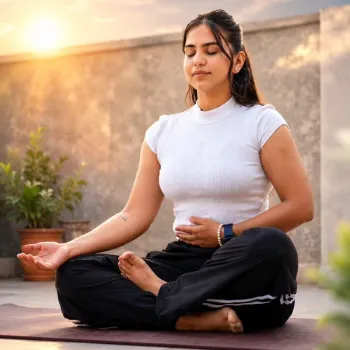
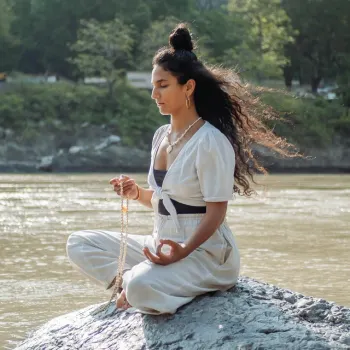

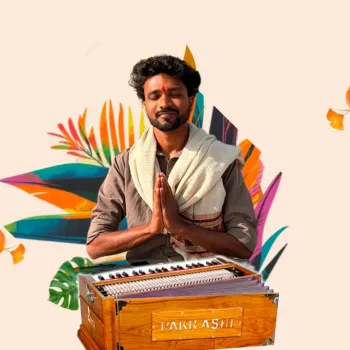



Veda Yoga Ashram Gallery

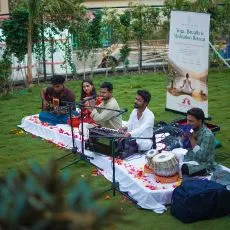
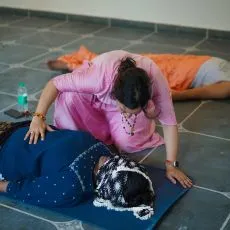
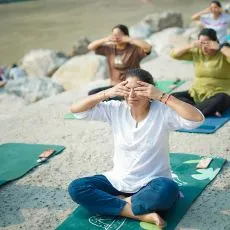
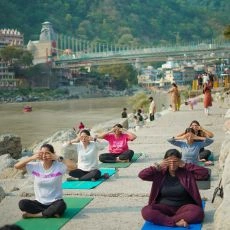
Yoga knowledge
Latest from our blog
Yoga & Wellness
Hanumanasana: How to Do It, Steps, Benefits & Precautions
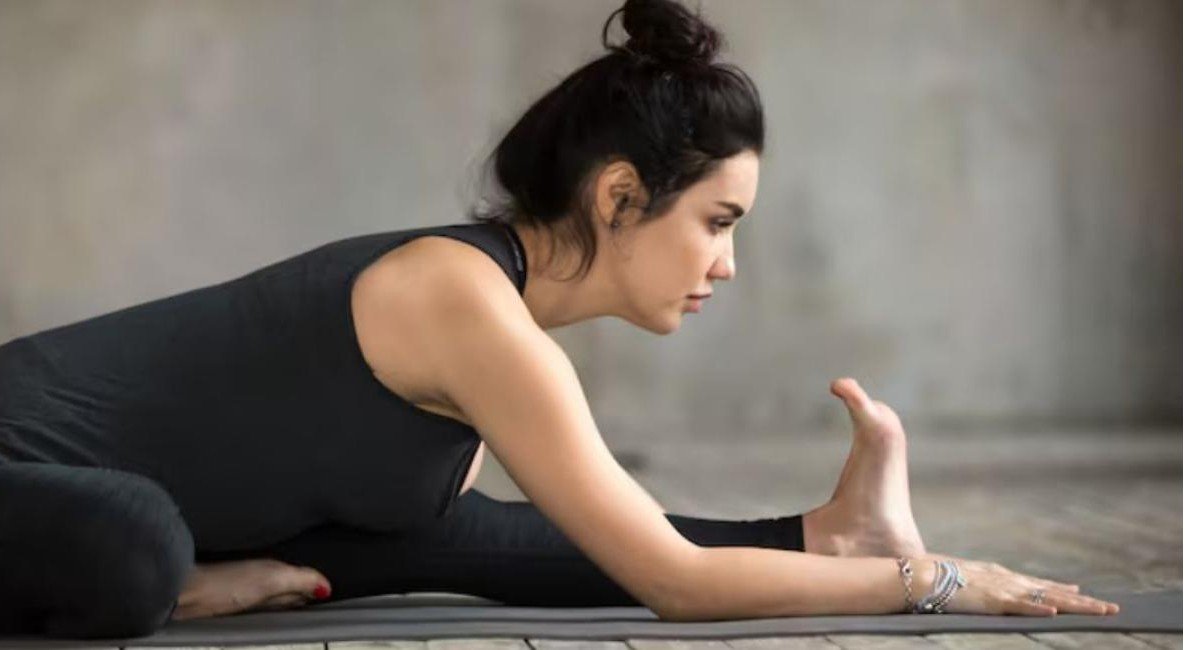
Yoga is a practice of patience, balance, and control. Some of the poses seem challenging at first glance. But they can be learned safely and steadily with practice. One such deep stretch is Hanumanasana. It is also referred to by many as the full front split. It stretches or releases the hips, thighs, hamstring muscles, and groin area. Thus, it is not advisable to rush this pose. Warm muscles, slow breathing, and careful alignment are important. Additionally, users should use blocks, cushions, or folded blankets for support if they are new to using a wheelchair. This guide provides all the steps for the pose, its benefits, variations, and safety tips in simple words. What Is Hanumanasana? Hanumanasana is named in honor of Lord Hanuman. It is an expression of his mighty leap in the Ramayana story. A lot of yoga instructors also refer to it as 'monkey pose'. One leg is brought forward, the other is brought backward. You slowly begin to move towards a full split position. But don't worry, you don't need to touch the ground on day one! You should instead respect the flexibility you have at the moment. Yoga Journal says that Monkey Pose stretches the lower portion of the body, including the thighs, hamstrings, and groin. It also helps to develop core strength and body awareness. Why This Pose Needs Proper Preparation? This pose requires a relaxation of the hips, flexibility of the hamstrings, and a firm grip. Thus, it is important to build up your body for a full shape. Begin with simple lunge, half splits, low lunge, and hamstring stretches. In addition, slow breathing in the lead up to deeper practice. Warm your muscles, not force. Too much pressure will strain the hips or hamstrings. Therefore, move slowly, and as soon as you experience sharp pain, stop. Besides, maintain both hips in front. This will help prevent excess strain on your spine in your lower back and maintain the stretch evenly. Relax your mind, and your body will open. Hanumanasana Steps for Safe Practice Follow these hanumanasana steps after a proper warm-up. Start in the first position with the knees in a low lunge. Maintain left knee on the floor and right foot in front. Then, put your hands on blocks or the floor. Then, slowly slide your right heel forward. Simultaneously, pull the left knee slightly back. Both hips should be square and facing forward. Then, lower the pelvis as far as it can go. Slow breathing and holding the spine long. Lastly, hold for a couple of breaths. Next, repeat the process with the other side. Don't bounce in this posture How to Align the Body Correctly? Hanumanasana pose becomes safer and more useful when it is performed well aligned. The first is to make sure your front knee and toes are pointing up. Then, make sure your back leg is straight behind you. Further, do not twist your pelvis to one side. Rather, pull back the front hip and forward the back hip. This movement helps to keep your hips level. Lift chest, relax shoulders. Additionally, lay blocks (or similar objects) under your hands when the floor is far. Folded blankets can be placed underneath your front thigh as well. This support takes tension off you, as well as helping to keep you relaxed throughout the stretch. Related Post:- What is the OM Symbol? Benefits of Hanumanasana The primary hanumanasana benefits are a result of the deep stretching in the lower part of the legs. This position makes it easier to get flexibility in the hip, thigh, groin, and hamstrings. It also makes the front body longer and focuses. Additionally, the pose is a lesson in patience as your body is opened slowly. The majority of learners also experience improved body control when practicing regularly. The posture is described as an intermediate yoga posture according to the Art of Living, which is related to Lord Hanuman’s great leap. It also emphasizes preparation, careful practice, and support for those who are beginning, all of which promote safer learning. So, do the pose with respect and not ego. You get better in your body when you remain steady. 1. Easy Variations for Beginners People who are new to yoga are not able to get into the full split pose. But the hanumanasana variations are safer and easier to practice. Begin in half-split pose - straighten only the front leg. Hips remain above the back knee. Then, place yoga blocks under both hands. Alternatively, a cushion under the hips to support is allowed. It can also be strapped around the front foot. It helps to keep the spine long, and it’s useful. You can also practice in front of a wall to help balance if you are a beginner. These minor adjustments decrease the stress and increase confidence. Your body will become more open with time. 2. Monkey Posture and Body Awareness The monkey posture is about listening to your body. To many, flexibility is about spreading the legs apart. But Yoga requires mindful movement. Keep your breath even. The face should be relaxed. In addition, the pain should not be shaking in your body. Stop and breathe if you sense any pulling. When sharp pain is felt, come out slowly. This conscientious method enables you to prevent injuries. Furthermore, it enhances concentration and perseverance. With conscious practice, the posture becomes more than just a stretch, and you will discover that you are able to apply the stretch to your daily life. It turns into a lesson of control. 3. Monkey Position Yoga for Flexibility Monkey position yoga is done by many to gain flexibility in the legs. But flexibility takes time to build up with practice. Simple poses can help achieve this objective. Experiment with low lunge, pigeon, seated forward fold, and lizard. In addition, incorporate soft stretches of the thighs at the end of the warm-up. Maintain a relaxed stretch for each stretch. Never compare yourself to others. All people have different hip sizes and hamstrings. So, your progress could be different. As time passes, your body becomes larger. However, depth is not the top priority for safety. A supported pose will always be better than a forced pose. 4. Difference Between Hanumanasana and Bhujapidasana Advanced yoga names are often confused by many students. But bhujapidasana and Hanumanasana are different. The shoulder pressing pose is Bhujapidasana. Requires arm strength, core control, hip opening, and balance. Hanumanasana emphasizes front leg flexibility, however. Extends legs and hips thoroughly. Both poses require practice and patience. But they train the body in different ways. But if you take yoga lessons with a professional teacher, those differences are obvious. Yoga is a Yoga Alliance-registered advanced yoga training center providing teacher training and structured Yoga Learning. 5. Precautions Before You Practise You should not do this pose if you have a recent injury to your hamstring, hip, groin, or knee. If you have lower back pain, do not do deep practice as well. Pregnant students should consult a trained yoga teacher before attempting. If you are a beginner, you should never perform without props. Warm up before the pose always. Also, use a non-slip mat. Keep your hands supported when entering and exiting. And above all, don’t ever force your body into a full split. If you feel pain, slowly come out of it. Safe yoga always honors the body. So, practice patiently and with care and steady breathing. Also May You Like:- 100 Hour Yoga Teacher Training Course Conclusion Hanumanasana may seem strong, but it must be done with caution and slowly. Warm-ups, props, and slow breathing to prepare your body. Also, depth should not be your primary concern, but alignment. The entire process may take weeks, months, or even longer. That’s perfectly fine. Yoga doesn't rush you. It will remind you to be alert, be safe, and be steady. With regular practice under guidance, this position will help you to gain flexibility, concentration, and control over your body. Most of all, have fun on the way, rather than on the way to the end.
Read article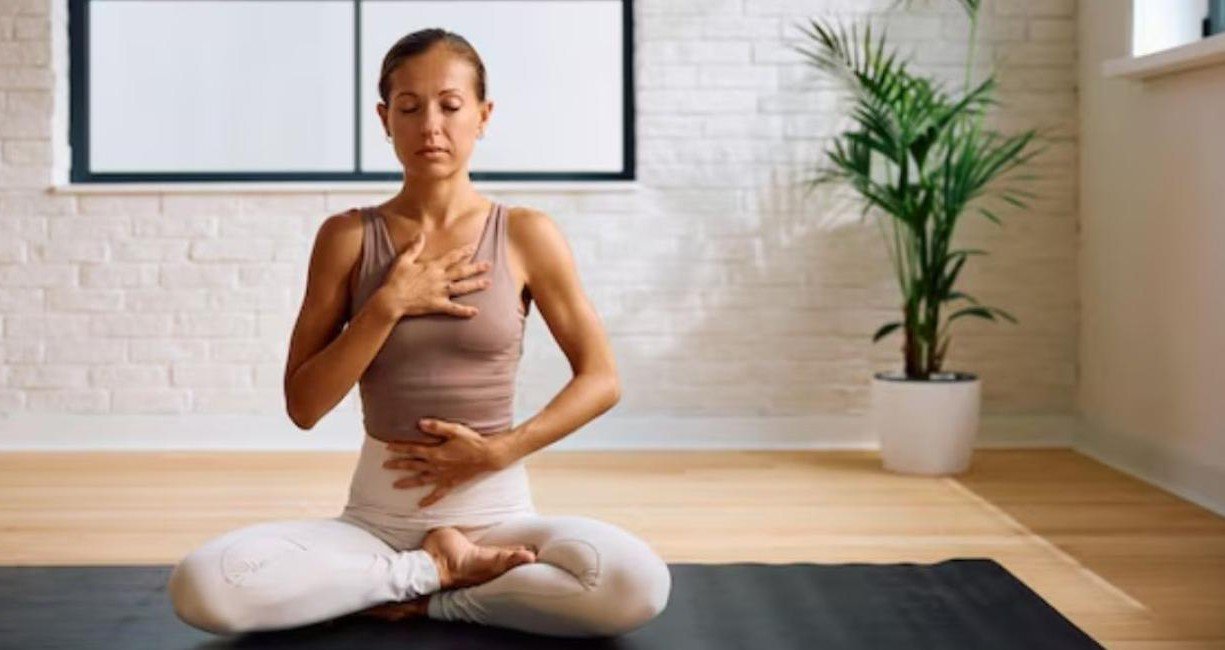
Yoga & Wellness
7 Essential Asanas for Mastering Pranayama: A Guide for Aspiring Yogis
Yoga is a life-changing practice if we understand and practice it well. It can make a huge change in not only our lives but our overall well-being too. It not only includes practicing some physical postures, but it also has a journey inward, where we explore our inner strength and potential, and where lies the practice of Pranayama, the art of breath control. What is Pranayama? Pranayama is an ancient technique and practice used in yoga, which translates in Sanskrit as "life force (prana) extension (ayama)." It is a practice in which we continuously direct and control our breathing. It believes that breathing directly influences the flow of vital energy within the body. The Breath-body Connection Have you ever noticed that whenever something happens in our body, no matter what, we are always told to take a deep breath or control our breathing? Why though? Well, breathing works as a vital bridge between the physical and other subtle aspects of our being. Asana practice, through different techniques and physical postures, prepares our body to control and navigate our breathing more deeply. Pranayama, on the other hand, refines our breathing and influences the nervous system in our body. This helps in not only improving our mental clarity but also letting us have an enhanced yoga experience. The Power of Bandhas The energetic locks we have in our body are known as bandhas, and they play a very crucial role in Pranayama practice. If we successfully engage these locks, we can not only direct but also intensify the flow of prana and have the maximum benefits of breath control practices. The 7 Essential Asanas: Building a Foundation for Pranayama Now that we know that pranayama is an essential aspect and that its connection with asana practice is crucial to helping us grow in our yoga journey, let's explore and learn in detail about the seven key poses that can help all individuals and aspiring yogis establish a strong base for breath control. 1. Sukhasana (Easy Pose) Description:- Sukhasana is one of the easiest poses, also known as "crossed leg easy pose," which is practiced in a sitting position. How to do:- Just sit comfortably with an erected spine, and keep your knees either slightly staggered or stacked. Rest your hands on your knees or laps and keep the position of your palms facing upwards. Benefits:- Provided a stable base for Pranayama. Allows proper alignment of the spine. Improves overall body posture. Increases body flexibility. Provide better digestion and relief from back pain. Variations:- Indivifuals who have pain in their knees or tight hips can place a folded blanket under their buttocks for better support. Alternately you can also avoid sitting on the floor and replace it with chair with feet flat on the floor. 2. Vajrasana (Diamond Pose) Description:- Vajrasana, also known as thunderbold or diamond pose, is a kneeling asana or pose in Hatha yoga. How to do:- To practice this pose, you need to kneel down on the floor and keep your toes pointed back in a way so that your buttocks rest on your heels. You need to keep your spine erect and rest your hands on either your thighs or knees. Benefits:- Promotes escellent spine alignment. Strengthen the core and leg muscles. Enhance the overall stability during the practice. Increases the thigh and foot muxcle flexibility. Helps in relieving rehumatic pain. Variations:- If you find kneeling on the floor uncomfortable, you can sit on a folded blanket to elevate or raise your pelvis. And alternatively, you can also use a chair to practice this pose while keeping your knees bent at 90 degrees and your feet flat on the floor. 3. Paschimottanasana (Seated Forward Fold) Description:- Paschimottanasana, also known as seated forward bend or intense dorsal stretch, is a bending asana in Hatha yoga. How to do:- To do this, you need to sit on the floor with your legs extended in front of you. Fold your body forward with your hips and try to reach your hands towards your toes or shins. Lengthen your spine and keep it long while avoiding hunching your back. Benefits:- Lengthen the spine and create space for deep breathing. It calms the mind and promotes relaxation. Provides relief from hamstring pain. It helps with weight management. It increases appetite and improves overall blood flow. Variations:- Reaching the toes might be difficult for most people, and for this, you can either use a belt or a yoga strap looped around your feet to assist your body in a forward bend. Shift your focus from forcefully trying to touch your head to your knees to lengthening your spine. 4. Balasana (Child's Pose) Description:- Balasana, also known as child pose, is a kneeling-down asana practice in yoga. How to do:- To practice this pose, kneel down on the floor with your toes together, but keep your knees hip-width apart. Sit back on your heels and rest your forehead on the mat. Lengthen the spine and extend your arms forward in front while keeping your palms facing down. Benefits:- It calms the mind and nervous system. Lengthen the spine and open up the hips. Relieves tension in the pelvis and relaxes the back muscles. Stimulates the digestive system and relieves constipation. Increases blood flow in the neck and back of the head. Variations:- For pregnant women, to add comfort, you can place a folded blanket between your thighs. People with lower back issues can modify it by either placing a rolled-up towel under their forehead or by sitting on a bolster, as you prefer. 5. Vrikshasana (Tree Pose) Description:- Vrikshasana, also known as Tree Pose, is one of the very few standing and popular poses in Hatha Yoga. How to do:- To practice this pose, begin by standing tall with your feet together. Shift your body weight onto one leg, lift one foot, and place it on your inner thighs, ankles, or calf. Practice based on your flexibility level, keep your hips lifted, and raise your arms overhead with your palms together in a joined namaskar pose. Benefits:- Improves overall balance and focus. Strengthen the muscles, core, and leg muscles. Improves stability and strengthens the ligaments. It helps build focus and relieves sciatica. Stabilises the hips and improves body posture. Variations:- To find the balance, beginners can use a wall by placing one hand on it for support. You can also rest your lifted foot on the floor beside your standing ankle for add stability to the practice while progressing to placing it on your leg. 6. Bhadrasana (Butterfly Pose) Description:- Bhadrasana is also known as the butterfly pose or throne pose, which is done while sitting on the mat. How to do:- To begin this pose, you need to sit on the floor with the soles of your feet together while pointing your knees outward. Gently press your knees down on the mat towards the floor while holding onto your feet with both hands to keep them attached. Keep your spine erect and engage your core muscles. Benefits:- Opens the hips and groins. Releases tension in the lower back and promotes relaxation. Increases the flexibility of the legs. Improves strength in the backbone, hips, and thighs. Helps in relieving varicose veins. Variations:- If you feel discomfort while pressing your knees down, you can use a bolster or a folded blanket under your thighs for support. People with the issue of tight hips and pain can also modify the pose by slightly bending their knees. 7. Savasana (Corpse Pose) Description:- Savasana, also known as Mritasana or a corpse pose, as stated by the name, is a relaxation pose usually used at the end of a session. How to do:- Lie flat on the floor with your arms on the sides and your palms facing upwards. Separate your feet and keep your legs extended. Close your eyes, relax your mind, focus on your breathing, and allow your body to completely relax. Benefits:- It helps in calming the central nervous system. It calms the mind and helps reduce stress. Aids the digestive and immune systems of the body. It helps reduce headaches and fatigue. It helps lower the blood pressure. Variations: People with back pain issues can put their legs on a chair or a wall and can also add a pillow, a rolled-up blanket, or a bolster under their knees or heads for better support. Read Also:- 200-Hour Yoga Teacher Training Deepen Your Practice: Know the Power of Bandhas After knowing in detail how to perform the foundational asanas with ease, now it's time to go a bit deeper in your practice and know the concept of bandhas. 1. Bandhas: The Energetic Locks Bandhas are energetic locks within our body that help intensify our Pranayama practice. If we engage these bandhas, we can direct and navigate the flow of vital energy in our body and maximise the benefits of the breath control system. 2. Unlocking Potential: Mula Bandha and Uddiyana Bandha There are two primary Bandhas that are useful in Pranayama, which are: Mula Bandha (Root Lock):- Know this bandha as if you are trying to stop the flow of something downward, for example, urine from the body. It involves the engagement of pelvic floor muscles, creates the basics of stability, and redirects the prana upwards in your body. Uddiyana Bandha (Abdominal Lock):- Upward is done; now it's time for inward. For this, you need to take a deep exhale and then suck your stomach in towards your spine as much as you can by lifting your diaphragm. It intensifies the breath and helps draw the prana inward. 3. Learning with Guidance and Expertise These basic descriptions of the bandhas are just the beginning points of your practice, where you learn and know about them. It's necessary to put the essentiality of practicing them under the guidance of skilled yoga teachers. As an experienced teacher will ensure proper alignment and technique and help you avoid any potential strain on your body while maximising the benefits of practice. And as you progress in the practice, they will also introduce you to more deep and advanced bandhas. Master Your Breath: One Asana at a Time We have gone through in detail the connection between asana and pranayama to help you build a solid foundation for your pranayama practice. Keep in mind that pranayama is considered the art of breath control and is also a cornerstone of yoga, and mastering it will require consistent practice. To do so, you will require some comfortable positions, both seated and standing, that are achievable through specific asana practice. This will not only enhance your overall well-being but also offer you an array of benefits, both physically and mentally. You can also further improve the Pranayama practice of Bandhas. Remember that mastering the Pranayama is a journey to begin with and not a destination to look after. Consistent practice is the only key; you need to regularly practice this asana and know how this will take you towards better health. So, to all the beginners and aspiring yogis, don't just wait; take a deep breath and start your practice now.
Read articlePlan Your Journey
How To Reach Us
Veda Yoga Ashram is nestled in the lap of nature, the Himalayas to its back while the Ganga meanders at its front. The place is well connected to the nearest cities by roadways, airways, and railways, assuring you a comfortable and hassle-free journey to the course.
By Airways
The nearest airport is Jolly Grant Airport, Dehradun, which is well-connected to all metro cities. You can also reach Rishikesh via Dehradun airport and you can hire a taxi from the airport or you can ask our coordinators to help you with one.
By Roadways
The city is well-connected to all neighboring cities by road. You can hire a taxi or board a bus from the nearest cities like Delhi, Haridwar, and Dehradun. The roads are in good condition, and a number of taxis are available on hire.
By Railways
The nearest railway stations are Haridwar and Rishikesh. Haridwar Railway Station is well-connected to most Indian cities and has regular local train services. You could reach Veda Yoga Ashram by hiring a taxi from the station.