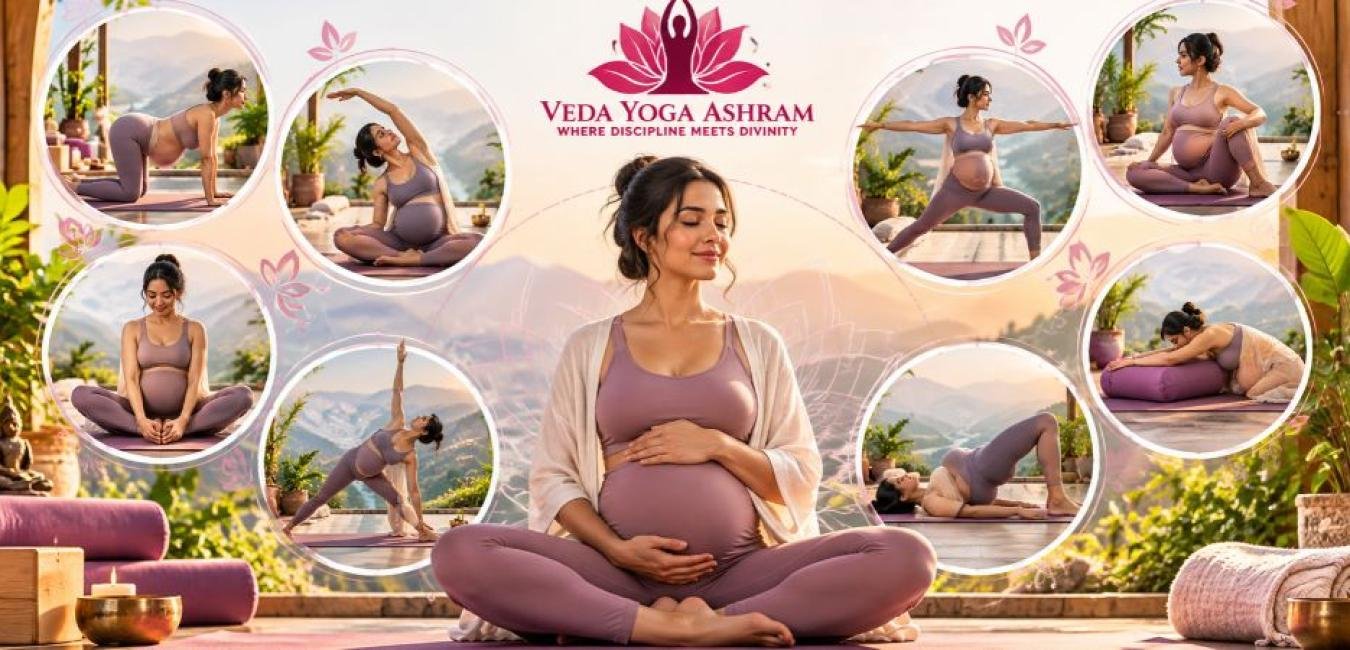
10 Safe Prenatal Yoga Poses for Beginners During PregnancyOur Yoga Blogs
Pregnancy causes physical and emotional changes. As the body gets ready for a growing baby moving can be a part of staying comfortable moving easily being strong and feeling relaxed. For healthy pregnancies yoga that is changed to fit the situation can be part of a regular activity plan.
Pregnancy is not the time to push for more flexibility or try advanced positions. Your balance, how your joints move, how energy you have and how you feel can change each week. The best way is to make sure the movements are gentle under control and match where you are in your pregnancy.
The pregnancy yoga poses in this guide are meant as examples for people who are just starting out not as a replacement for medical advice. If you are pregnant talk to your healthcare provider before starting or changing your exercise routine especially if your pregnancy is risk or you have a health problem. The NCCIH says that yoga can be safe and helpful, during pregnancy if the right steps are taken.
Table of Contents
- Why Choose Prenatal Yoga During Pregnancy?
- Yoga Asanas During Pregnancy 1st Trimester: What to Know
- 1. Cat-Cow. Marjaryasana-Bitilasana
- 2. Supported Bound Angle Pose. Baddha Konasana
- Yoga Poses During Pregnancy: Second Trimester Practice
- 3. Warrior II. Virabhadrasana II
- 4. Goddess Pose. Utkata Konasana
- 5. Supported Triangle Pose. Trikonasana
- Prenatal Yoga Poses for the Third Trimester
- 6. Supported Childs Pose. Balasana
- 7. Legged Standing Side Stretch
- 8. Supported Malasana. Garland Squat
- 9. Side-Lying Relaxation Pose
- 10. Pelvic Tilts on Hands and Knees
- Pregnancy Yoga Chart: A Simple Trimester Guide
- First Trimester Yoga Poses: What Should Beginners Remember?
- What to Avoid When Practicing Yoga During Pregnancy
- : Essential Safety Tips
- How Often Should You Practice?
- Why Learn Prenatal Yoga From a Qualified Teacher?
- Common Mistakes Beginners Should Avoid
- Trying to Stretch Deeper
- Ignoring Balance Changes
- Holding the Breath
- Practicing Through Pain
- Following a Generic Online Routine Without Modification
- Final Thoughts
Why Choose Prenatal Yoga During Pregnancy?
Prenatal yoga is adapted to the changing needs of pregnancy. Than focusing on achieving difficult shapes prenatal yoga emphasizes comfortable movement, breath awareness, relaxation, mobility and appropriate strength work.
Research reviewed by NCCIH suggests that prenatal yoga may help reduce perceived stress, anxiety and depression during pregnancy although evidence for outcomes remains limited and researchers continue to study the practice.
A pregnancy-focused class may also help beginners understand how to modify postures as the abdomen grows and balance changes.
The important principle is simple: prenatal yoga should feel supportive rather, than
Exhausting.
Yoga Asanas During Pregnancy 1st Trimester: What to Know
The first trimester can cause tiredness feeling sore breasts and changes in energy. You might feel completely different from one day to the next.
There is no need to start a routine just because you are pregnant. If your doctor says it is okay to exercise gentle movement can be adjusted depending on how you feel.
1. Cat-Cow. Marjaryasana-Bitilasana
Start on your hands and knees with your hands under your shoulders and your knees under your hips.
As you breathe in gently stretch your spine. Open your chest. As you breathe out curve your spine a little. Let your neck relax.
Move slowly. Stay within a comfortable range.
This is a mobility exercise because you can easily make the movement smaller when you have less energy.
2. Supported Bound Angle Pose. Baddha Konasana
Sit comfortably with the soles of your feet together. Your knees pointing outward.
Put cushions or folded blankets under your thighs if your hips feel tight.
Keep your spine relaxed and straight. There is no need to push your knees down.
This seated position can be used as a movement and relaxation practice especially when you don’t want a hard session.
Yoga Poses During Pregnancy: Second Trimester Practice
As pregnancy continues, the belly. The body’s balance changes. Balance can become harder to manage which is why steady standing positions and helpful tools can become more useful.
3. Warrior II. Virabhadrasana II
Stand with your feet a little apart. Turn one foot out.
Bend the knee only as far as feels right while keeping the knee in line with the foot.
Stretch your arms out in directions and breathe steadily.
Use a wall or chair for support whenever you need it.
Warrior II can offer a controlled lower-body strength challenge without needing flexibility.
4. Goddess Pose. Utkata Konasana
Stand with your feet wider than your hips and turn your toes out.
Bend your knees gently and lower your body only as far as you can manage comfortably.
Keep your body straight and use a wall or strong support if your balance feels unsure.
Don’t stay in the squat long if your legs get tired.
5. Supported Triangle Pose. Trikonasana
Take a stance and turn one foot out.
Stretch your arms. Reach gently toward the front leg. Of reaching all the way down put your hand on a yoga block or something similar.
Keep your torso long. Avoid pressing on your stomach.
As pregnancy continues, making your feet further apart and using support can make the pose more comfortable.
Prenatal Yoga Poses for the Third Trimester
During the trimester the growing belly can affect balance and movement a lot. The goal of the practice might change to movement, comfortable strength, breathing and relaxing.
6. Supported Childs Pose. Balasana
Get on your knees and spread your knees enough to make space for your belly.
Put a bolster or a few folded blankets in front of you. Let your upper body rest on the support instead of pushing your torso down.
If this position does not feel good choose another resting position.
The modified version is more important than trying to make the shape exactly.
7. Legged Standing Side Stretch
Stand with your feet a comfortable distance apart and hold onto a wall or chair with one hand.
Lift the arm and gently stretch the side of your body.
Do the same on the side.
This simple standing move can be easier to control than a twist and can be changed as your balance changes.
8. Supported Malasana. Garland Squat
Stand with your feet a little wider than your hips and slowly lower into a squat.
Use a yoga block, bolster, wall or strong support so you don’t have to balance without help.
Don’t force your knees out. Go deeper just to get the traditional pose.
Because pregnancy affects balance and movement differently for each person the depth should be based on how you feel, not a goal.
9. Side-Lying Relaxation Pose
Lie on your side with your head supported by a pillow.
Put another pillow between your knees. Add more support under your belly if needed.
Let your shoulders jaw and hands relax while breathing normally.
This can be very helpful as a rest position later in pregnancy.
NCCIH suggests changing yoga during pregnancy. Specifically says that lying on your back for too long should be avoided.
10. Pelvic Tilts on Hands and Knees
Get on your hands and knees with your spine, in a neutral position.
Gently move your pelvis to create an amount of spine movement without making it too big.
Keep the movement slow. Match it with your breathing.
If your wrists feel uncomfortable put a folded towel or yoga wedge under your hands. Ask a trained teacher for another option.
Pregnancy Yoga Chart: A Simple Trimester Guide
|
Stage |
Main Focus |
Examples |
|
First Trimester |
Gentle mobility and relaxation |
Cat-Cow, Supported Bound Angle |
|
Second Trimester |
Balance, strength and mobility |
Warrior II, Goddess, Supported Triangle |
|
Third Trimester |
Comfort, support and relaxation |
Supported Child's Pose, Side-Lying Relaxation, Supported Squat |
This chart is a general guide rather than a prescription. Your healthcare provider or qualified prenatal yoga instructor may recommend different movements depending on your health and pregnancy.
First Trimester Yoga Poses: What Should Beginners Remember?
During pregnancy many new mothers think they must start exercising or become more flexible right away. That is not necessary.
If you were doing yoga before getting pregnant you might be able to keep up with a version of your routine but talk to your healthcare provider first. If you have never tried yoga begin with movements instead of complicated poses.
The first trimester is about noticing how your body feels. On days when you feel very tired or sick a short session of stretches breathing exercises or quiet relaxation can help more, than trying to do a full yoga class.
What to Avoid When Practicing Yoga During Pregnancy
Safety is always more important than getting into a certain pose.
According to NCCIH, pregnant yogis should steer clear of hot yoga due to the potential for overheating and also modify exercises which require long periods of lying down on the back. It also suggests consulting a healthcare professional and yoga instructor about personal requirements.
You might also want to consider avoiding/ modifying:
- Deep abdominal compression
- Extremes in twisting
- Advanced Inversions
- Breathing techniques that are forceful
- Aggressive stretching
- Balance poses that do not have support
- Any position that causes pain or discomfort
Do not make comparisons between your pregnancy yoga routine and pictures of advanced practitioners on the internet.
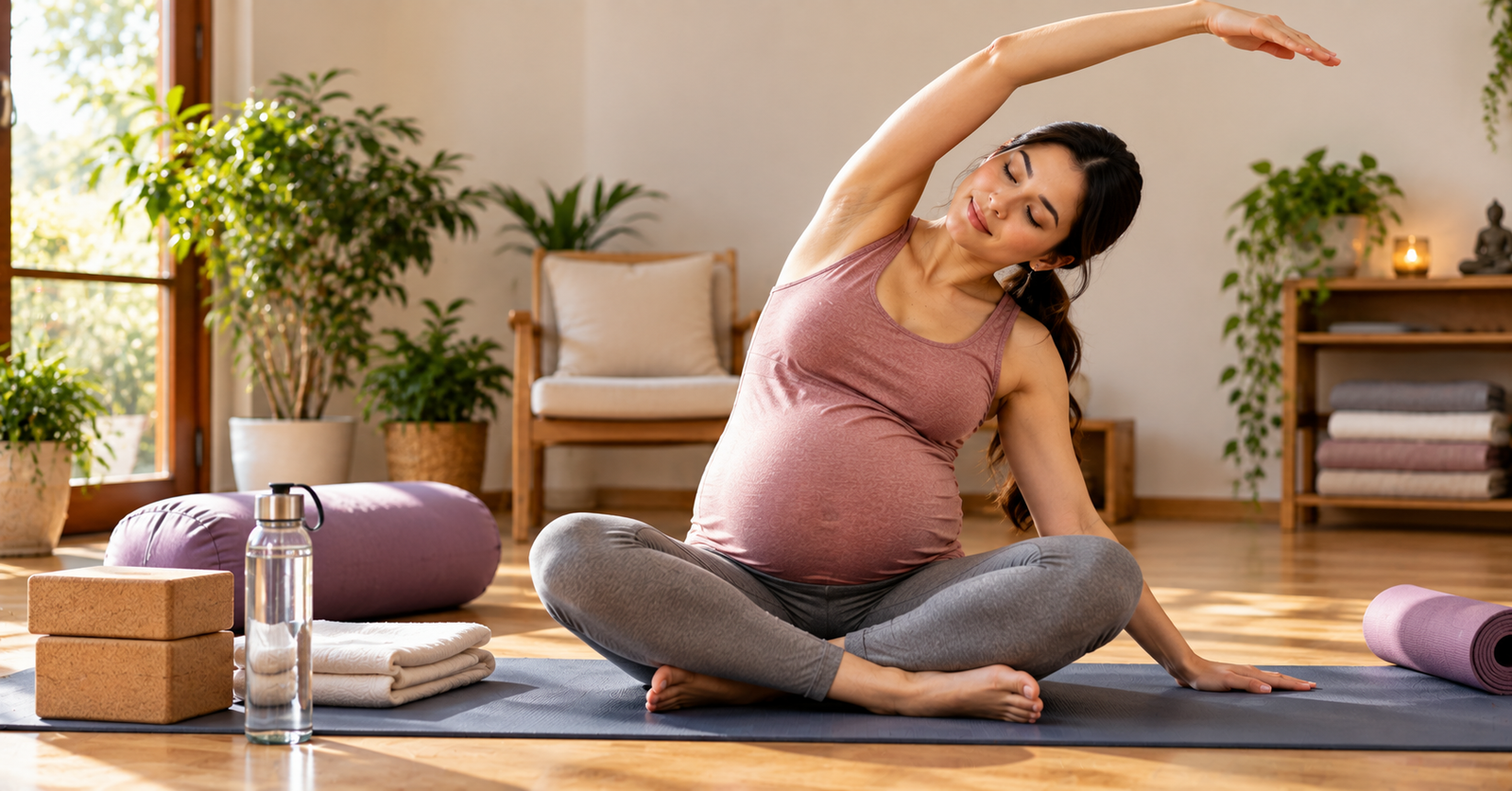 : Essential Safety Tips
A comfortable practice environment is as important as the poses themselves.
Use a nonslip surface. Keep a wall, chair, blocks or bolsters close by. Stay hydrated. Avoid exercising in too much heat.
Your instructor should know that you are pregnant and should understand how to modify the practice for people.
NCCIH recommends that pregnant people discuss their needs with both their healthcare provider and yoga instructor because modifications may be necessary.
Stop exercising and seek advice if you experience concerning symptoms such, as vaginal bleeding, fluid leakage, chest pain, faintness, severe breathing difficulty, painful contractions or other symptoms your healthcare provider has told you to seek attention.
How Often Should You Practice?
There is no need to measure your pregnancy journey by the number of poses you complete.
You might practice for 15 to 30 minutes on a day when your energy's good while another day may call for a shorter session.
For pregnancies regular physical activity is generally encouraged when medically appropriate. NCCIH notes that physical activity can be safe and beneficial during pregnancy while emphasizing the importance of precautions.
Consistency, comfort and listening to your body are more important, than intensity.
Why Learn Prenatal Yoga From a Qualified Teacher?
Pregnancy yoga needs more than swapping a few poses for simpler ones. A qualified prenatal instructor must know about trimester‑specific details how to modify poses when to use props, breathing methods and when to send a student to a doctor. Veda Yoga Ashram that covers postnatal poses, trimester‑specific precautions and contraindications the anatomy of pregnancy breathing techniques, meditation, relaxation methods pose modifications and teaching methods.
Common Mistakes Beginners Should Avoid
Trying to Stretch Deeper
Pregnancy is not a flexibility competition. Stop before discomfort.
Ignoring Balance Changes
A pose that felt stable weeks ago may feel different now. Use support.
Holding the Breath
Breathing should remain comfortable and natural unless practicing a breathing technique under expert guidance.
Practicing Through Pain
Pregnancy involves unfamiliar sensations but pain should not be ignored.
Following a Generic Online Routine Without Modification
A routine designed for a -pregnant practitioner may not account for trimester-specific changes.
Final Thoughts
A thoughtful prenatal yoga practice is less about achieving perfect shapes and more about moving with awareness as your body changes.
The ten movements in this guide provide examples of gentle practices that may be adapted for different stages of pregnancy, but no generic pregnancy yoga poses list can replace individual medical advice.
Start slowly, use props, stay within a comfortable range, and select a qualified prenatal yoga instructor whenever possible. As your pregnancy progresses, your practice may need to change—and that is completely normal.
The goal is not to maintain the same yoga practice you had before pregnancy. The goal is to create a practice that respects where your body is today.
 Q. Is yoga safe during pregnancy?
Share Post
No Comments Yet